

“An idea can become reality very quickly.”
Chris has watched software reshape theatre once before. Now OpenDesign acts as the design director inside his multi-agent workflow — turning creative intent into a coherent interface, giving coding agents a system to build from, and bringing the result back to brief when implementation drifts.
He had seen software expand what artists could make.
In 2007, Chris Wenn ran the sound for a show with four CD players, a mixer, and seven different CDs, swapping discs while he mixed the performance live. A year later, QLab put the whole sequence onto one computer timeline. It went on to become an industry standard and changed what theatre artists could make.
Chris has spent his career inside that change. Trained as a sound designer, he now teaches technical sound in Sharjah and describes himself as a technology artist — always looking for tools that can add a new dimension to his creative work and teaching.
But when the tool he wanted did not exist, he could only take the idea so far. He could sketch in Pure Data or Max and write scripts; he knew what he liked on a screen. What he did not have was a visual design practice that could turn the idea into an interface other people could immediately understand.
Then, while looking through GitHub for ways to do more with the agents he already used, he found OpenDesign. He tried it on a holiday project. A few months later, it had become the realization step in a workflow of his own.
I’m not really a visual person — I’m a sound person. So having that assistance to bring an idea to life was really useful for me.
Loreweaver: an imagined world found its visual language.
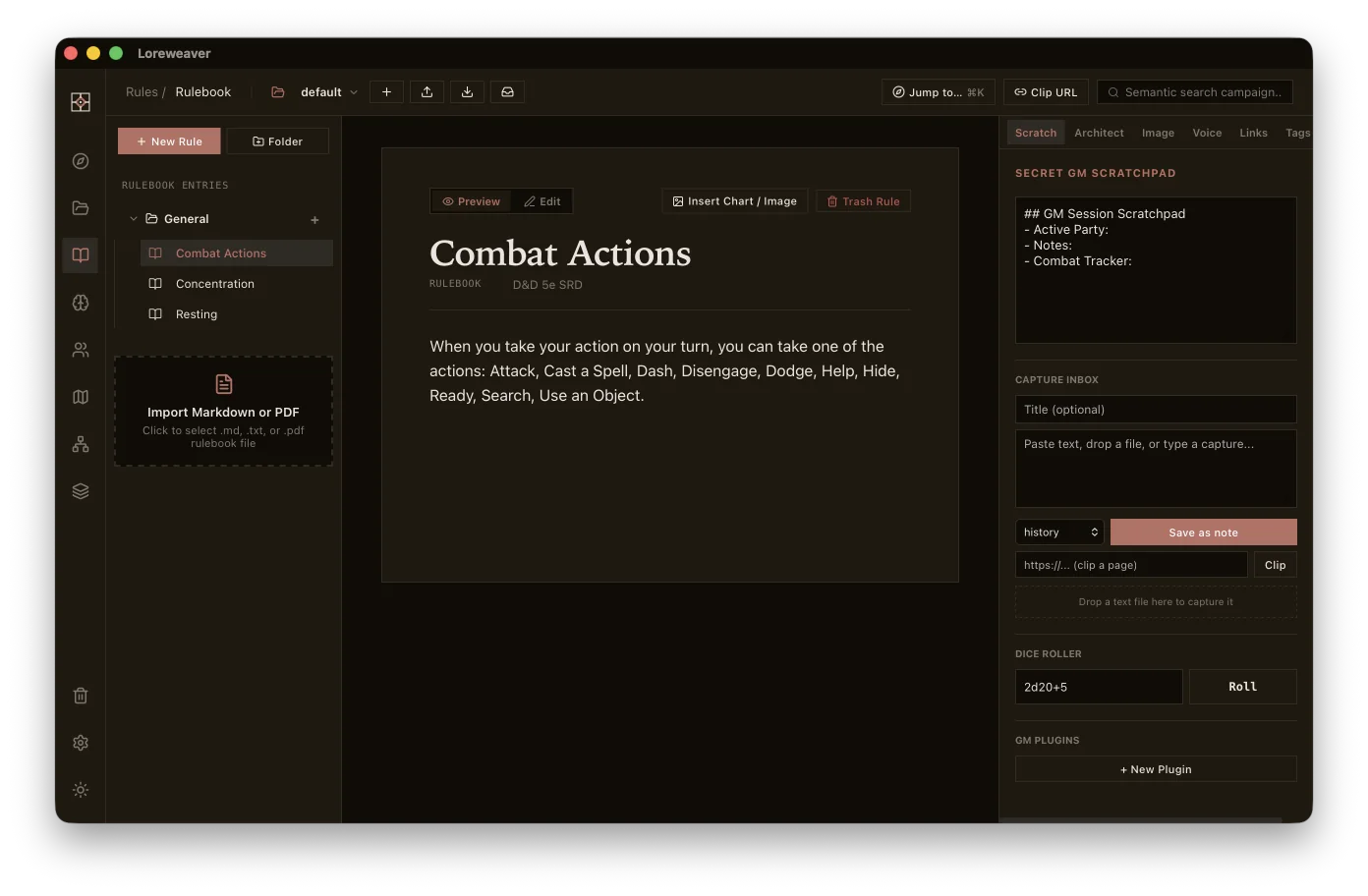
Chris began with a project for play: an AI-supported workspace for tabletop role-playing, with campaigns, worldbuilding, rules, characters, maps, relationship graphs, and an agent to generate ideas. Loreweaver is still a work in progress, but its interface already carries the world he imagined.
He did not want generic fantasy polish. He wanted something welcoming, vintage, dark, and parchment-lit — in his words, “not real looking, but real feeling.” By asking questions and helping him refine the idea, OpenDesign gave that feeling a visual language.
The design takes shape before the plan does.
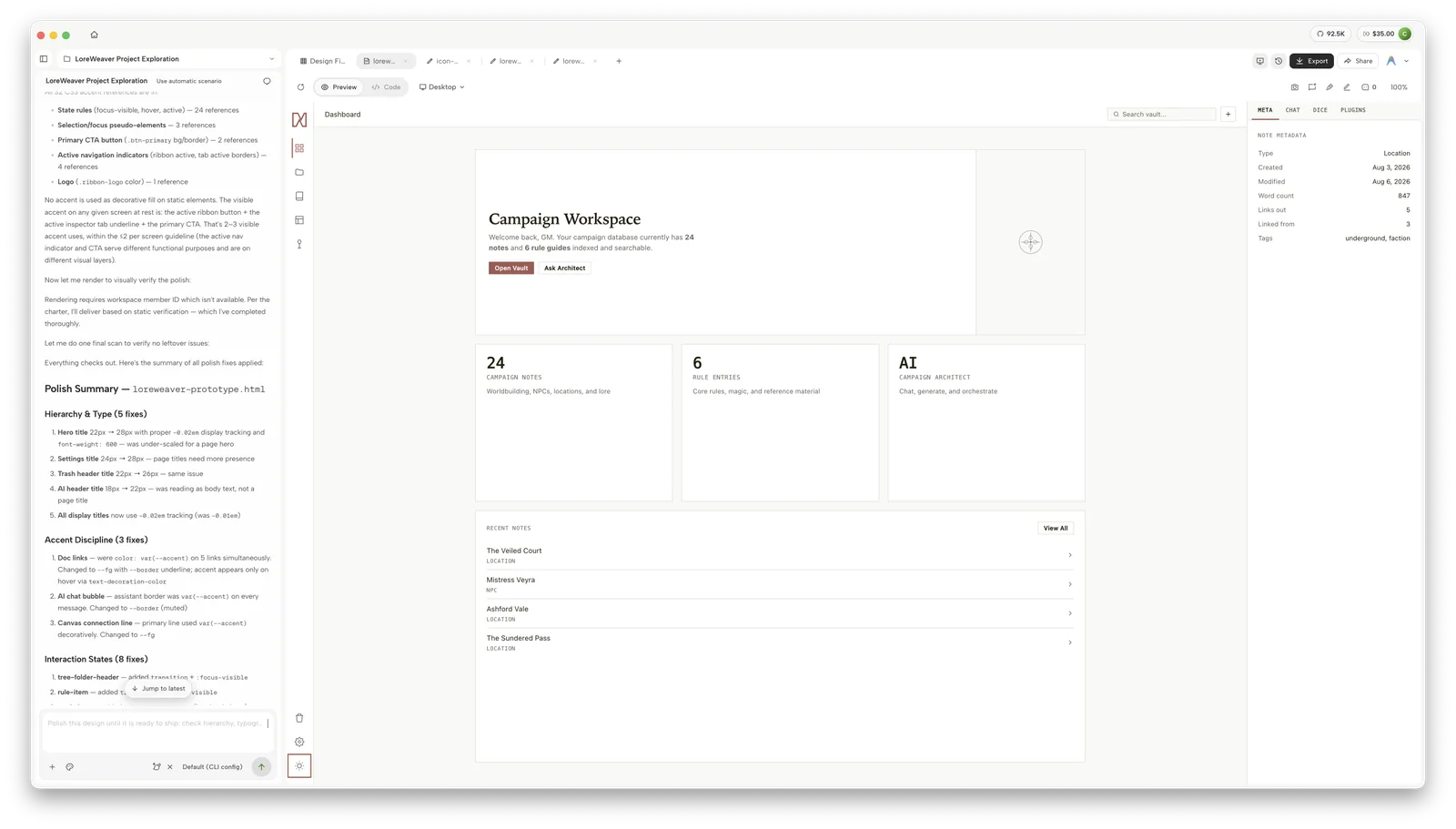
Chris does not begin with a finished PRD. He works as he would in rehearsal: an idea develops by doing the thing itself. He sketches what he wants, brings it into OpenDesign to make it visible, hands the design to coding agents to build, then returns for a final check against the brief.
That last step came from experience. Other agents did not always follow the design, and Chris would look at the result and think, “That doesn’t look quite right.” He learned to add structured review steps. OpenDesign became not only the realization layer, but the place where he checks that the built product still belongs to the original idea.
“I can guide it to make better things for me. And I can also teach it better because I’m seeing the kind of behind-the-scenes part of it.”
Then one experiment became part of every day.
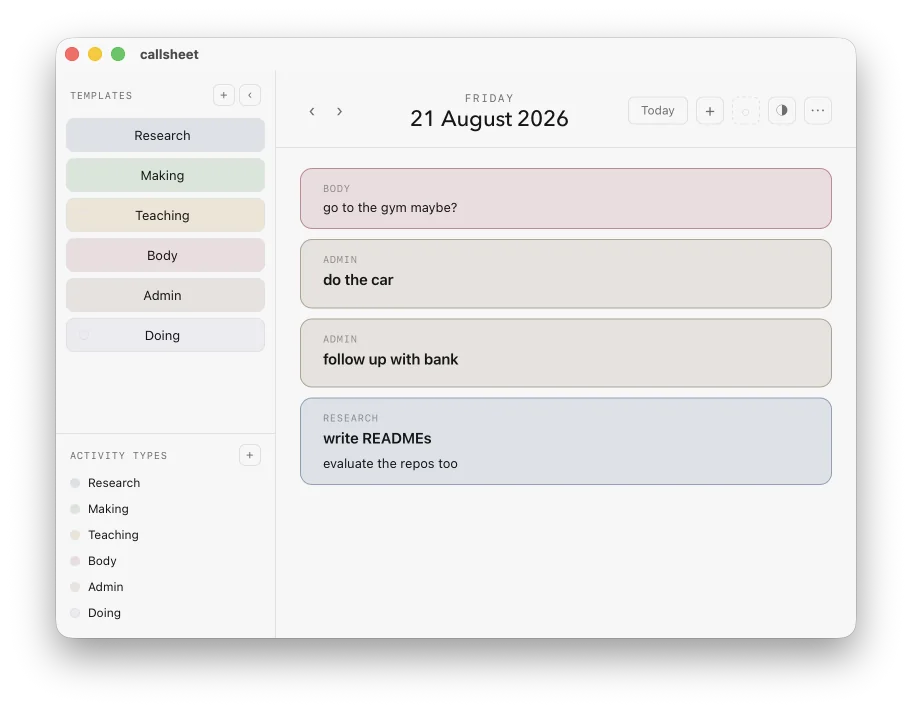
Chris is not good at to-do lists. He is good at looking at a whiteboard. So he imagined a quiet one for his desktop: no notifications, no interruption — just a calm place he could glance at to see what he was working on. It also connects to his Hermes instance, which can suggest what might belong in the day.
OpenDesign shaped the calm colours and visual language of callsheet; Chris directed and tested the application as coding agents built it. At the time of our conversation, he believed the first commits were only a week old. It was already in his workflow every day.
“I can shift my attention to my day, but not have to stress out about it. That’s exactly what I wanted.”
Once one idea had a way forward, the others followed.
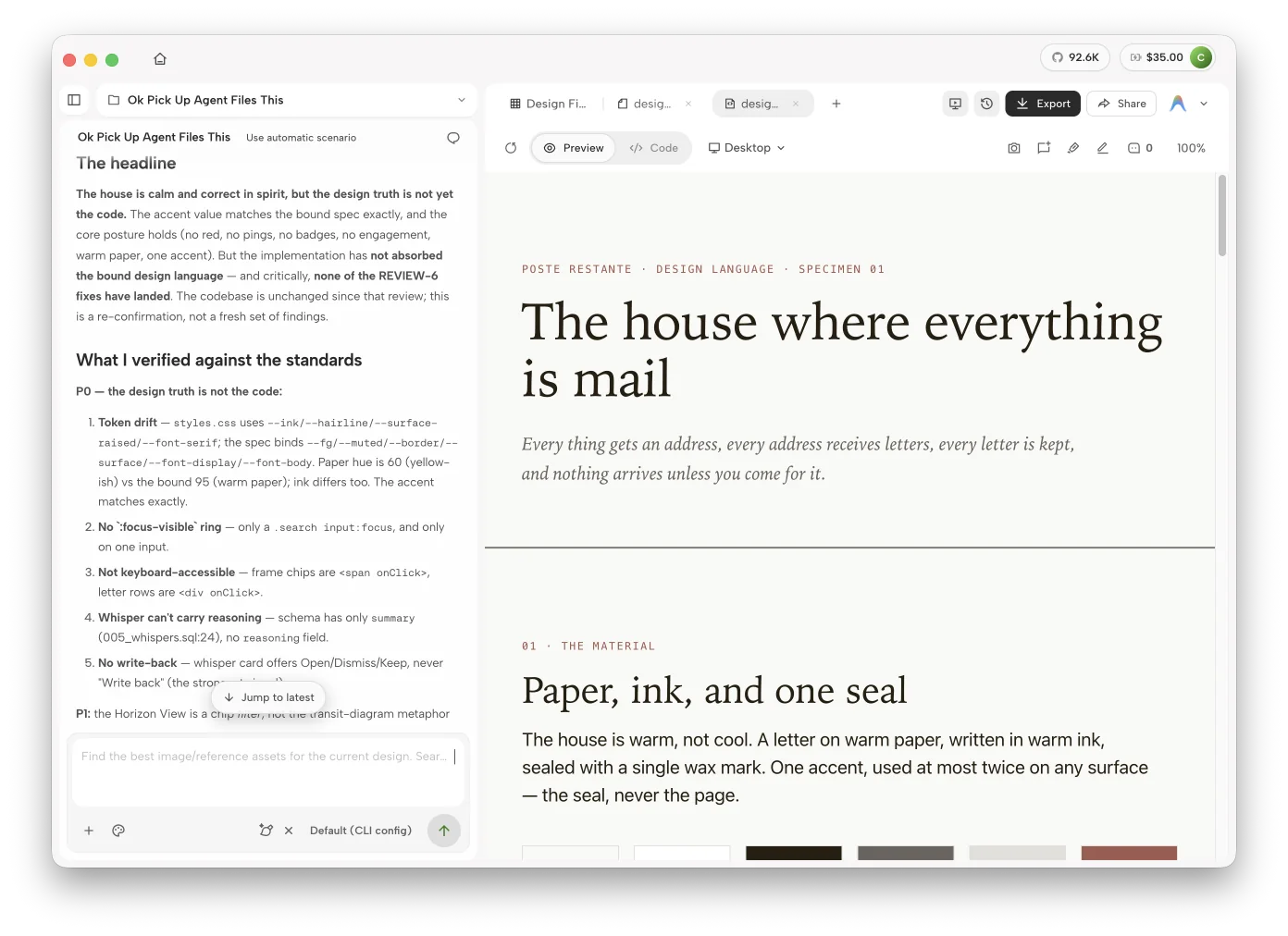
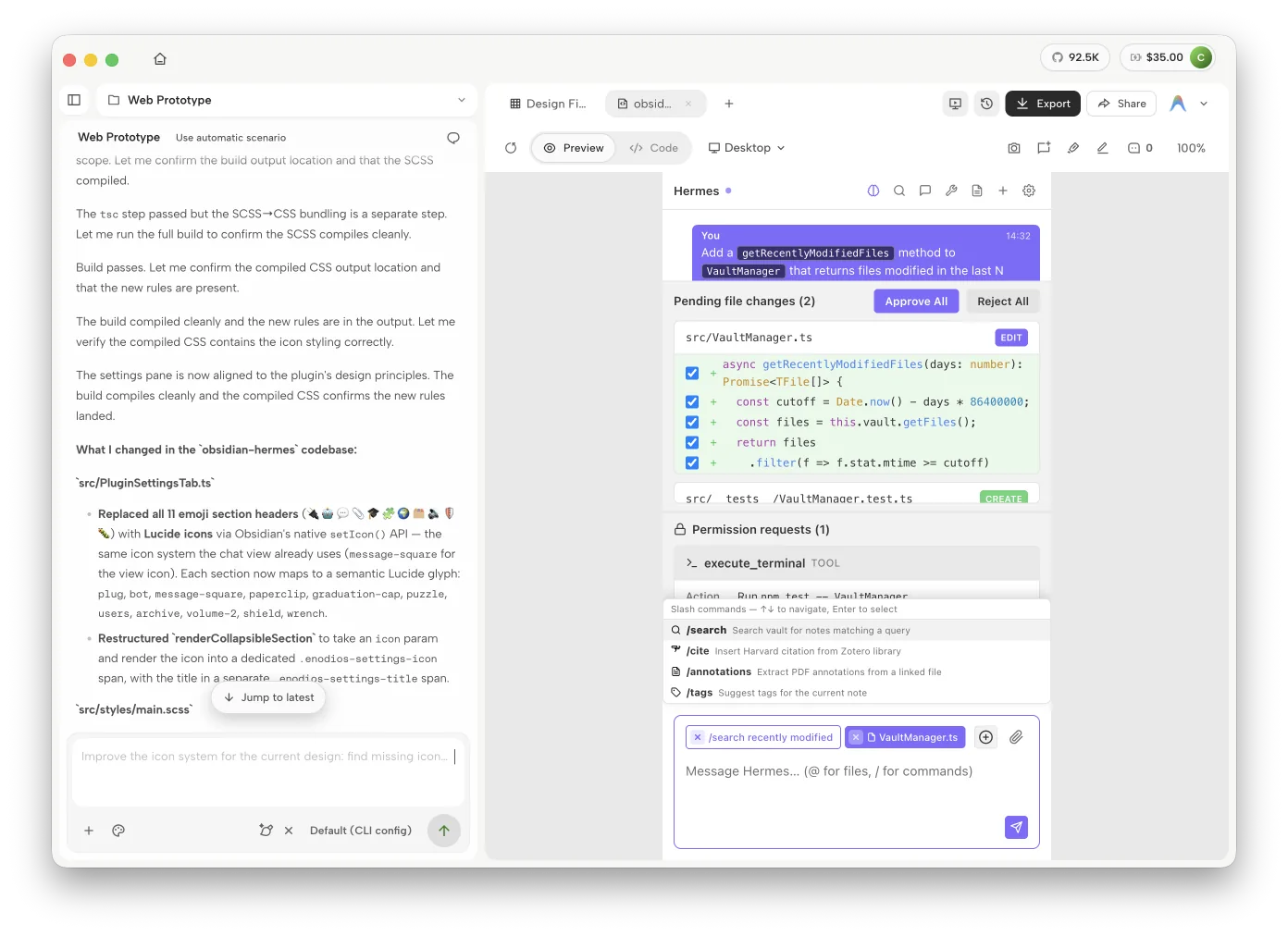
Loreweaver and callsheet were not one-offs. Once Chris had a way to turn an idea into a visible, reviewable design, more strange and specific tools started moving from idea into view: Poste Restante, a social–anti-social network where everything is mail; Enodios, a Hermes plugin for Obsidian; audio plugins, cue-list utilities, and a tool for programming a 1994 synthesizer whose original software is gone.
Some are working tools, some are experiments, and some are only beginning. Together they form part of the same practice — things Chris can use, test, document as research, and carry back into his teaching. When one is ready, he can release it as open source, just in case it helps someone else.
“Empowering artists to create technological tools means there are more shifts yet to come.”
Build the tool only you would think to make.
OpenDesign is free, open-source, and runs on your own machine and your own keys.