
Website
Bianjing Night Tour Website Design
An interactive night journey through an imagined Song-era Bianjing, combining a persistent river city, poetry, lanterns and multilingual chapter pacing.

LLM Arena Sep 2026
Case notes- Model
- GPT 6 Sol
- Design task
- Create a multilingual, interactive night journey through an imagined Song-era Bianjing.
- Output
- Website
Designed For
- Cultural Storytelling WebsitesShape historical interpretation into an atmospheric, navigable digital journey.
- Digital Exhibition ExperiencesConnect oversized narrative type with scenes, chapters and responsive local states.
- Interactive Editorial FeaturesExplore how a fixed Three.js world can carry a long-form story.
Key Highlights
- Persistent River CityOne animated city remains behind all five chapter transitions.
- Multilingual WayfindingChinese, English and Japanese controls remain visible throughout.
- Poetry to LanternsA selected Chinese line is carried from reading into the ending.
Bianjing Night Tour Website Preview
1 / 6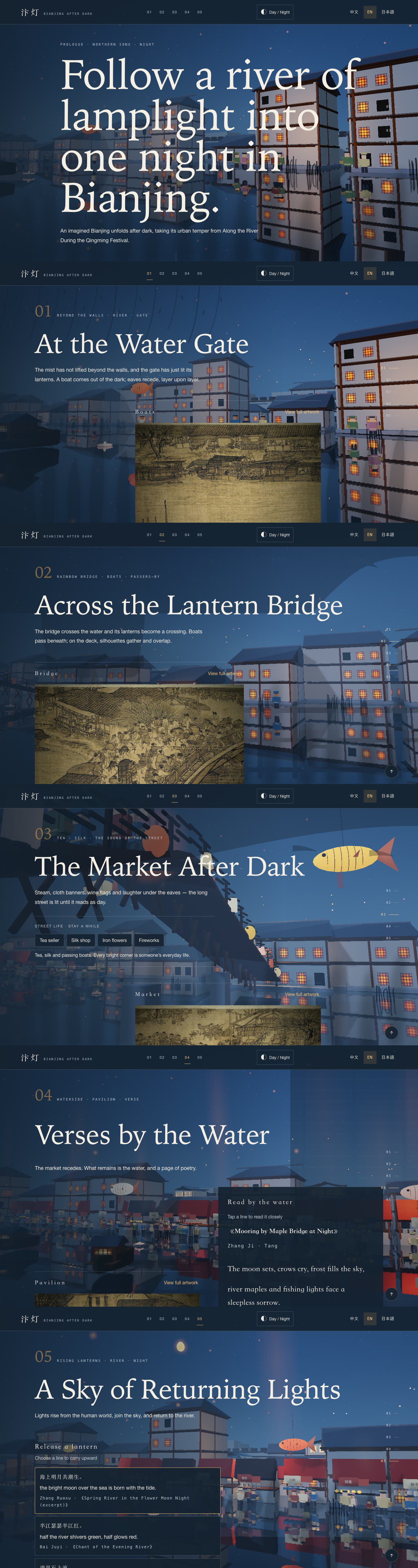
How the Bianjing Night Tour Website Builds Its World
Bianjing Night Tour Website Design presents an imagined night in Song-era Bianjing through five connected chapters. Its contemporary cultural interpretation takes its urban temper from Along the River During the Qingming Festival and the night settings of classical poetry. It is not a real tour, booking service or historically verified reconstruction.
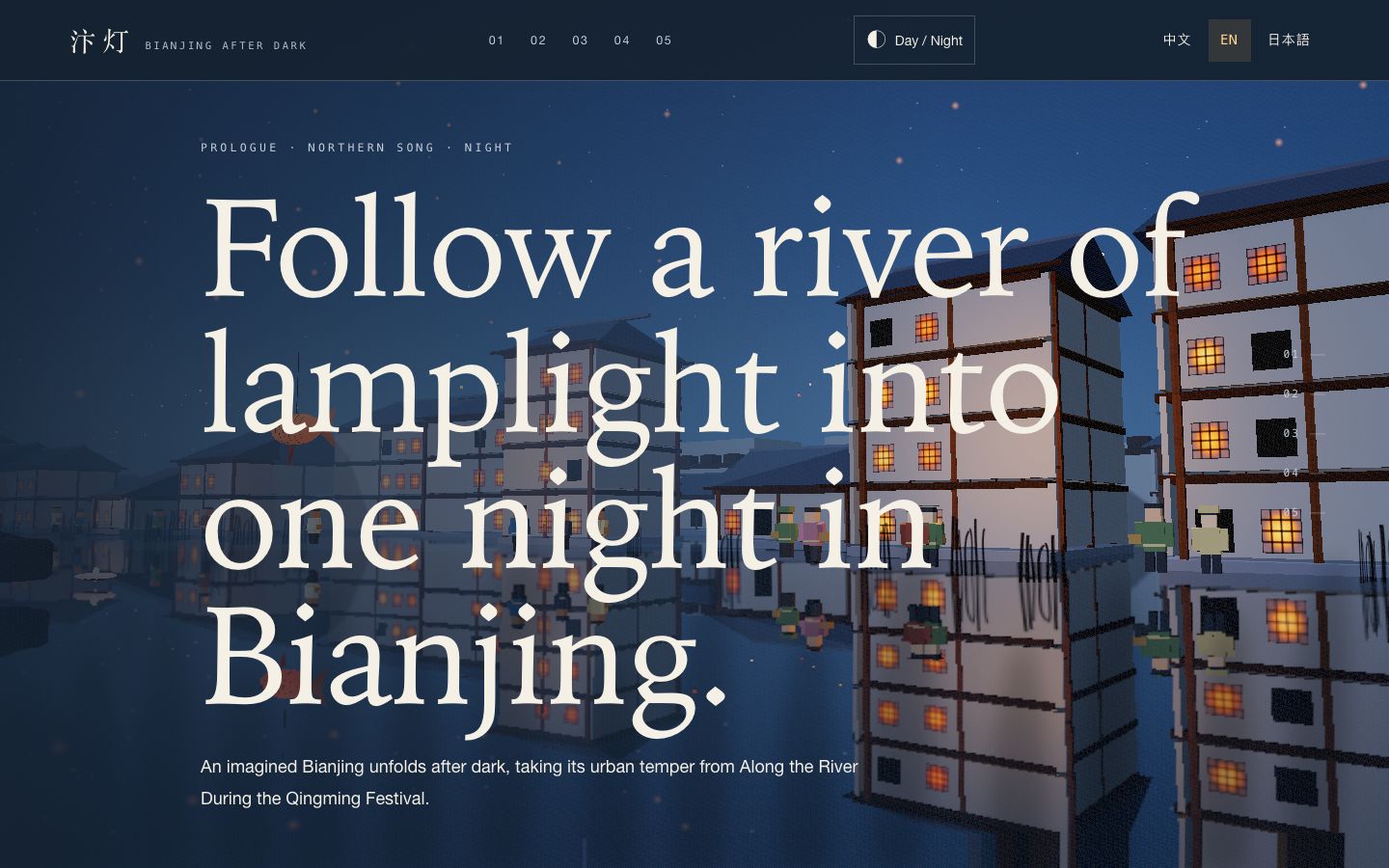
The hero establishes the central device immediately: “Follow a river of lamplight into one night in Bianjing.” A persistent Three.js river city sits behind the editorial layer, while the chapter indicator, Day / Night control and language switcher make the experience read as one journey rather than five unrelated pages.
The visual evidence shows a deliberate contrast between a dark blue city, warm window light and oversized cream typography. That scale gives each chapter an unmistakable emotional register, but it also narrows the available space for dense controls. The design therefore places interaction groups below or beside the primary statement instead of competing with it.
A Contemporary Interpretation
The source identifies public-domain painting material, public-domain classical verse and AI-created Song-inspired illustrations. Those ingredients establish a designed interpretation of place, not evidence that the depicted streets, buildings or journey existed as shown.
That boundary is useful for cultural teams: the experience can borrow visual and poetic atmospheres while keeping its framing explicit. The closing note repeats that distinction, describing a contemporary imagining rather than standing in for any real place.
Where This Cultural Storytelling Pattern Fits
This case is suited to cultural organizations, editorial teams and experience designers developing a guided digital narrative from visual archives. It demonstrates how a place can be explored through sequence, mood and interpretive context instead of a conventional map or destination page.
The five chapters create a useful pacing model. Visitors first meet the city at the Water Gate, cross Rainbow Bridge, enter the market, pause with poetry by the water and finish with returning lanterns. Each stop changes the subject while the underlying city preserves continuity.
Archive-Led Interpretation
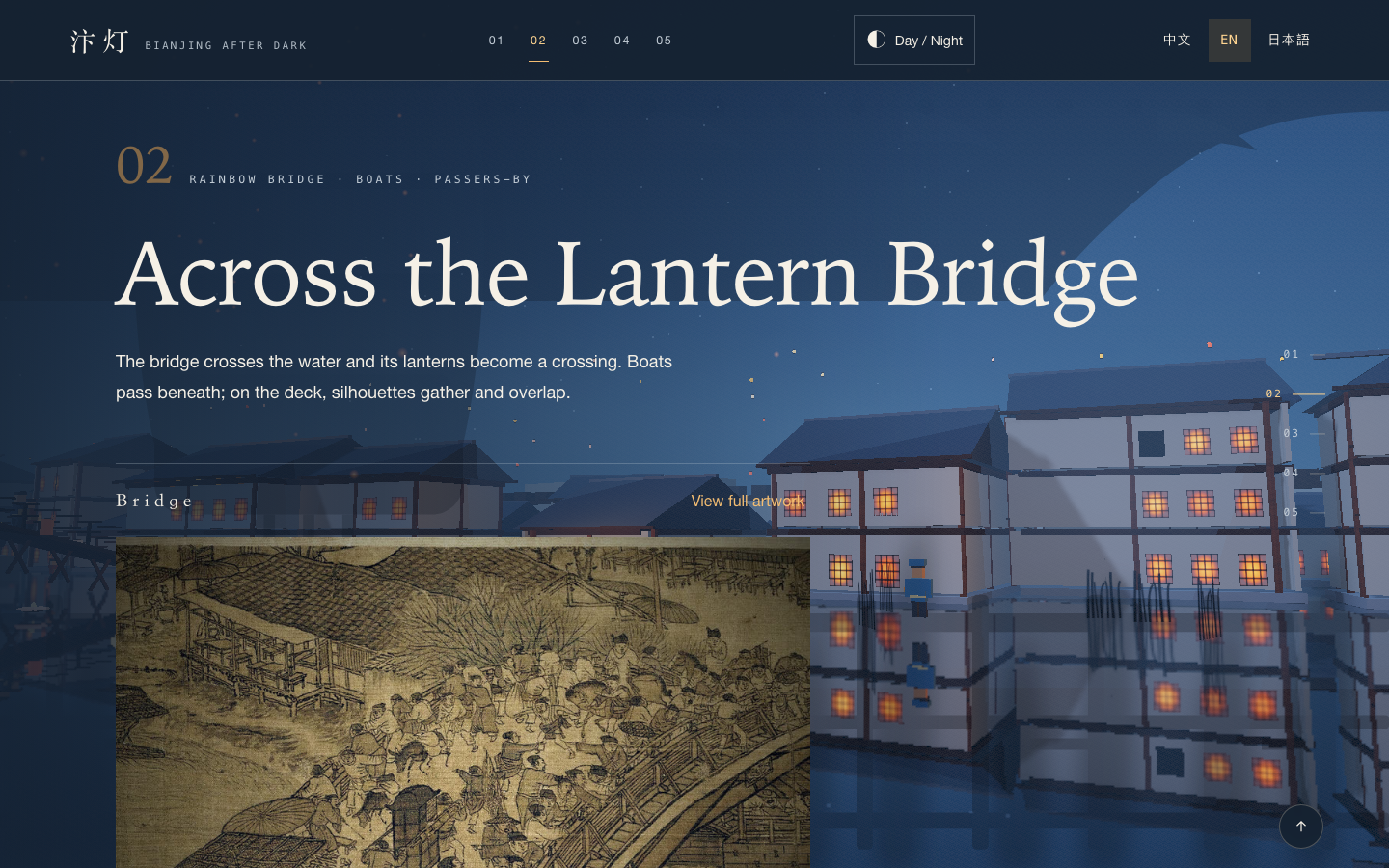
Use a public-domain painting as a visual reference while surrounding it with a new atmospheric scene. In the market chapter, the source image appears below the live scene through a “View full artwork” route, so archival material supports the interpretation without replacing it.
Chapter-Based Exhibition
Turn a long-form story into five distinct, navigable moments. The persistent 01–05 navigation provides orientation, while chapter labels such as “Tea · Silk · The Sound Of The Street” establish a changing sensory focus.
Interactive Poetry Reading
Let readers select a line rather than treating poetry as static decoration. The river-lantern ending carries the tested line “海上明月共潮生。” into a larger release moment, linking reading to the final scene.
How Five Chapters Share One Animated City
The page uses one fixed animated canvas with six full-screen captures representing the hero and five chapters. A lightweight navigation strip is derived from that continuous scene, while the original gallery upload remains unchanged. This structure lets the city persist as the editorial layer advances.
The controls are intentionally stable. Chinese, EN and 日本語 remain in the top navigation, alongside Day / Night and chapter numbers. The language controls signal a multilingual design system, while the supplied evidence does not establish the completeness or runtime behavior of every translation.
Stable Layer
The river city and chapter navigation preserve orientation while the visitor changes focus.
Changing Layer
Market selection and lantern selection provide local response without requiring a new page.
Editorial Layer
Large headings and short scene descriptions control the emotional pace of each state.
| Observed Element | Reader Effect | Tradeoff |
|---|---|---|
| Persistent river scene | Maintains spatial continuity across chapters | Can compete with text and controls |
| Four market controls | Adds local cause-and-response | Increases interaction density |
| Selected Chinese line | Connects reading to the finale | Requires careful language and state legibility |
From Gate to Bridge
The first chapter places the visitor at the Water Gate with mist, layered eaves and a boat emerging from darkness. The second reframes the same river as a crossing: lanterns on Rainbow Bridge, boats beneath it and silhouettes on deck. Reusing the water makes the transition legible, while the shift from threshold to passage keeps the narrative moving.
Market State and Local Feedback
The market chapter introduces four controls: Tea Seller, Silk Shop, Iron Flowers and Fireworks. The tested Fireworks state changes the local message, which shows how a small interaction can alter the meaning of a stable scene. The tradeoff is density: four controls, explanatory copy and the visual scene all compete with the oversized chapter title.
Poem Navigation and Return
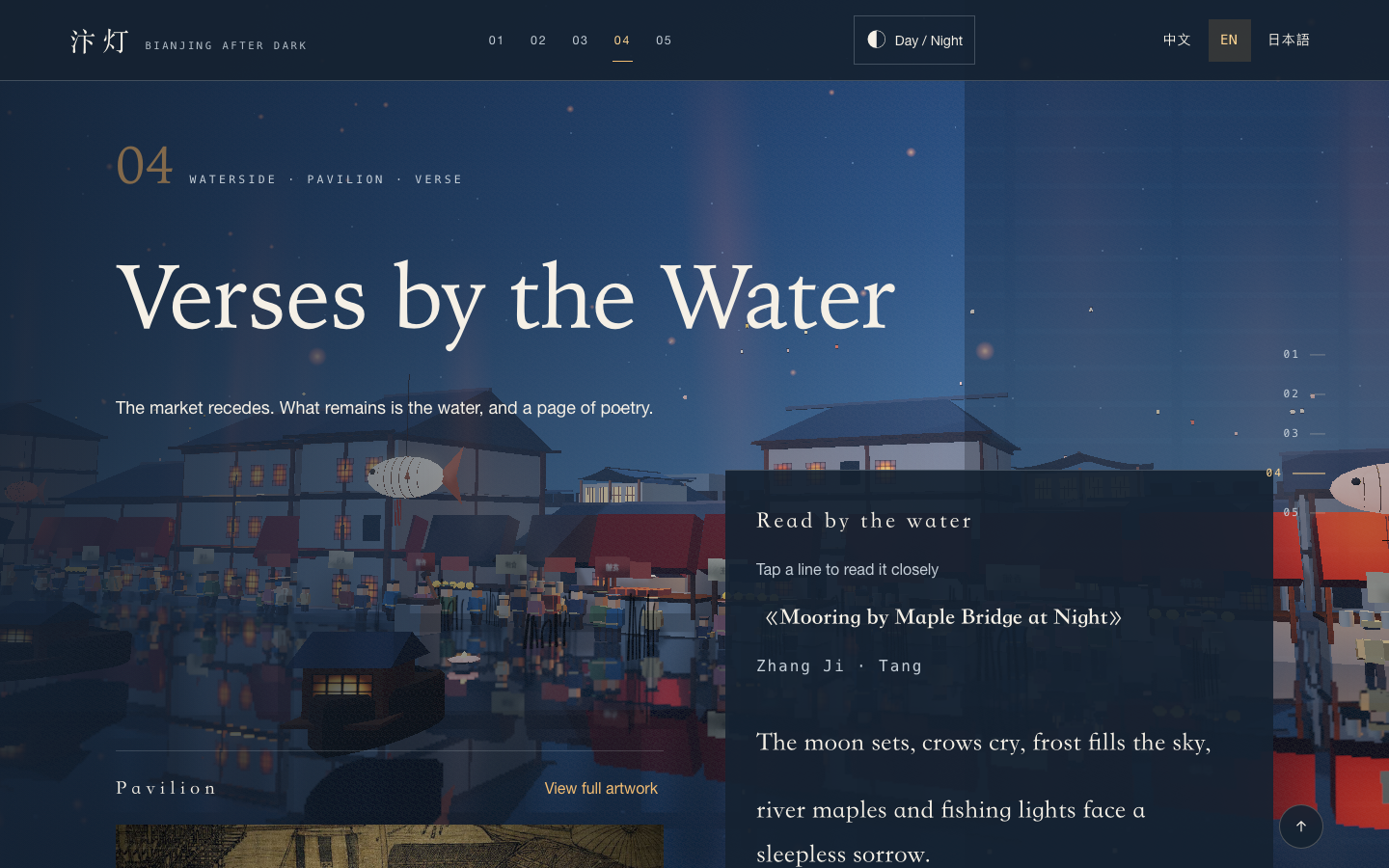
The poetry chapter changes the rhythm from street activity to close reading. It begins with “Mooring by Maple Bridge at Night,” identifies Zhang Ji and Tang, and offers previous and next poem controls with a visible 1 / 4 position. The navigation then continues toward “Chant of the Evening River,” making the poetry a sequence rather than a single quotation.
What the Bianjing Night Tour Website Demonstrates
The supplied artifact is a design-led digital experience represented by full-screen captures of a fixed Three.js scene. The captures prove visible composition, labels, chapter ordering and tested states such as Fireworks and the selected river-lantern line. They do not by themselves prove backend services, booking, persistent user data or production platform behavior.
The main design challenge is balancing atmosphere with legibility. Oversized editorial type makes the chapters memorable and supports a slow reading pace, but dense areas such as the market controls and poem cards need enough contrast, spacing and responsive adaptation to remain readable. Day/night switching and multilingual controls should be evaluated as interface states, not assumed from their visual presence.
The lantern discovery panel also models responsible interpretation. It explicitly notes that a quoted Hangzhou poem is not about Bianjing, offering the verse for its river maples, fishing lights and night-on-a-boat mood. That note preserves poetic association without presenting it as geographic evidence.
How to Create Bianjing Night Tour Website Design in OpenDesign
Set the Continuous Scene
Build one river-city canvas that can support five chapter framings: Water Gate, Rainbow Bridge, Night Market, Poetry By The Water and River Lantern Finale. Keep the chapter indicator and language controls persistent. Check that each framing has a distinct subject while the river, lantern light and city depth continue to connect the sequence.
Suggested PromptCreate a multilingual night-story website about an imagined historical city. Use one persistent Three.js-style river scene behind five full-screen chapters: Water Gate, Rainbow Bridge, Night Market, Poetry By The Water and River Lantern Finale. Include Chinese, English and Japanese controls, a Day / Night control, chapter numbers, oversized editorial headings and a compact local interaction area. Add four market choices—Tea Seller, Silk Shop, Iron Flowers and Fireworks—with a changed local message for Fireworks. Add a poem reader with four positions, then carry one selected Chinese line into the final lantern state. Treat all history as contemporary interpretation, not a real tour, booking flow or verified reconstruction. Keep visible text readable in reduced motion and avoid assuming backend storage.
Refine Interaction Density
Use the market chapter to test the balance between atmosphere and action. Keep the four controls understandable beside the large title, and make the tested Fireworks response visibly local rather than changing the entire journey. In the poetry chapter, show the title, attribution, 1 / 4 position and previous/next relationship without allowing decorative scale to obscure the verse.
Check the Journey End to End
Review every chapter framing at desktop and narrow widths. Verify that language switching preserves the current chapter, reduced-motion presentation keeps scene context and controls readable, and a selected line remains identifiable when it reaches the River Lantern Finale. Confirm that the Hangzhou poem note remains attached to its quotation and that archival artwork is clearly presented as source material.
Export and Get a Share Link
Export your finished design, then use Share in OpenDesign to get a share link. Open the link in a separate browser window and check that the intended version and its assets are available before sending it.
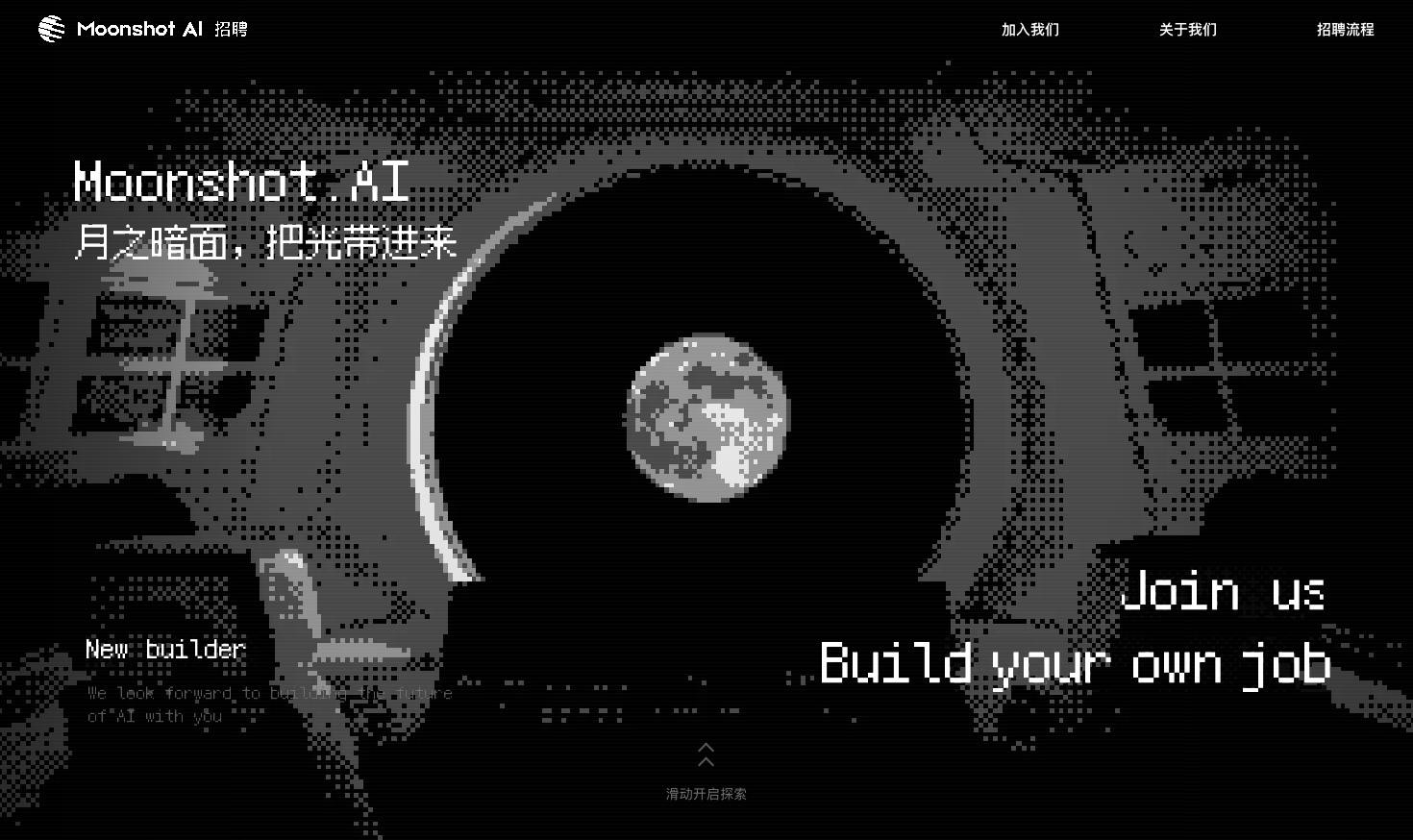
Careers Website Design
A Kimi careers study built from eight lunar scenes, with scroll-linked transitions and an illustrated application process.
Website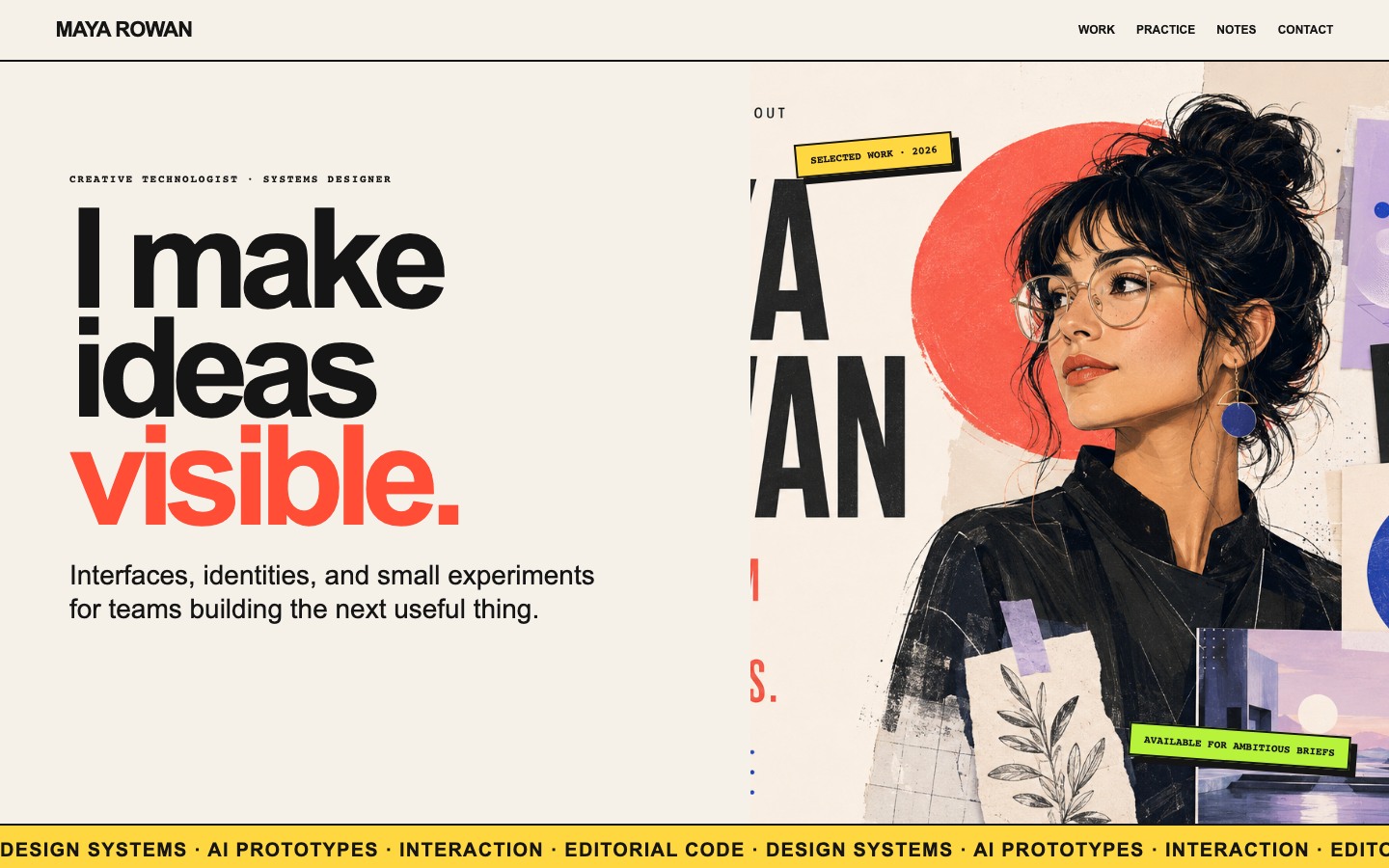
Creative Portfolio Website Design
Maya Rowan’s fictional portfolio connects project cards, practice, and notes.
Website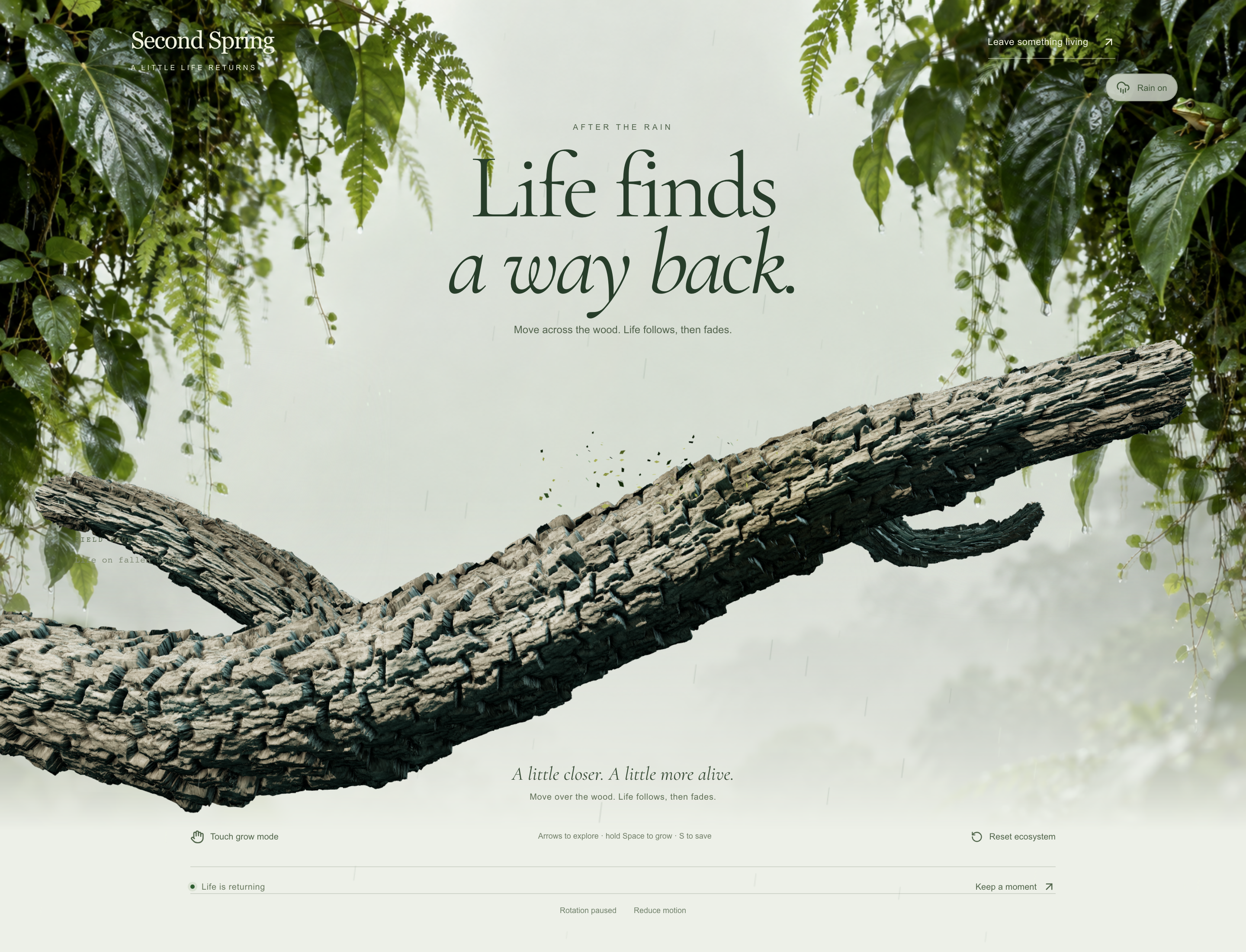
Forest Restoration Website Design
Explore Second Spring, where an interactive fallen branch leads to forest field stories, a restoration plan and simulated ways to contribute.
Website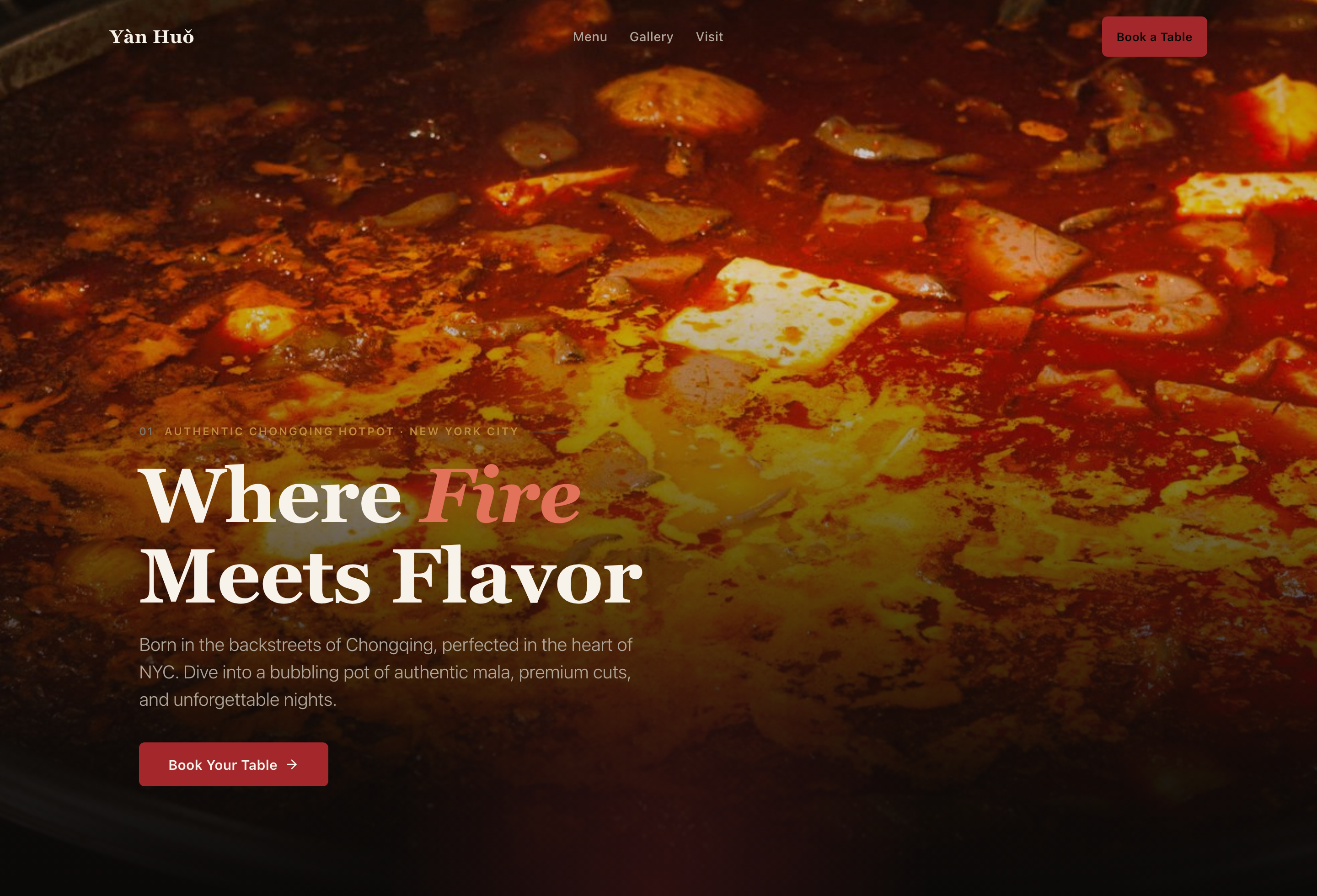
Hotpot Restaurant Website Design
Yàn Huǒ introduces hotpot through a priced signature menu, a dining gallery and visit details before booking.
Website