Creative Studio Portfolio
Prompt preview
Present three projects with discipline, role, year and case-study links; use expressive type and an asymmetrical image grid.
THE DESIGN PROMPT LIBRARY
Design prompts for websites, apps, dashboards, slides, graphics and video. Preview the reference, add your brief and copy the prompt into your project.
Present three projects with discipline, role, year and case-study links; use expressive type and an asymmetrical image grid.

Establish the website as a flat scene; travel down its sections; rise to a full-page overview; return to the hero for the closing title.

Establish a verified milestone; show the period it covers; connect it to the product story; end with a concise acknowledgment.

Show clean editable interface content; apply a brief glitch interruption; restore the same underlying layout.

Choose one real app task; establish its key screen; animate a useful interaction; resolve on the result and app name.
Record a trail entry with a photo and optional location, save it on the device, then show exactly which entries are waiting to sync.

Introduce the game’s real play loop; show desktop and mobile use; reveal approved visual themes; close with a playable destination.
Show recent work, assigned tasks, deadlines and project activity with clear priorities.

Land a first-second brand hook; explore typography and shape play; change scale with a consistent camera language; settle the brand identity.

Establish the listening stage; introduce playback UI; turn musical energy into motion; finish on a controlled product tableau.

Explain why the task matters; show the current friction; demonstrate the actual product change; summarize the useful outcome.
Build six slides: problem, current workflow, approach, three capabilities, evidence and next action.

Read the supplied repository; identify approved screens and assets; compose the feature story; connect motion and sound to the real interactions.

Introduce the real voice-product hero; move through its supplied page; let selected components lift toward the camera; finish on a concise closing line.
Land a short hook; push words through the frame; connect typographic scenes with a clear transition motif; hold the closing message.

Identify the real product promise; build a short visual story; align meaningful transitions to music; hold the product identity.
Enter ingredients with quantities and expiry dates, find meals using those ingredients, and add only missing items to a shared shopping list.

Introduce an approved analysis task; show the supplied chart or research input; reveal the supported analysis view; close on the app identity.
Build a 3:4 poster with exact event name, date, venue and organizer credit using type as the main visual.

Introduce the frequency bars; follow the soundtrack’s energy; resolve on the final audio decay.

Introduce the ranking metric; reveal the lowest ranked entry; move through the comparison; finish on the leader.

Introduce the covered years; launch trajectories in chronological order; fade completed paths; hold the time overview.
Reveal three narrative stages as the reader scrolls through a bounded section.

Identify the strongest project; establish its visual identity; show a contrasting project; connect the work through credits and a closing contact.

Introduce a first-person service narrator; draw a simple finance scenario; explain the supported action; close with a restrained identity.

Introduce a learning problem; reveal the actual guide collection; focus on one useful guide; connect it to the intended reader.
Choose an origin, destination and departure time, review a clearly labeled demonstration fare, then show a sample ticket and its validity period.
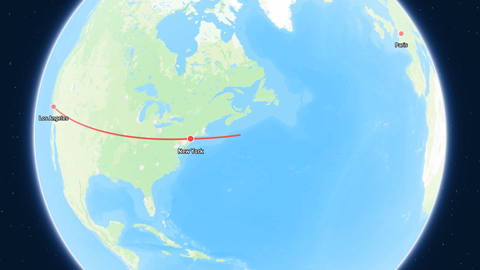
Establish the starting city; trace the first leg; move to the next destination; reveal a recognizable landmark.

Establish a physical scene; drop the ball onto timed objects; change environments at musical boundaries; resolve its last landing.
Explain one product promise, show its core workflow, list three verified capabilities and offer one next action.

Establish the verified user milestone; express a specific acknowledgment; connect the moment to the product community; hold a thank-you frame.

Introduce the product’s concrete purpose; draw marker annotations around meaningful elements; move between light and dark beats; close on the actual mark.

Establish the empty glass; add the supplied measured ingredients; show mixing and texture; hold the finished drink.
Present a primary metric, date range, comparison period and supporting breakdowns.
Ask for the product name, eight to twelve UI states, approved interface labels, a single accent color and a licensed music track. Use [APPROVED_CONTENT] for text and [BRAND_RULES] for visual constraints. If music or a required asset is missing, identify the gap before rendering. For a silent draft, use a 120 BPM timing grid and label it as a timing preview.
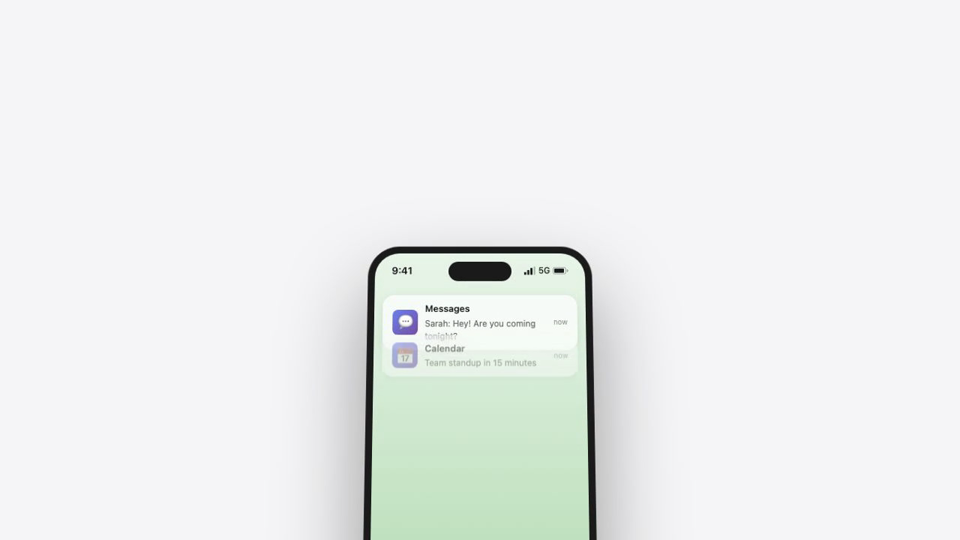
Reveal a large device from below the frame; rotate toward the viewer; settle into a legible product hold.
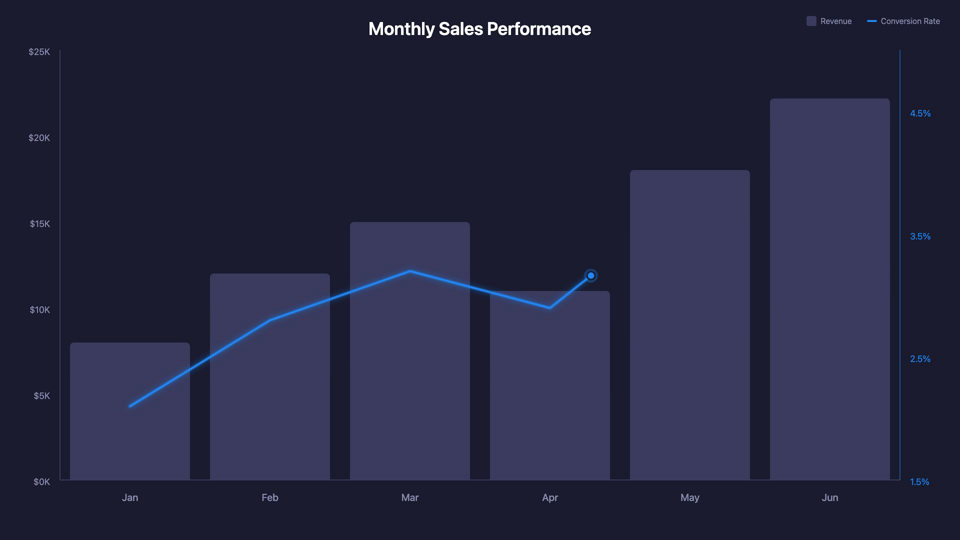
Establish monthly labels; grow revenue bars from one baseline; draw the conversion line; hold the completed comparison.
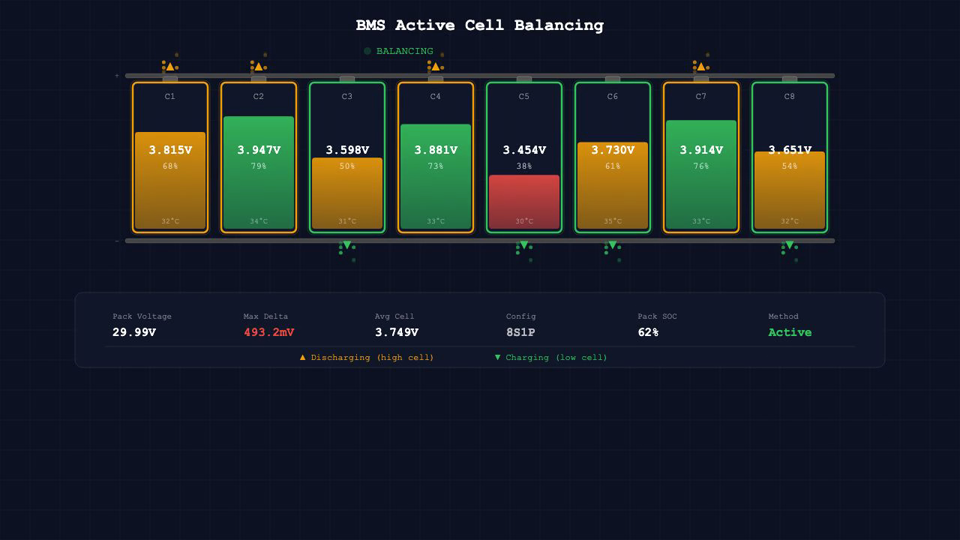
Show eight battery cells and initial charge levels; reveal the energy transfer path; update levels together; hold the balanced pack.
Organize books by reading state, record a page or chapter, and save a quotation with its source and a personal note.
Build five slides: research question, method, observation, alternative explanations and recommendation.

Land the speaker’s name; introduce an authorized portrait; build technical rings and information; settle the identity.
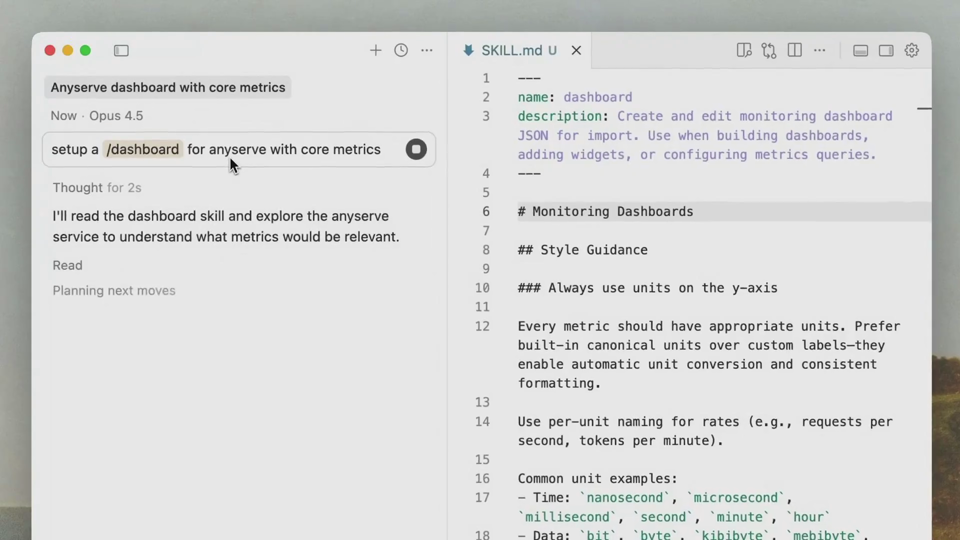
Type the release headline; explain the skill concept; play an actual workflow recording; close with the release identity.

Establish a line of text; move a circular lens over it; reveal magnified details; move the lens away.

Type an installation command; reveal the desktop workspace; demonstrate one agent task; close with a real project destination.

Open with a music discovery question; introduce the shop identity; reveal a row of album art; end on a purchase destination.
Adapt one approved campaign message into square, portrait and landscape compositions.
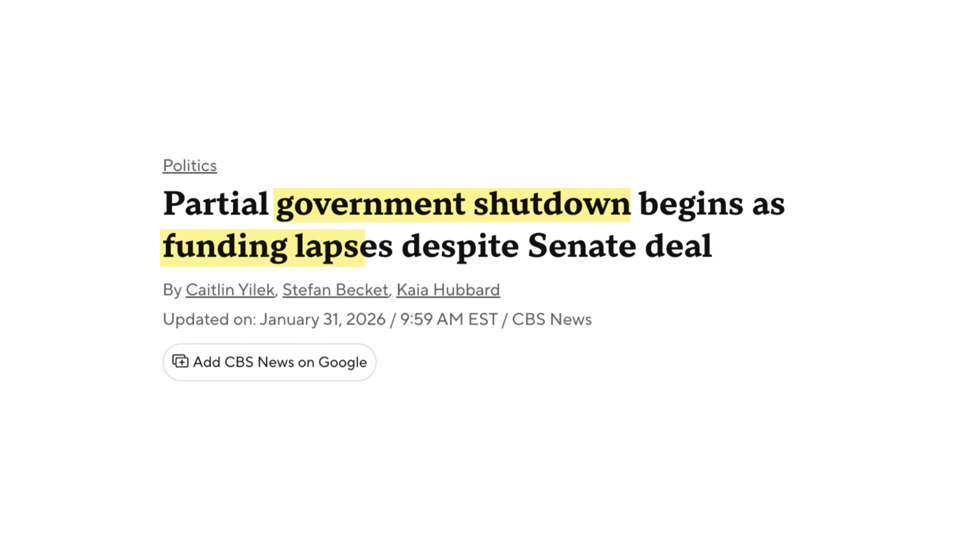
Frame an article screenshot; bring it into focus; sweep marker strokes behind selected words; hold the highlighted headline.
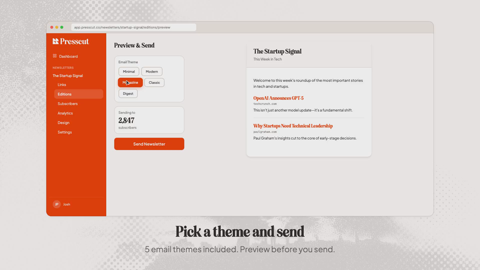
Show the customer’s initial task; demonstrate the product action; reveal its useful result; close with a clear next step.
Introduce the terminal product; show its defining workflow; emphasize a useful interaction; settle the wordmark.
Select a short practice session, answer a listening question with a text alternative, and review specific answers without inventing a proficiency score.

Introduce the speaker’s specific point; add an animated concept label; support the explanation with a diagram; hold a concise recap.
Let project cards overlap progressively while preserving captions and case-study links.
Arrange a row of geometric forms; lift and rotate them; morph each into its target letter; settle the complete wordmark.
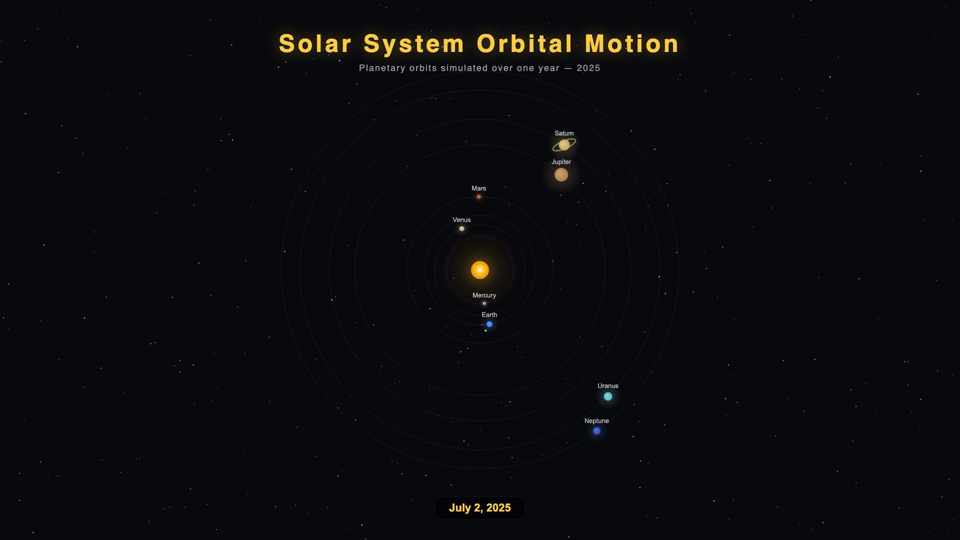
Establish the sun and planets; start their orbital motion; show the time reference; finish with an explanatory hold.
Lead with a concrete developer task, a readable code example, setup requirements and a documentation link.
Introduce the supplied vector mark; extrude it into depth; rotate through a controlled light; apply a brief glitch accent; resolve front-on.
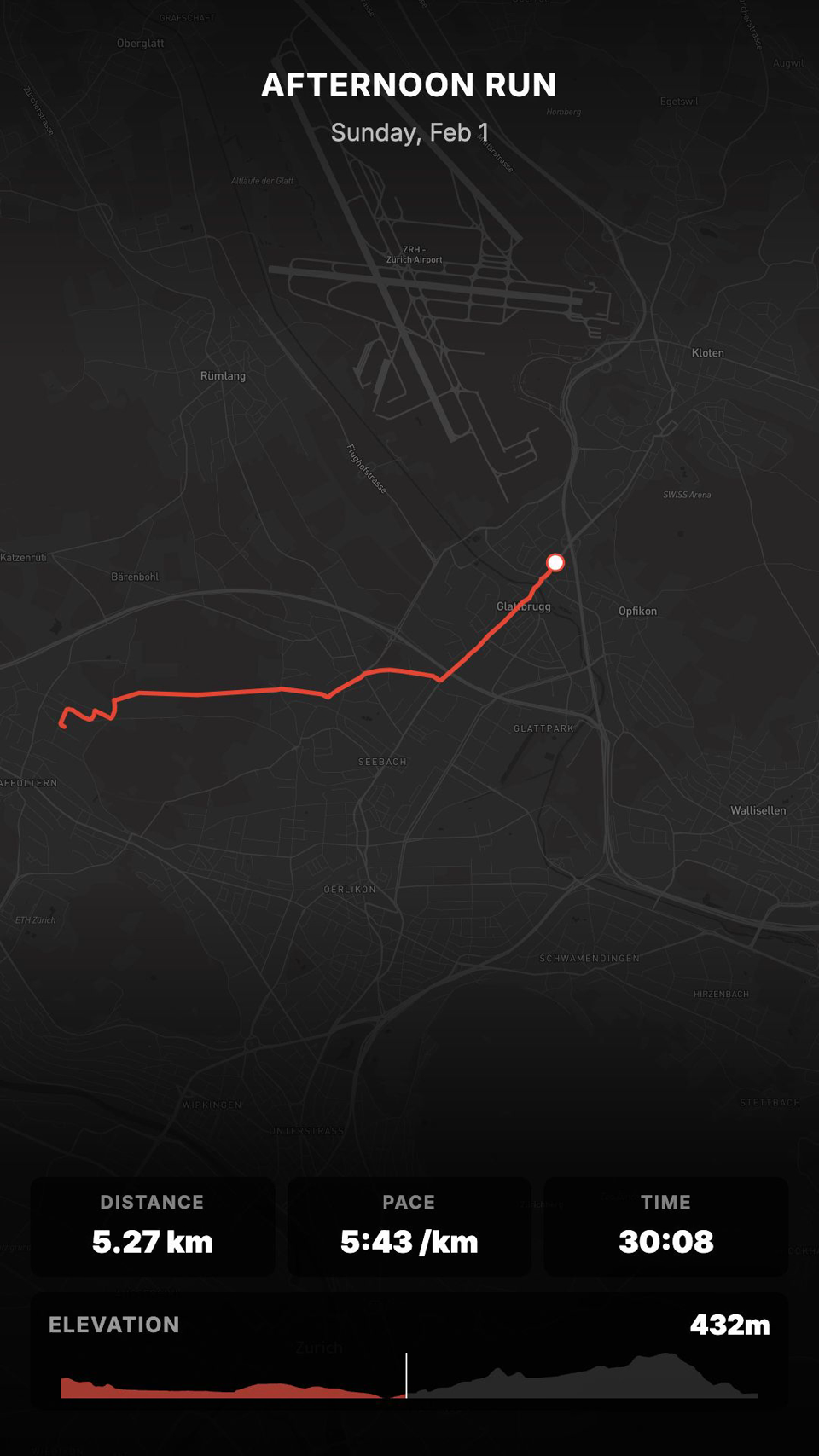
Establish the map; trace the recorded route; update distance and pace; finish with a summary of the activity.
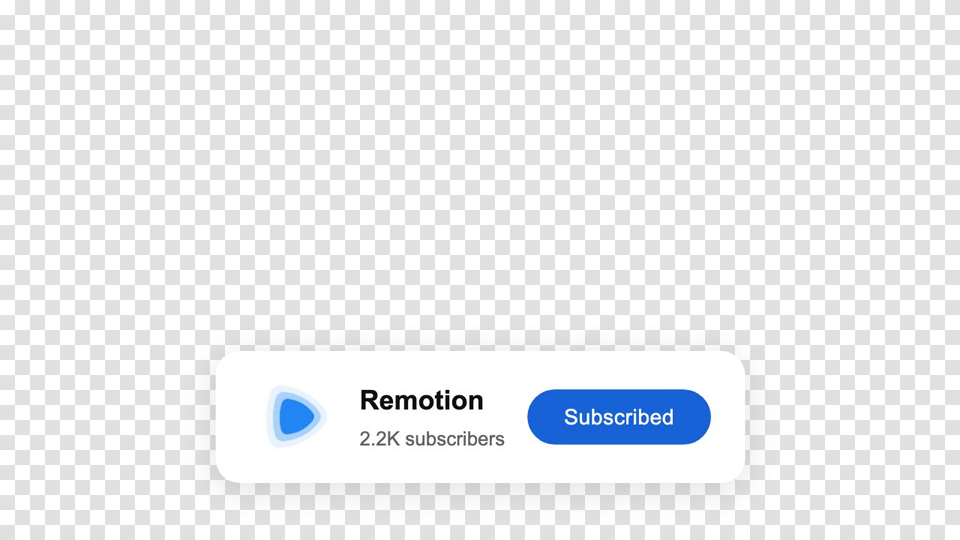
Slide in an identity strip; reveal the supplied channel information; animate a deliberate button press; remove the overlay.
Track user-defined watering schedules, record a care action and photo, and reschedule a reminder for an individual plant.
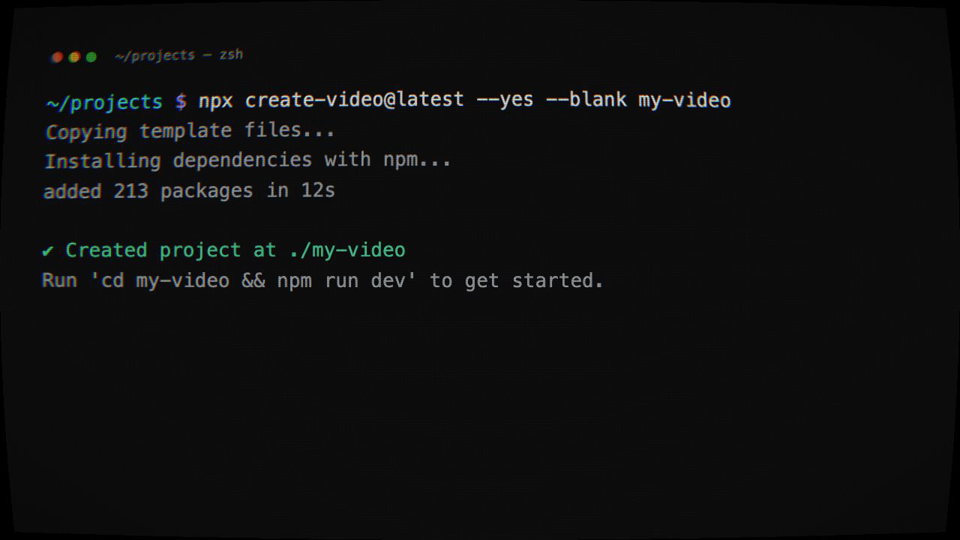
Type a terminal command; reveal its output; introduce restrained screen curvature; resolve on legible terminal content.
Draw a heavy ring; rotate the notch into its locked position; introduce the wordmark; hold a short tagline.
Show plan, billing period, invoices, payment method and change-plan flow.
Trace the enclosing ring; draw and fill the central play mark; introduce the wordmark with a small spring settle; finish with the tagline.
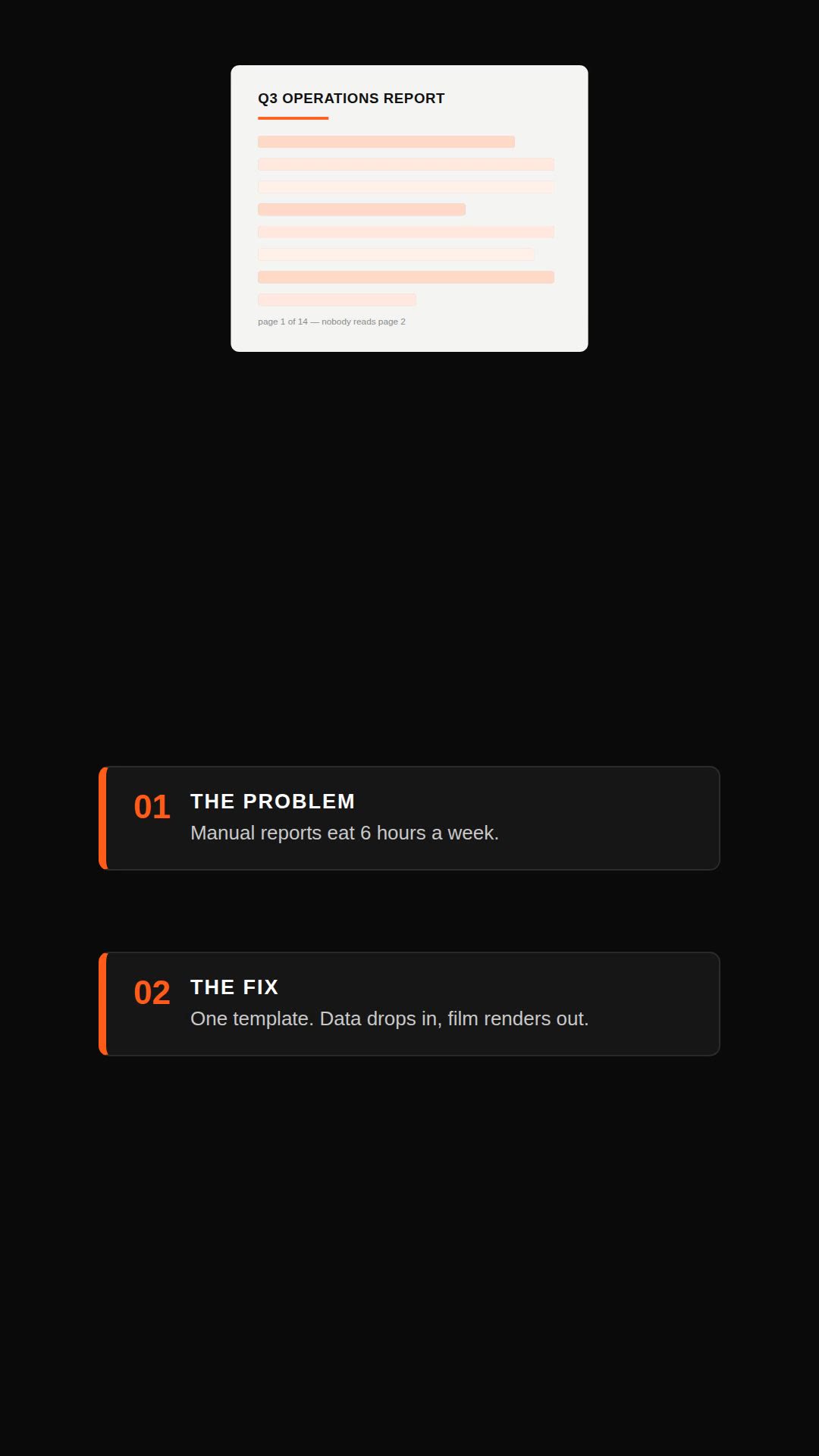
Show a report page; highlight three relevant passages; shrink the source document; arrange three numbered takeaways below.
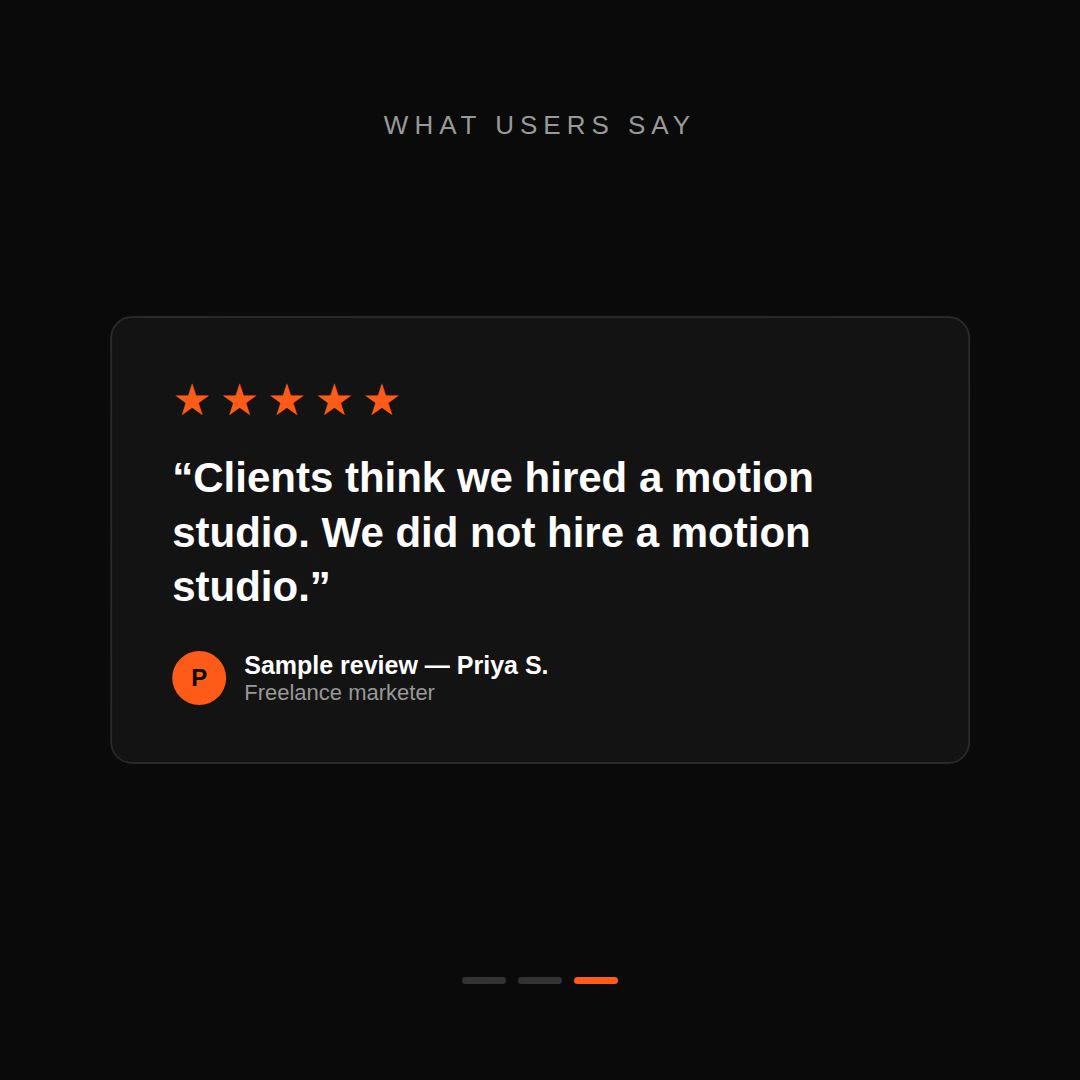
Introduce the review heading; hold the first quote; exchange cards along one horizontal path; finish on the final attribution.
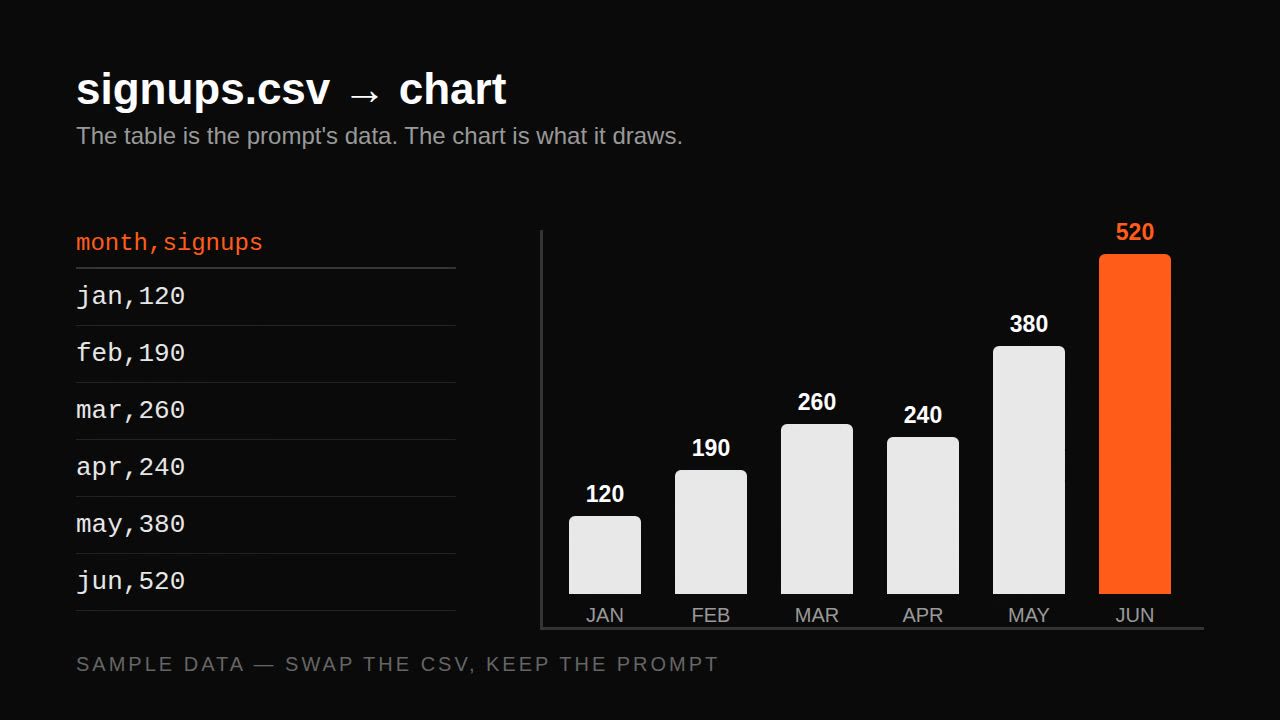
Reveal source rows; build the matching chart; emphasize the actual maximum; hold the completed comparison.
Structure problem, audience, solution, business model, evidence, team and funding use.
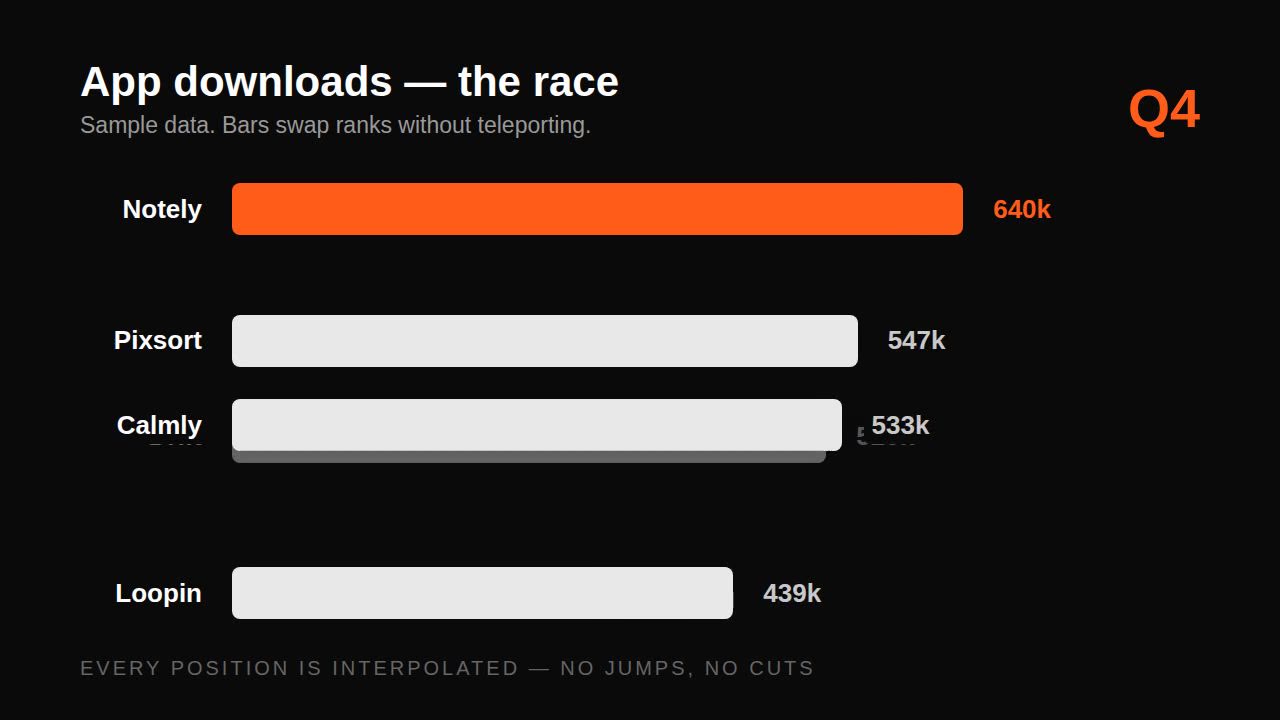
Establish the first period; interpolate values into the next period; move bars through rank crossings; hold the final ordering.
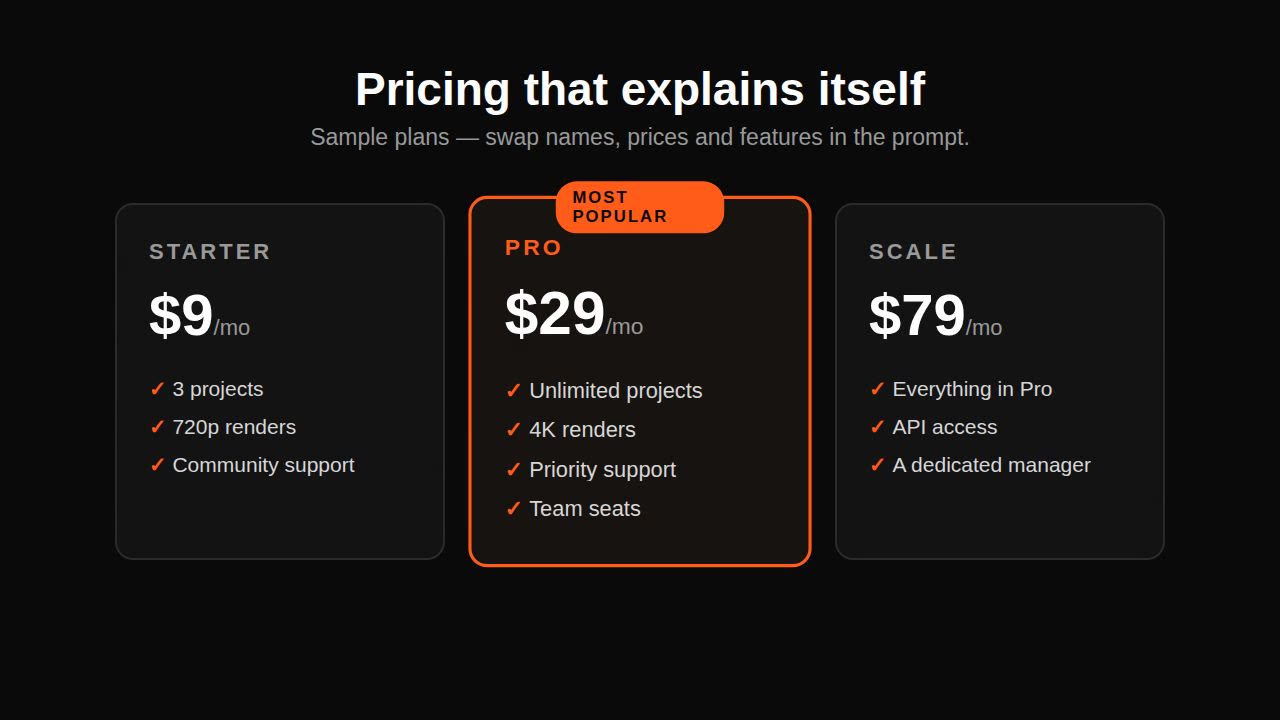
Introduce plan names; reveal comparable plan cards; emphasize the approved recommended tier; hold the real CTA.
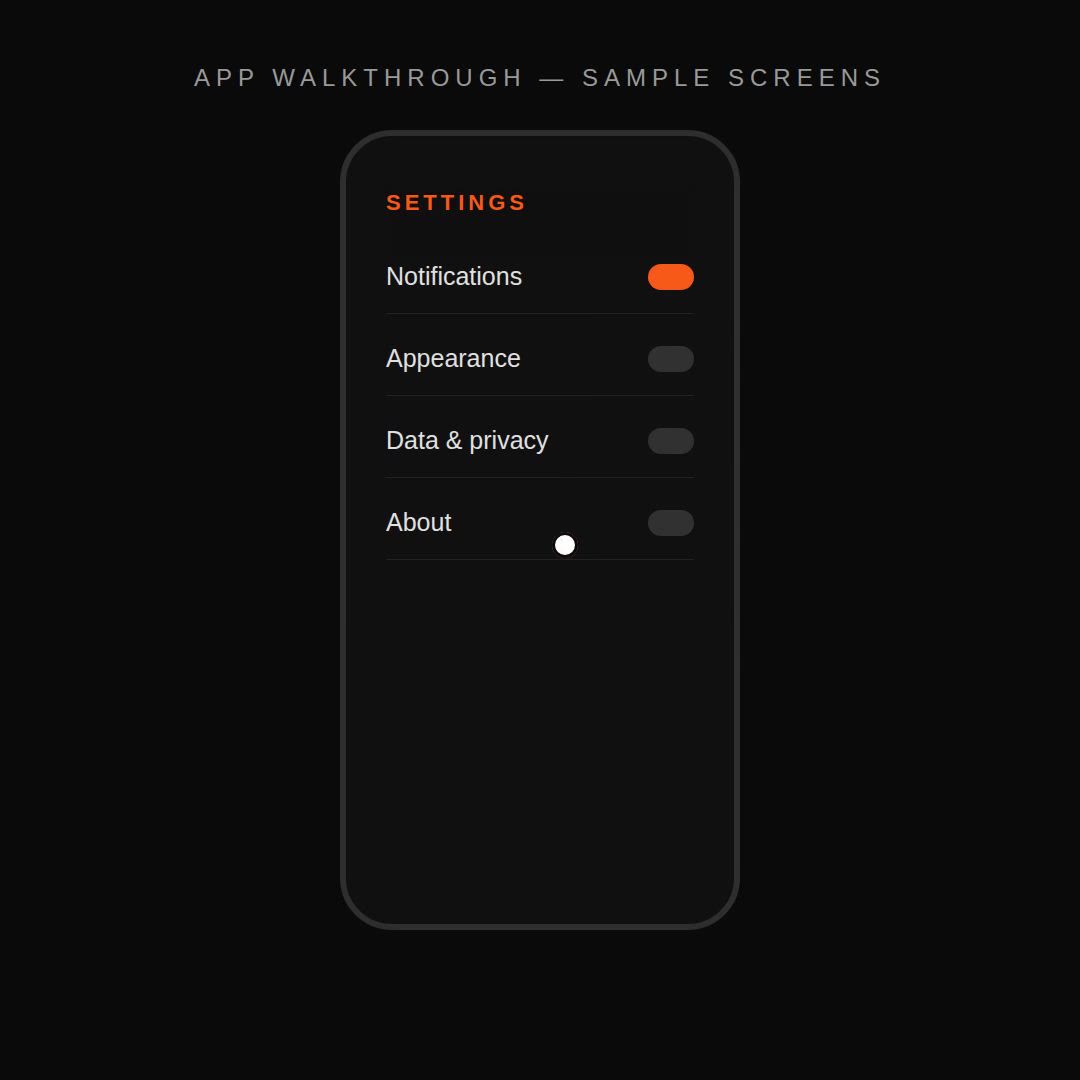
Establish the phone frame; show the Home screen; move to Insights; visit Settings; close on the completed task.
Browse an exhibition, open an artwork with creator credits, and control an audio guide with a synchronized transcript and download status.
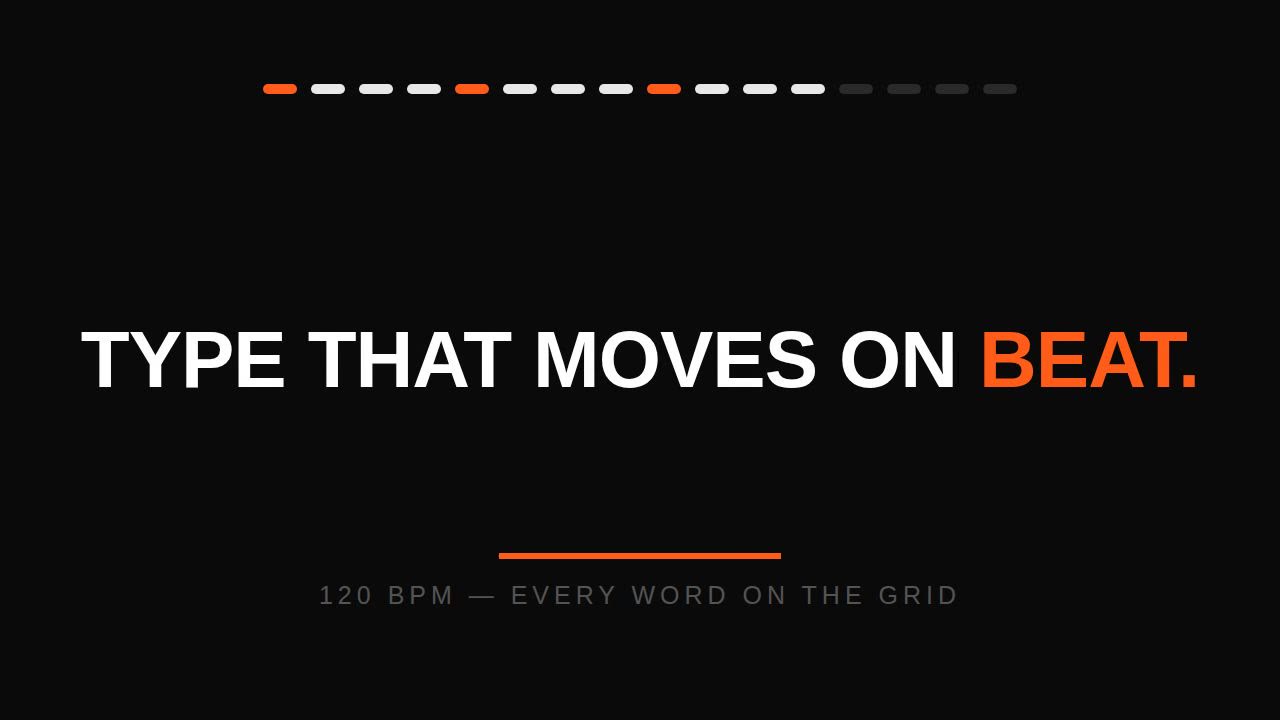
Establish the beat grid; introduce words on successive beats; emphasize the final key word; hold the complete phrase.
Create a launch visual with one product message, a supplied product image and an availability note.
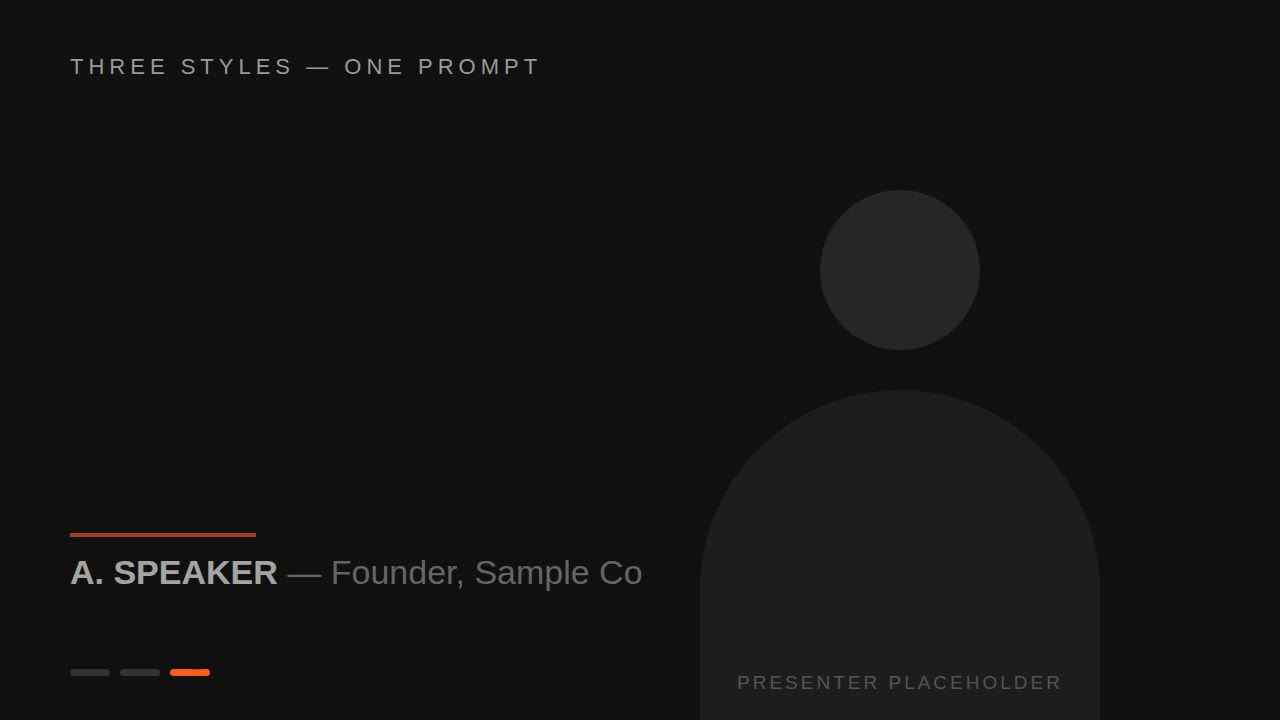
Introduce a presenter placeholder; reveal a name bar; compare restrained overlay treatments; remove the final lower third.
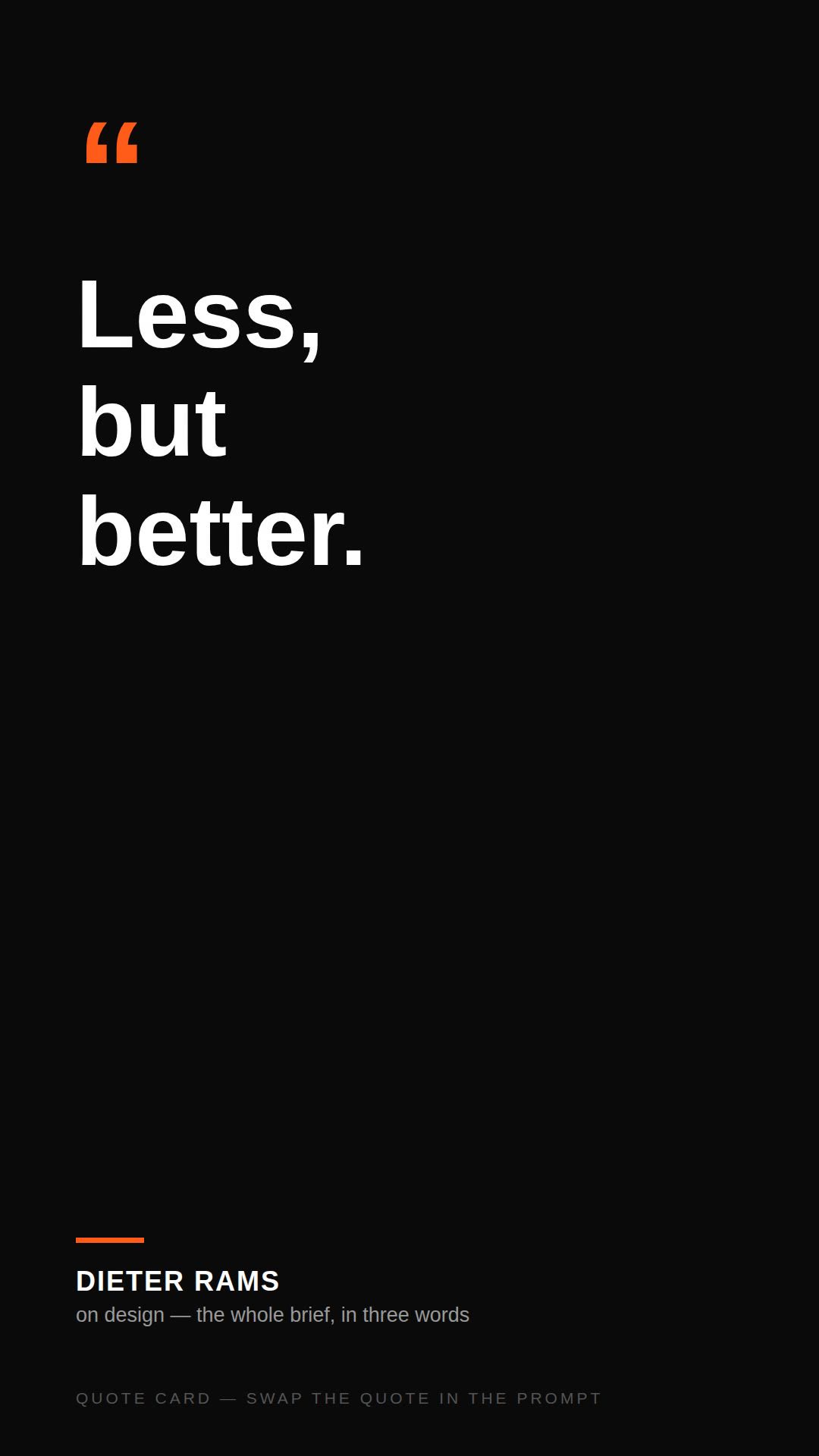
Introduce a quotation mark; reveal the approved quote in deliberate lines; draw an accent rule; settle the attribution.
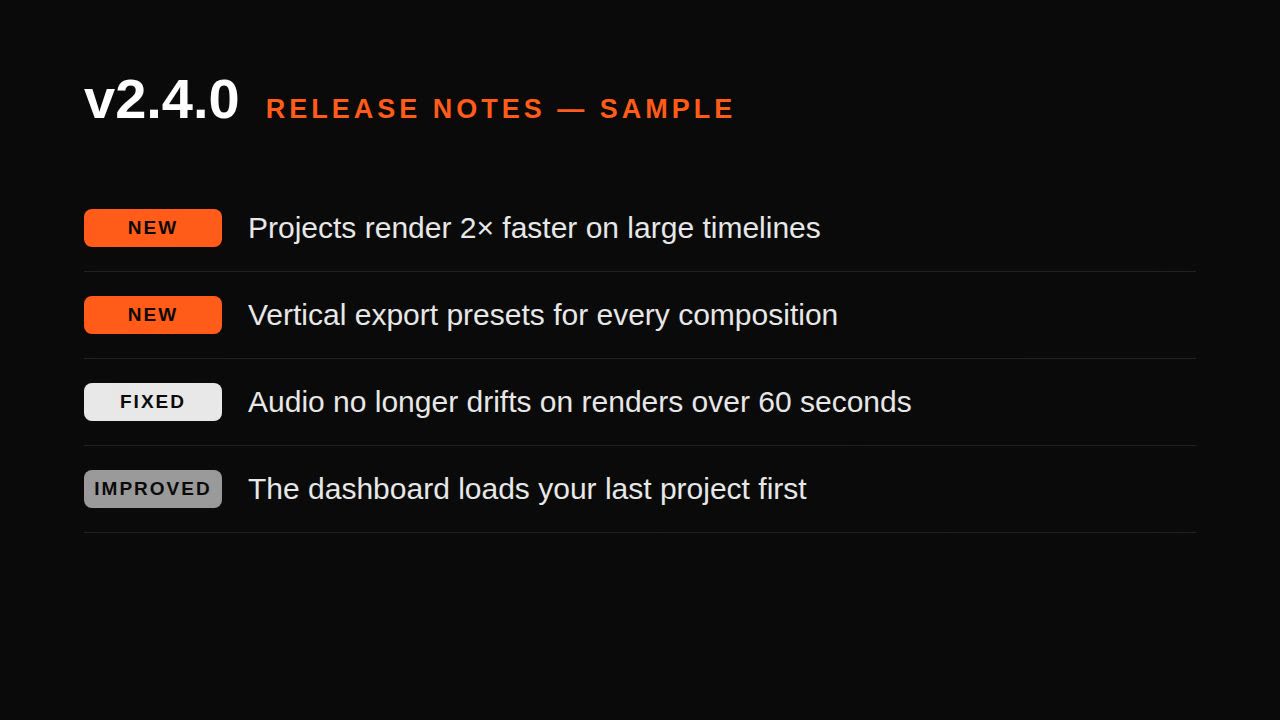
Introduce the version; reveal release-note rows; distinguish new, fixed and improved changes; close on the full notes destination.
Translate a bounded scroll section into a horizontal sequence of captioned projects.

Introduce the wordmark; select real photos; transform interface surfaces into print layouts; resolve on the finished photo product.

Introduce an editorial visual idea; combine authorized imagery with painted accents; vary scale through short compositions; close on the brand mark.

Start with an empty glass; add measured ingredients in order; show mixing and garnish; hold the completed recipe.

Type a real user request; turn the request into a useful result; reveal two relevant features; end on the product identity.
Assign household tasks, agree on a recurring rotation, and mark an occurrence complete without changing the entire recurring schedule.
Organize built work by project type, location and year using photographs at their original proportions.

Land one short hook; turn it into an actual UI action; show authorized vertical clips; highlight the useful output; finish on the product mark.

Identify one real growth workflow; demonstrate its input; reveal the product’s actual output; close with a relevant CTA.

Establish one small recursive problem; show a nested version; change visual genre while preserving the same logic; return to the original call.

Introduce a link-related user task; demonstrate the real interface action; reveal the associated result; settle a clear product identity.

Establish the customer’s problem; introduce the service; explain three steps; show a supplied proof point; close with the business identity.
Invite collaborators by email with role selection, pending invitations and resend states.

Establish the logo’s construction pieces; align them progressively; reveal the complete mark; hold a clean final identity.

Introduce one approved capability; demonstrate a meaningful money-movement concept; connect it to the intended audience; close on the brand.
Explore sessions by time and track, build a personal agenda, and show conflicts, room changes and event notices.

Open on a typographic impact; switch between display, supporting and code-like text; use controlled print offsets; return to the opening composition.

Click an opening control; carry one accent dot into typography; turn it into a graph or geometric form; land it on the closing card.
Connect a client's problem to proposed scope, deliverables, timetable and commercial assumptions.

Interact with a slider; release the white ball into the scene; let its impact trigger notifications; return to the opening layout.

Introduce the next release theme; reveal a limited approved feature clue; show the intended benefit; close on the launch identity.

Introduce a real developer problem; break the product UI into editable parts; demonstrate its output; resolve on the actual logo.
Translate the article's main tension into an original restrained visual with room for the title.

Introduce an email task; show the supported action; reveal the organized result; finish with the product’s next step.

Introduce the model’s approved positioning; show a range of authorized outputs; connect prompt inputs to results; close on the product identity.

Establish one thought; build competing typographic paths; let the visual complexity peak; resolve to a deliberate final statement.
Organize delivery updates, display a fictional pickup code with expiry, and let the user record that a parcel has been collected.

Type a craving; reveal a set of relevant food results; focus on the chosen dish; land the product’s closing identity.

Introduce the release version; show a concrete styling example; reveal the developer-facing change; hold the package or documentation identity.
Introduce a short headline through a restrained line-by-line entrance.

Introduce an approved identity statement; illustrate a concrete capability through an example; connect it to the user’s task; finish on a clear name.

Present a website task; show a visible browser action; reveal the completed result; close on the project’s real entry point.

Introduce the target founder task; show a small number of real product moments; connect them into a short outcome story; hold a brand-accurate end card.

Introduce one agent use case; show its required input; reveal a real supported operation; finish with the platform identity.
Present staff picks, opening hours, events and a browsable catalog with author and format details.

Grow a single dot into a desktop terminal; introduce chart and order-related panels; move between scales; reveal a mobile landscape arrangement.

Define the model and notation; draw a simplified example; introduce symmetry breaking; explain the consequence with a short narrated recap.

Introduce the workflow’s input; draw the sequence of tool steps; show the output handoff; close with a concise recap.
Allocate a manually entered monthly budget to spending envelopes, move an amount between them and review the resulting balances.

Introduce the approved platform concept; identify the agent’s role; explain the supported workflow; end with the product identity.
Compare roles across actions and show inherited versus custom permissions.

Hook with one customer task; show product proof; explain the approved AI-assisted step; finish on a concrete demo outcome.

Identify the product story in the supplied design files; select its strongest interface moments; animate those components; finish on the approved identity.

Introduce the opening speech line; use earlier words as spatial structure; build each new phrase onto that structure; land the final declaration.
Organize goals, actual results, drivers, risks and next-quarter decisions.

Introduce the bookkeeping product’s visual identity; reveal a refined financial UI moment; connect it to a useful work result; settle a restrained closing frame.

Establish the locked badge; reveal its material and depth; release a brief celebration; settle the unlocked state.

Introduce one approved coaching task; show its actual input; reveal a supported recommendation view; close with the product identity.
Record feeding, walks and owner-supplied care notes for multiple pets, then collect appointment questions and documents in one place.

Introduce the community metric; establish its time window; reveal a comparison of verified groups; finish with a readable summary.

Introduce a knowledge-capture problem; show the approved organization workflow; reveal a useful retrieval moment; close on the service destination.
Combine show identity, episode topic, guest credit and a strong thumbnail hierarchy.

Open with the product’s main task; show one recognizable action; reveal one useful output; hold a concise identity.

Establish the platform’s real audience; identify its supported workflow; show a small sequence of inputs and outputs; finish with a clear entry point.

Introduce an approved SEO workflow; show its required input; reveal a real tool output; end on the product’s next step.

Research the actual product; establish its audience and problem; demonstrate several supported moments; close with a clear outcome.
Design a menu opening and closing sequence that clarifies the navigation hierarchy.

Introduce the actual design task; show a useful tool interaction; reveal an authorized output; resolve on the brand identity.

Define a timeline-driven visual story; calculate each state from time; capture repeatable frames; assemble the final video with approved audio.
Browse fictional market stalls and produce, save quantities to a shopping plan, and group the plan by stall for an in-person visit.

Inspect the supplied frontend; identify a supported voice workflow; animate actual product components; finish on a clear user result.
Build an event narrative with tracks, schedule, speaker roles, venue and ticket options.

Establish the app’s actual social interaction; show the relevant interface state; demonstrate a supported response; close on a recognizable identity.
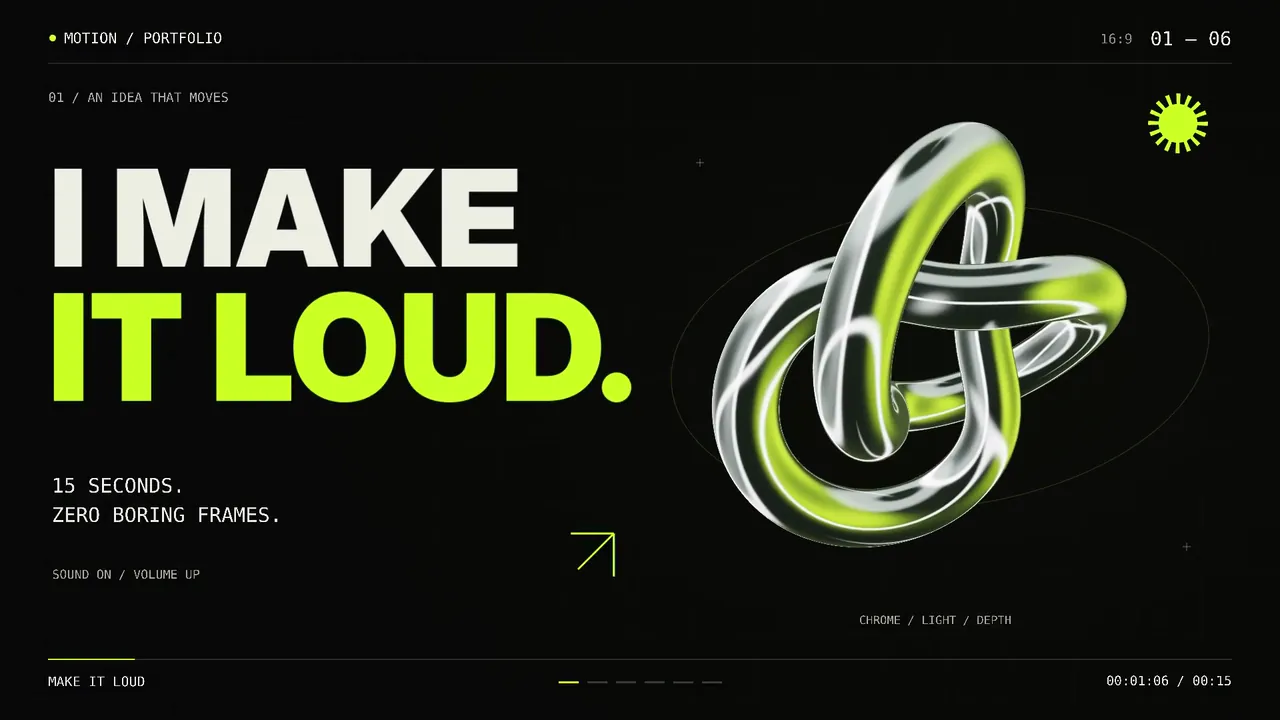
Introduce a short two-tone headline beside a chrome knot; rotate the knot through a readable silhouette; pass its circular motion into a particle or grid composition; settle on the supplied identity.

Open with one oversized word on a warm color field; multiply a dot into a patterned composition; sweep a ribbon through the type; resolve the pattern into a calm wordmark.

Frame an approved photo workflow inside a neon HUD; introduce a striped sunset and wireframe landscape; carry a photo card through a tunnel transition; close on the real app identity.
Guide users through goals, workspace setup and optional personalization with a review step.
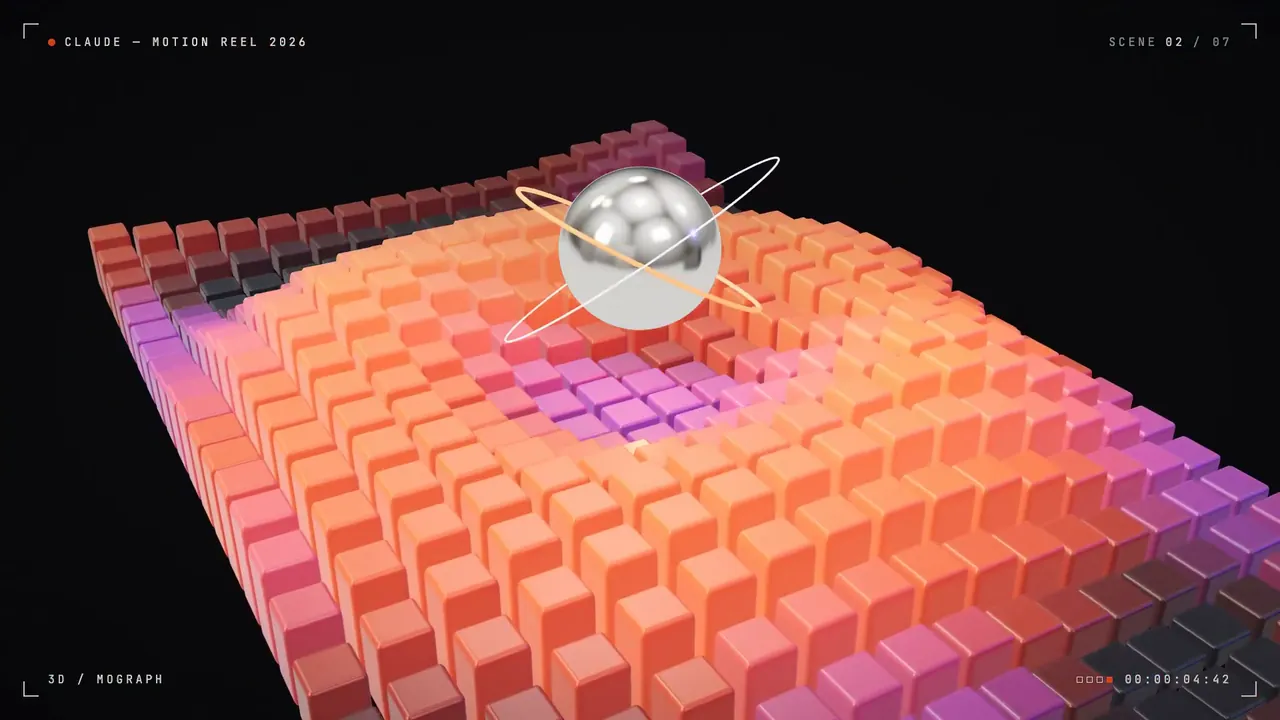
Reveal a bold typographic hook; send a wave through an orange voxel field; connect the raised blocks to a particle or data composition; finish with a compact identity card.
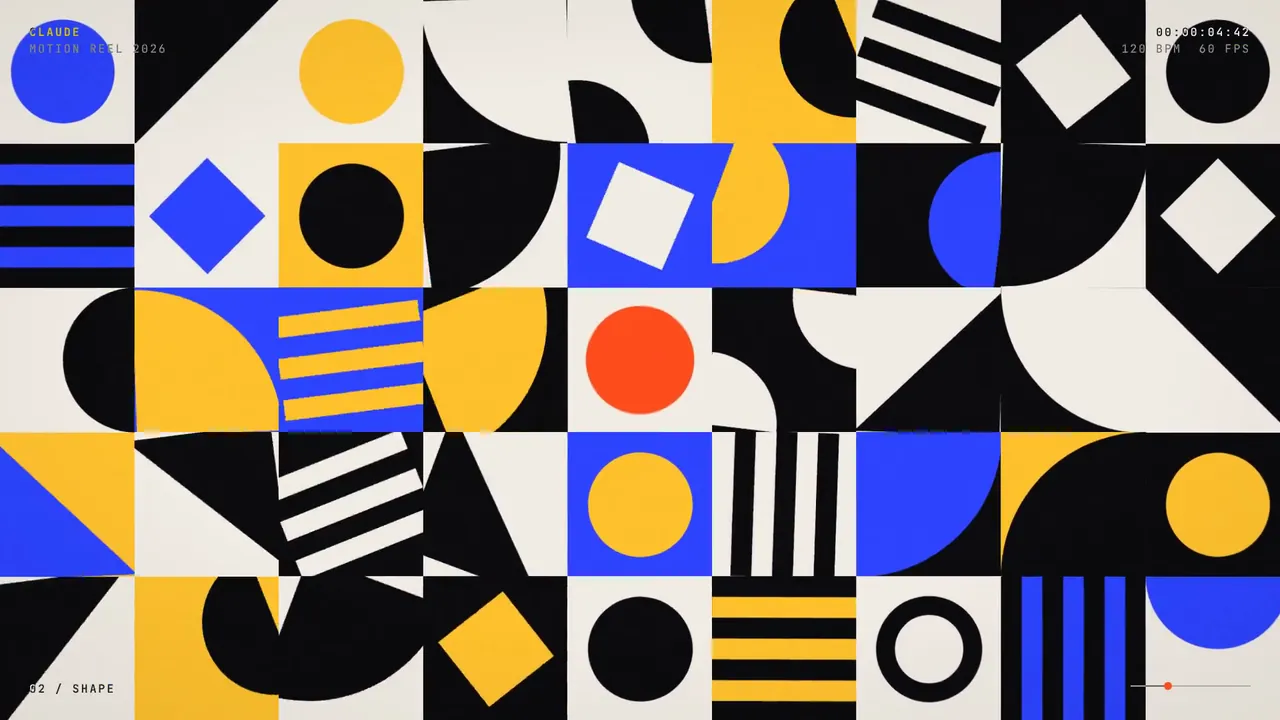
Place a single accent dot on a primary-color layout; build a grid of circles stripes and diamonds; reorganize the tiles around a large word; return the dot to a closing composition.
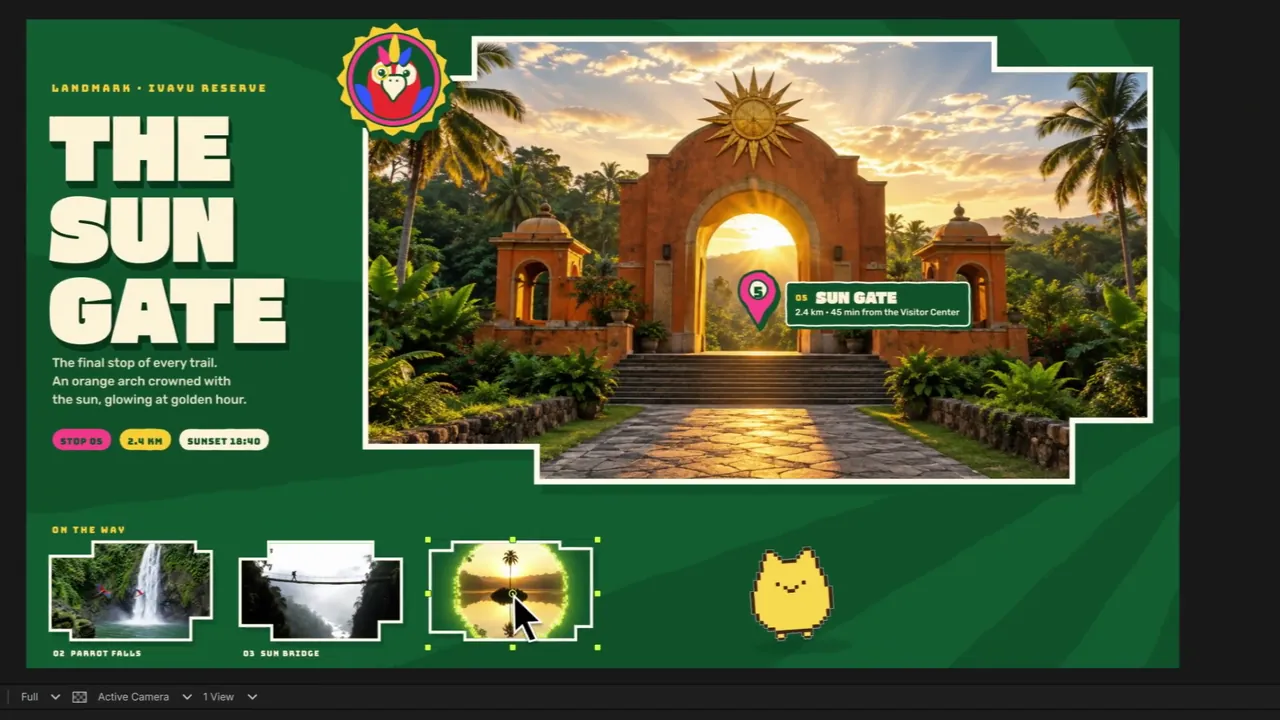
Establish an authorized reserve landscape; reveal a green and cream identity board; introduce a mascot or sticker derived from approved assets; combine the system into a closing brand scene.
Choose a task and timer duration, pause or finish a session, and record a short reflection without turning interruptions into failure.

Introduce a real product benefit on a dark grid; glide translucent panels into a feature composition; trigger a supported interface response; pull back to an overview and final logo.
Present the design problem, constraints, alternatives, chosen direction and open decisions.
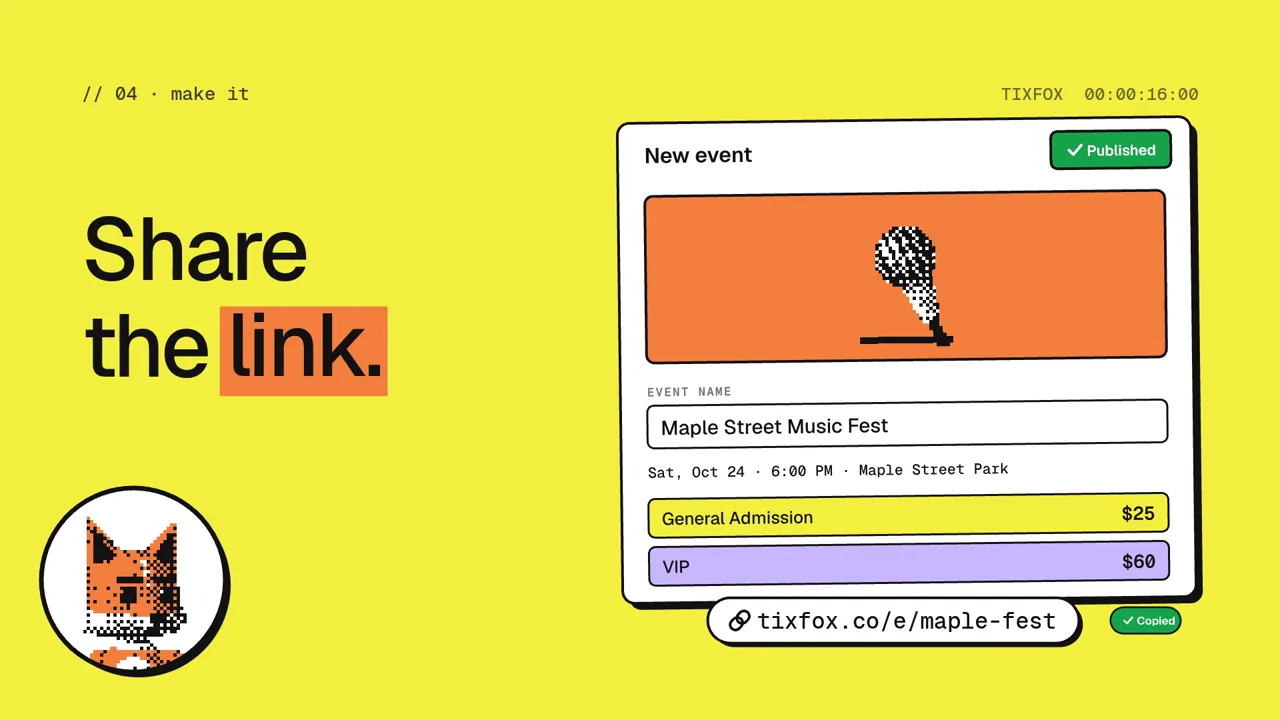
Introduce an approved ticket offer with a pixel mascot; explain the event link and creation workflow; demonstrate a ticket selection in the real interface; end on the authorized event destination.
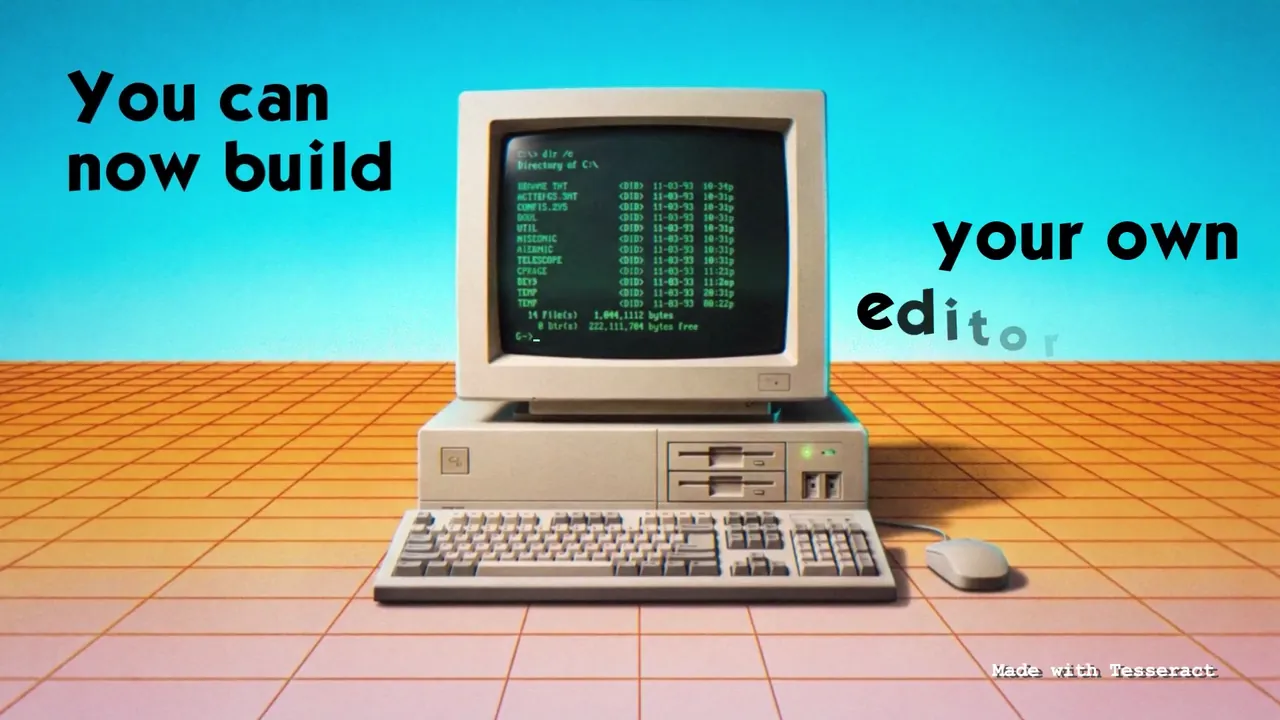
Establish a beige computer in a colored grid world; introduce an editable timeline on its CRT; zoom into the screen as it becomes the next composition; close on the actual editor workflow.

Introduce a small character on a paper-like ground; follow a circular opening into an indigo space; carry its silhouette through rings and branching light; return to a quiet grounded scene.

Reveal a central eye-like focal point; build concentric curves around the pupil; modulate color and orbiting accents; let the pattern decelerate into a quiet final frame.

Establish a warrior silhouette in a fixed arena; move through a small sequence of readable poses; attach fire trails to the moving limbs or weapon; return to a balanced resting stance.
Prioritize the session topic, date, timezone, speaker and registration action.

Introduce one approved API capability; animate a compact request and response motif; connect the result to a branded geometric scene; close on the real documentation destination.
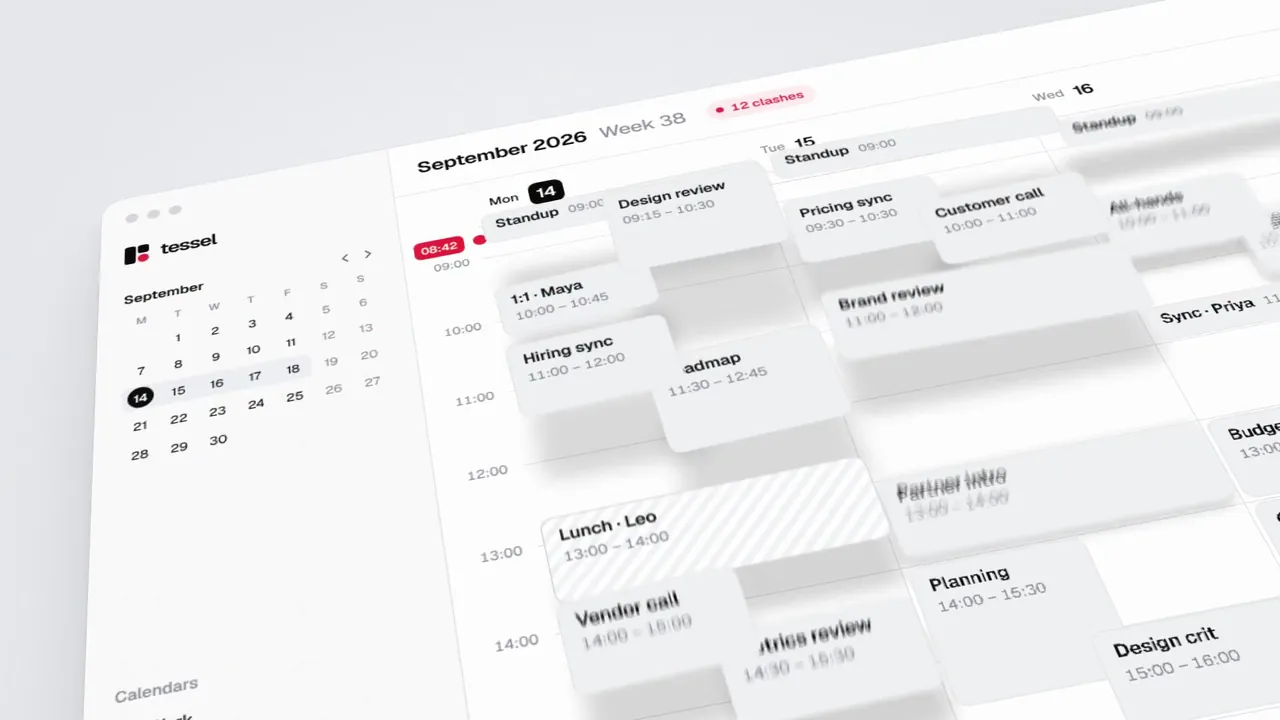
Establish the calendar's real weekly layout; zoom toward a meaningful scheduling interaction; show the interface reorganizing after the action; pull back to a clean closing view.
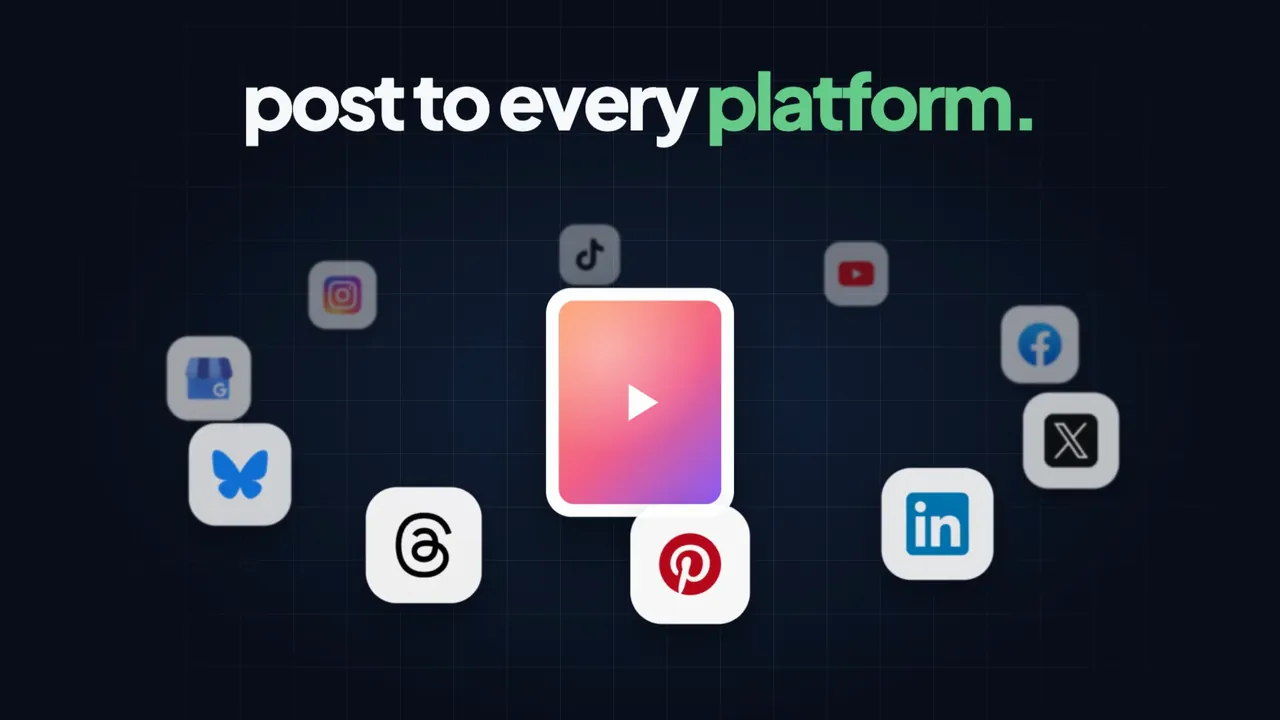
Introduce one approved draft; surround it with the supported publishing destinations; show the draft moving into a small publishing queue; confirm the actual result and closing CTA.
Build a practice session from exercises, set a target tempo and duration, then log the tempo actually practiced and a recording note.
Animate disclosure panels while preserving section labels and open-state feedback.
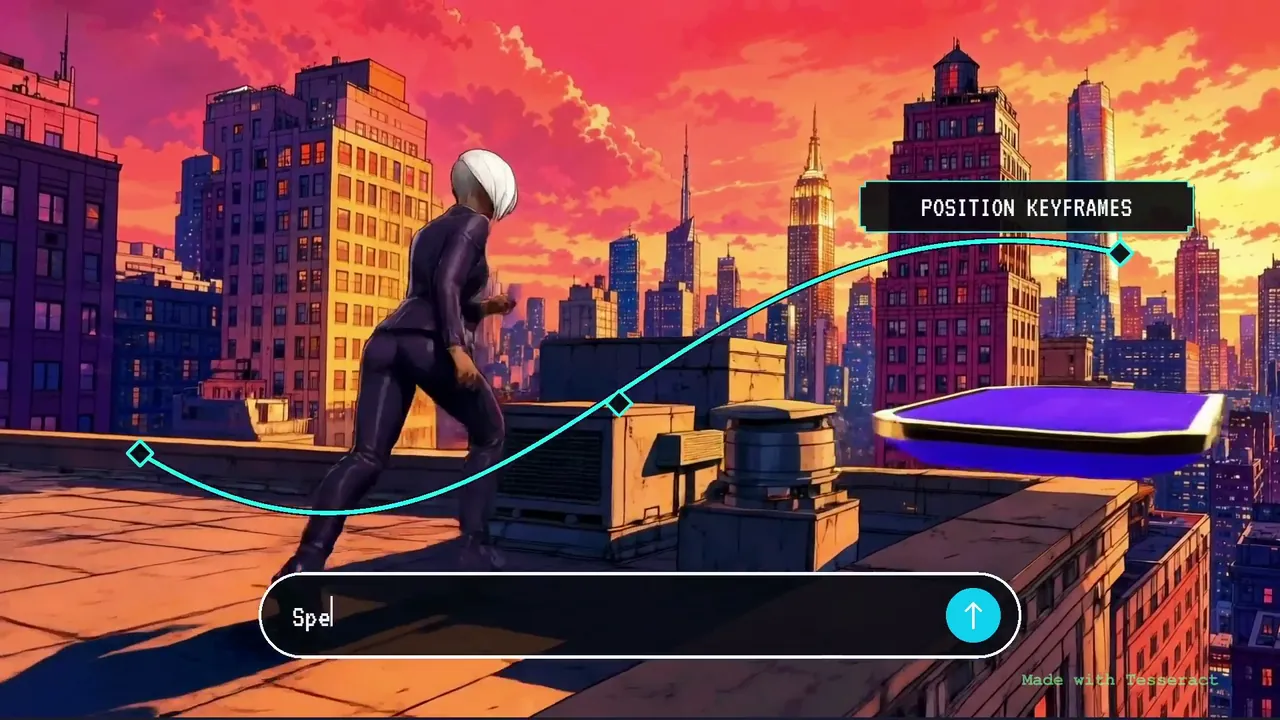
Establish a single environment and a command bar; apply one visible environment change; reveal its camera or keyframe path; resolve the transformed scene inside a final display frame.

Introduce the studio's visual premise; alternate authorized identity boards and interface scenes; connect contrasting treatments through a recurring mark; settle on a coherent studio end card.

State an approved pricing proposition; reveal the included tools as a small tile group; move through a focused interface wall; finish on the actual purchase destination.
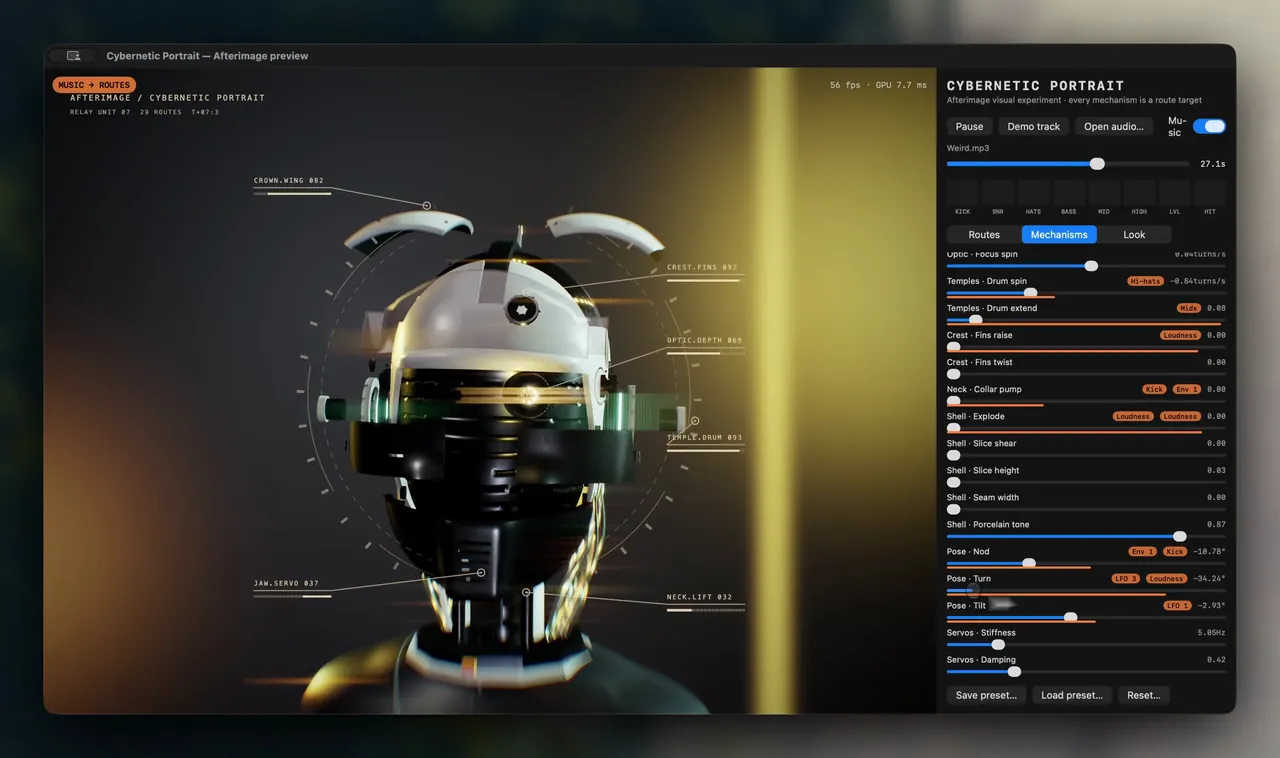
Introduce a rotating robot-head model; expose a limited set of audio controls; separate and reassemble its parts on marked musical cues; settle the model into a readable hero angle.
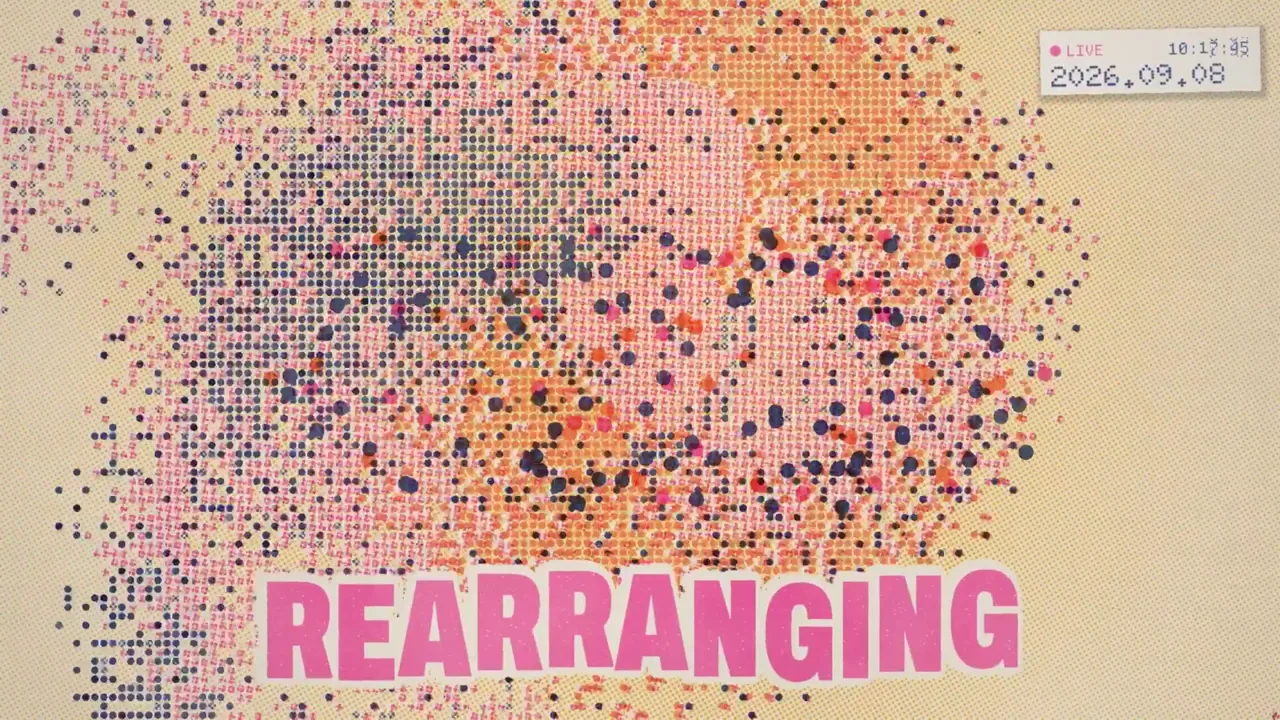
Choose a small set of sourced technology milestones; give each milestone an illustrated scene and caption; connect events through a chronological visual motif; close with the final documented state.
Make the menu, location, current hours and accessibility information easy to find.
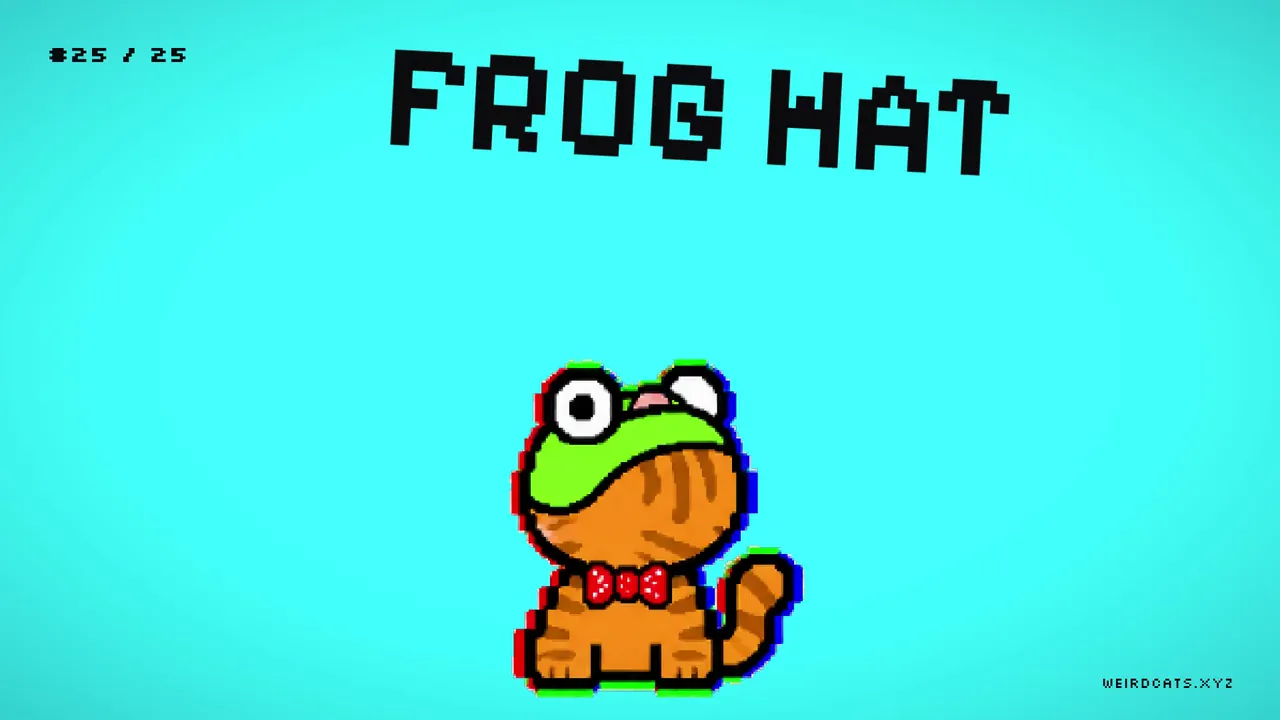
Boot a short terminal message; reveal an original pixel-art mascot; demonstrate the supplied site inside a retro window; resolve a restrained glitch into the final destination.
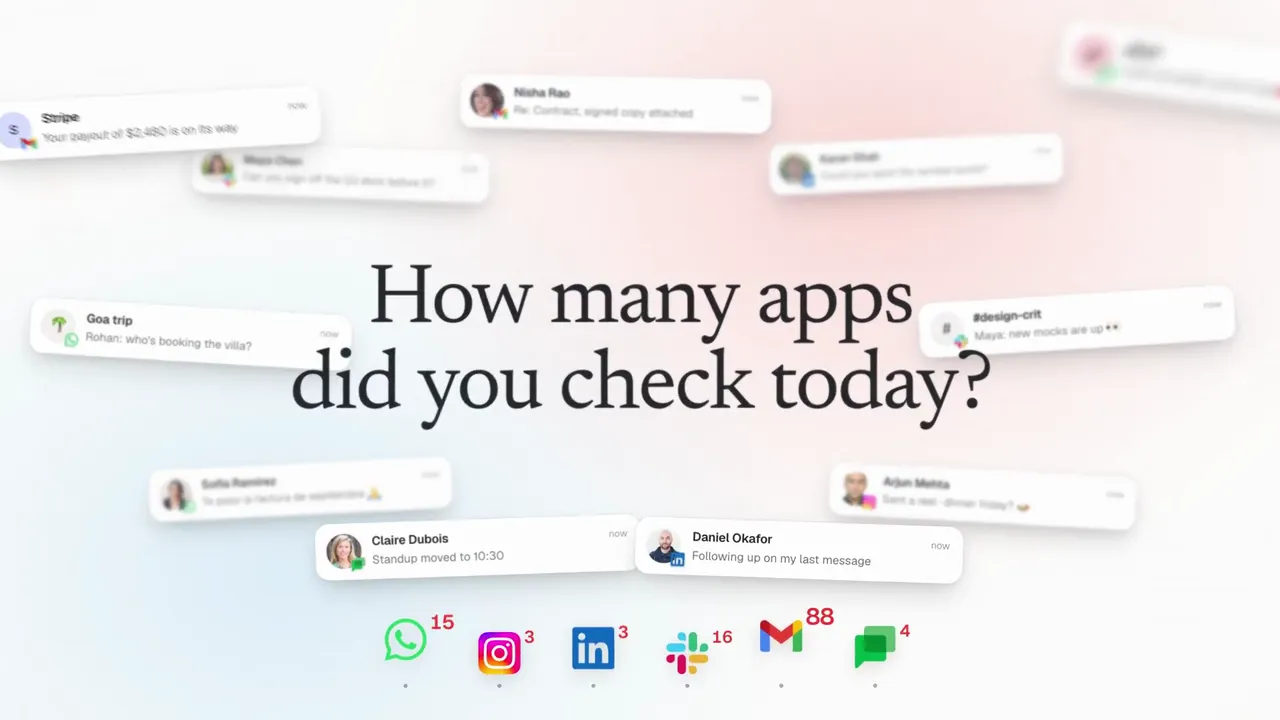
Introduce a short question about app switching; accumulate a small group of notification cards; focus on one actionable message; clear the frame to the approved closing line.
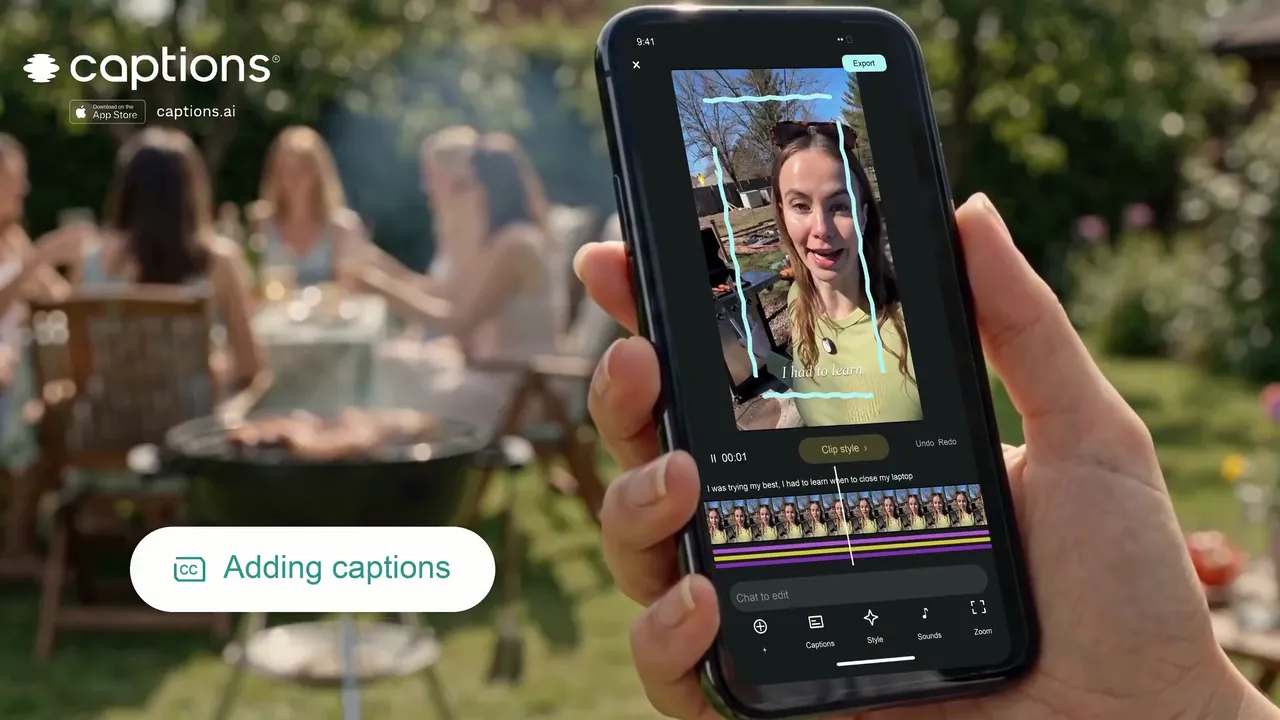
Show an authorized source clip; introduce a before-and-after caption comparison; demonstrate one real editing action; end on the improved clip and product identity.
Arrange reservations and personal plans by local day, open their confirmation details and prepare a downloadable trip information pack.

Introduce a small assistant avatar and one user need; type a concrete request; reveal the supported response in cards; show a follow-up action and final identity.
Design sign-in, recovery request, sent confirmation and invalid-link states.

Establish one sourced media-analysis question; reveal the geographic or topic pattern; connect the pattern to a readable insight; close on the actual analytics workflow.

Establish the bicycle and rider silhouette; turn the pedals through a complete cycle; move the bird and wheels together through a scene; hold a readable profile before repeating.

Establish a licensed painting-inspired environment; move a controllable viewpoint into the scene; reveal an original hidden cat; confirm the discovery without breaking the environment.
Explain audience, positioning, voice, visual principles and application examples.

Select a verified sequence of model milestones; introduce each as a pixel-art scene; carry a recurring character or symbol across the timeline; end with a clearly labeled speculative or documented state.

Establish a fixed carriage and table; move a layered landscape outside the window; transition through four seasonal treatments; return to a calm interior and a readable final view.

Introduce two opposing players and a small hand of cards; select a legal action; animate its cost and combat result; resolve the turn with a readable board state.
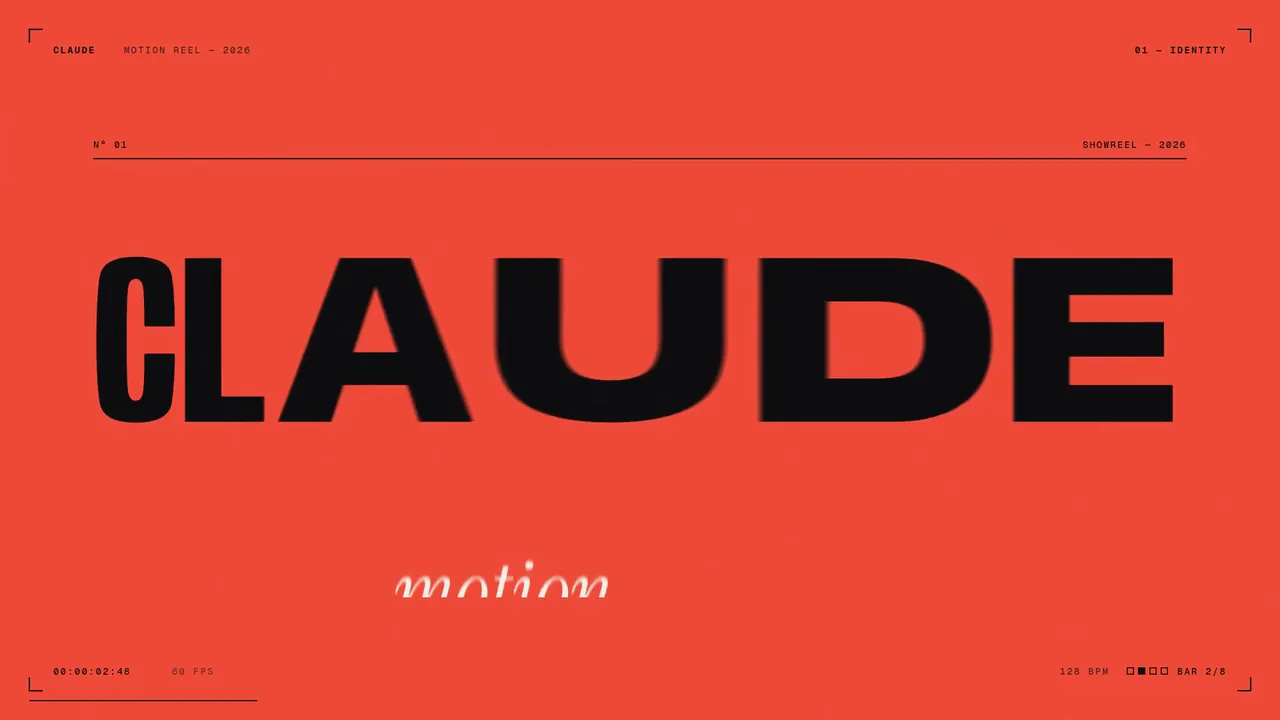
Land one short typographic hook; turn an accent dot into geometric patterns; switch between controlled color fields; finish with a supplied wordmark.
Scale a supplied recipe, follow one step at a time and run separately named timers while retaining the ingredient list.
Present a supplied portrait, speaker name, role, session title and event identity.

Establish a real sketchbook page; introduce one original drawn animal; let it move while retaining an ink-and-paper character; settle it back into the page.

Introduce one approved inference use case; populate a data or request grid; demonstrate the documented output; end on the platform identity and actual next step.
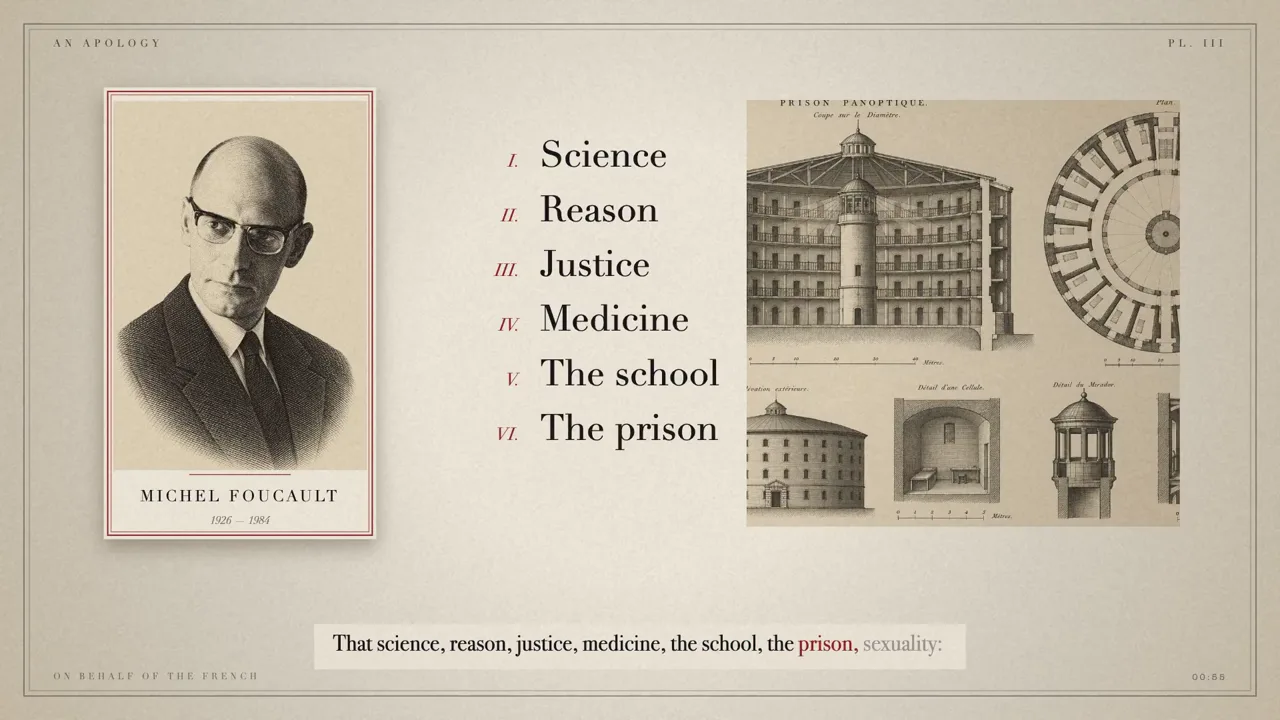
Choose one clearly scoped theory question; introduce sourced people terms and dates; connect illustrated evidence cards; close with a qualified explanation rather than a slogan.
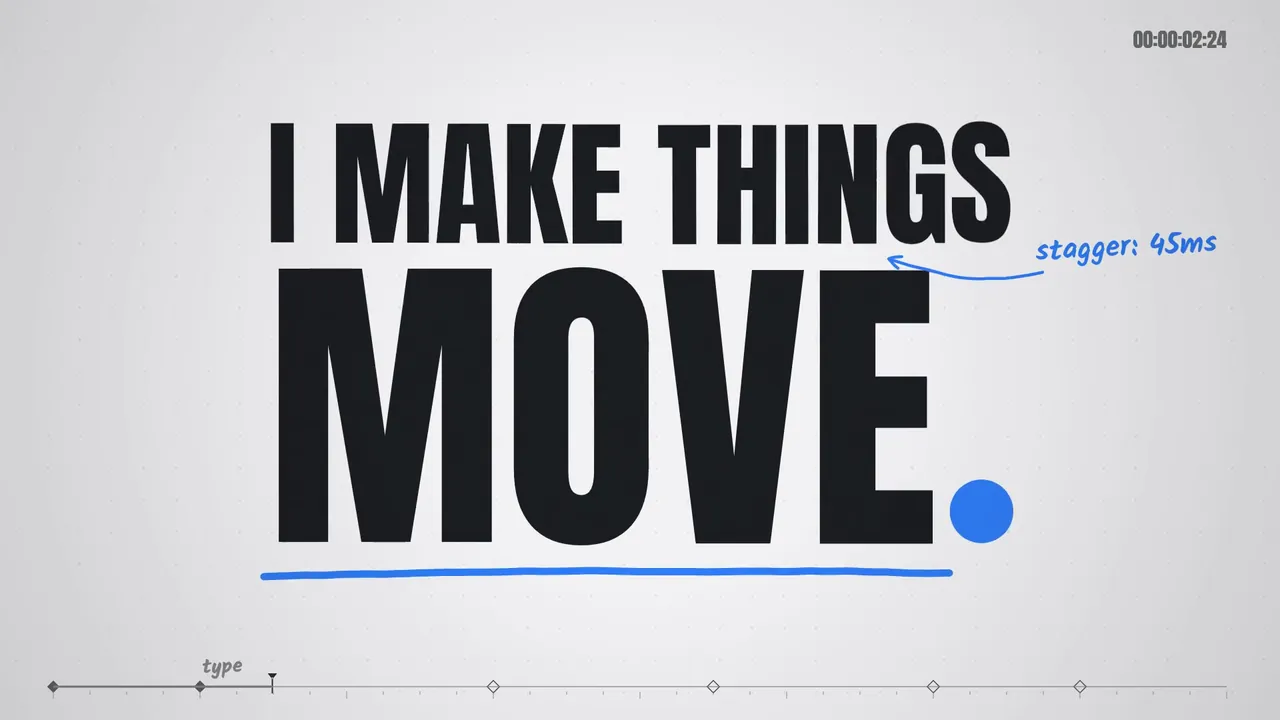
Show a simple ball at rest; demonstrate squash and stretch on a bounce; reveal its motion arc and easing curve; apply the same principle to a short typographic action.
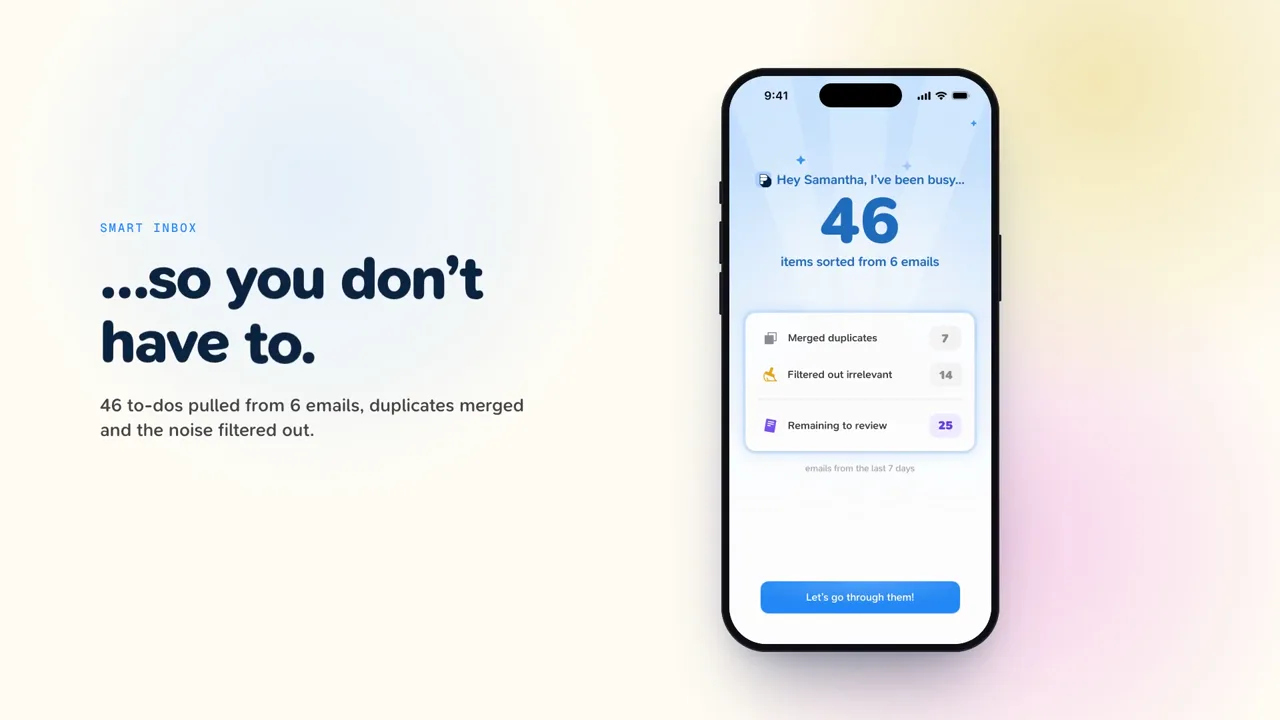
Introduce an approved mascot and user need; reveal a real feature in a device frame; show a supported gesture or theme change; settle on a clear product close.
Move between content panels with a subtle transition that preserves spatial context.

Ask a specific creator-workflow question; demonstrate a real drafting or engagement action; show an approved example of the resulting insight; close on the actual workflow destination.
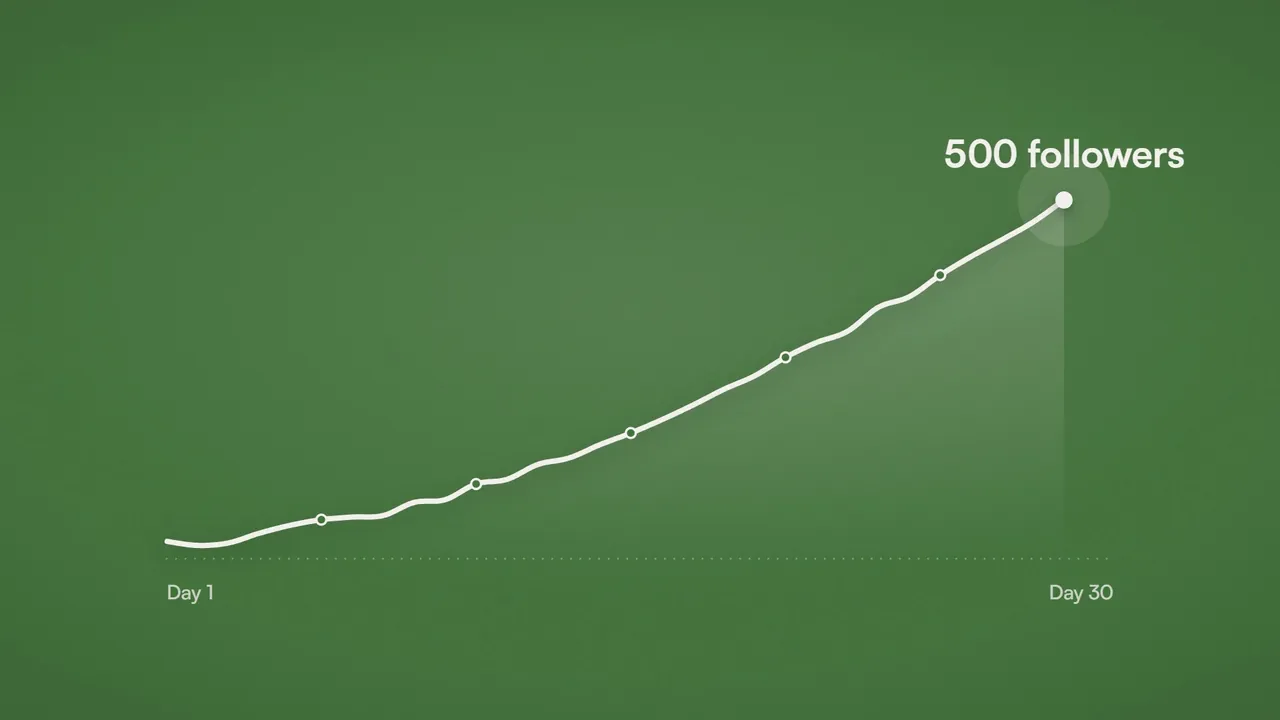
Introduce a measurable analytics question; reveal the relevant report; highlight a supported comparison; end on an actionable next step.
Find a locally listed tool, inspect its condition and lending terms, request dates and record a return checklist with owner confirmation.

Draw a point along an easing path; compare a snap with a calm settle; expand the motion into bars or a voxel wave; collapse the composition back to one point.

Establish one creator task on a near-black canvas; reveal the relevant interface cards; show a supported result in a compact graphic; resolve the red glow into a final identity.
Introduce the exhibition concept, featured works, visiting information and curator credits.
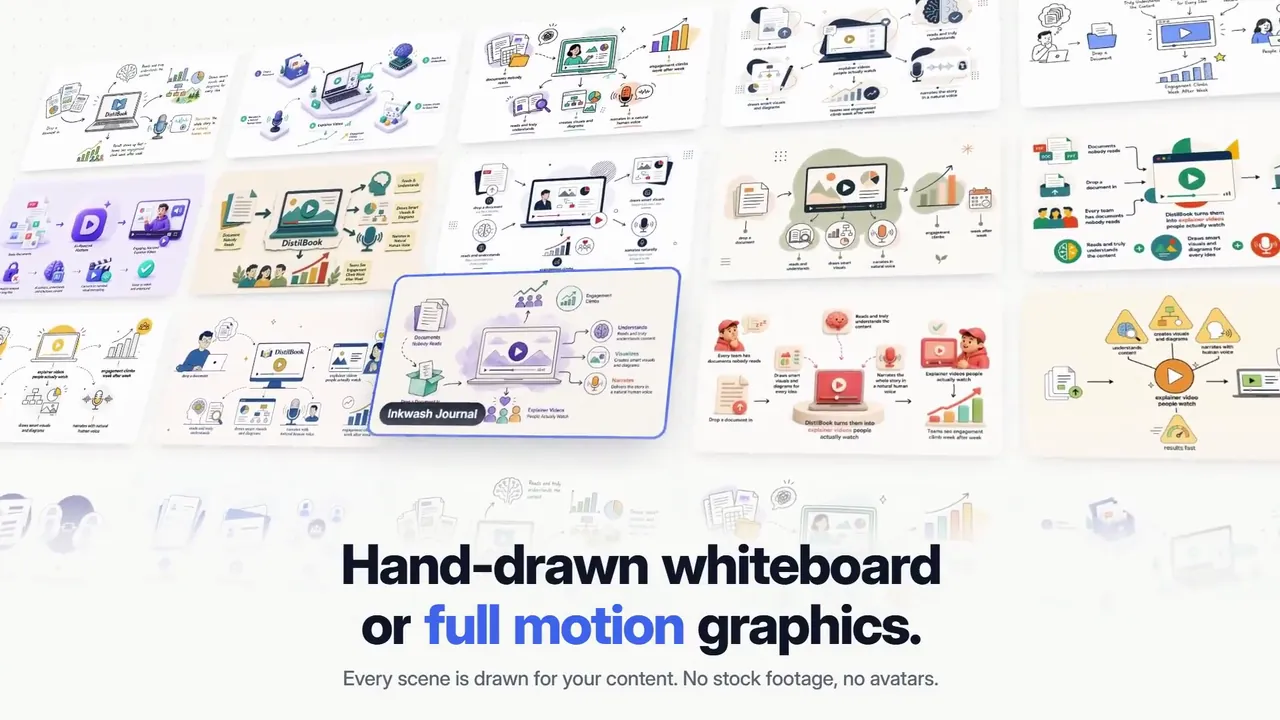
Introduce an approved source document; select one passage and learning goal; transform its ideas into a short illustrated explanation; show the final lesson beside its source.
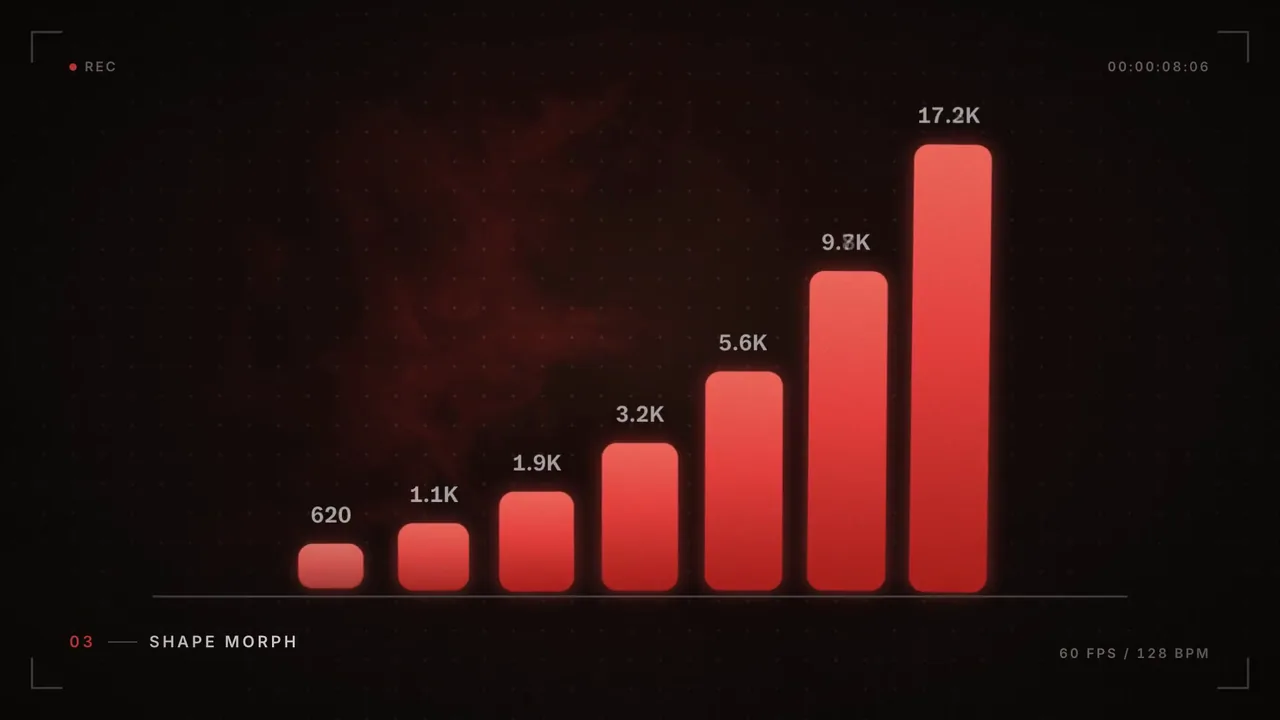
Introduce a supported publishing task; reveal the relevant content cards; animate an approved status or metric; collapse the red light motif into the closing identity.

Introduce a specific desktop workflow; show a real command or interface action; connect the action to its supported output; resolve technical grids into a product close.
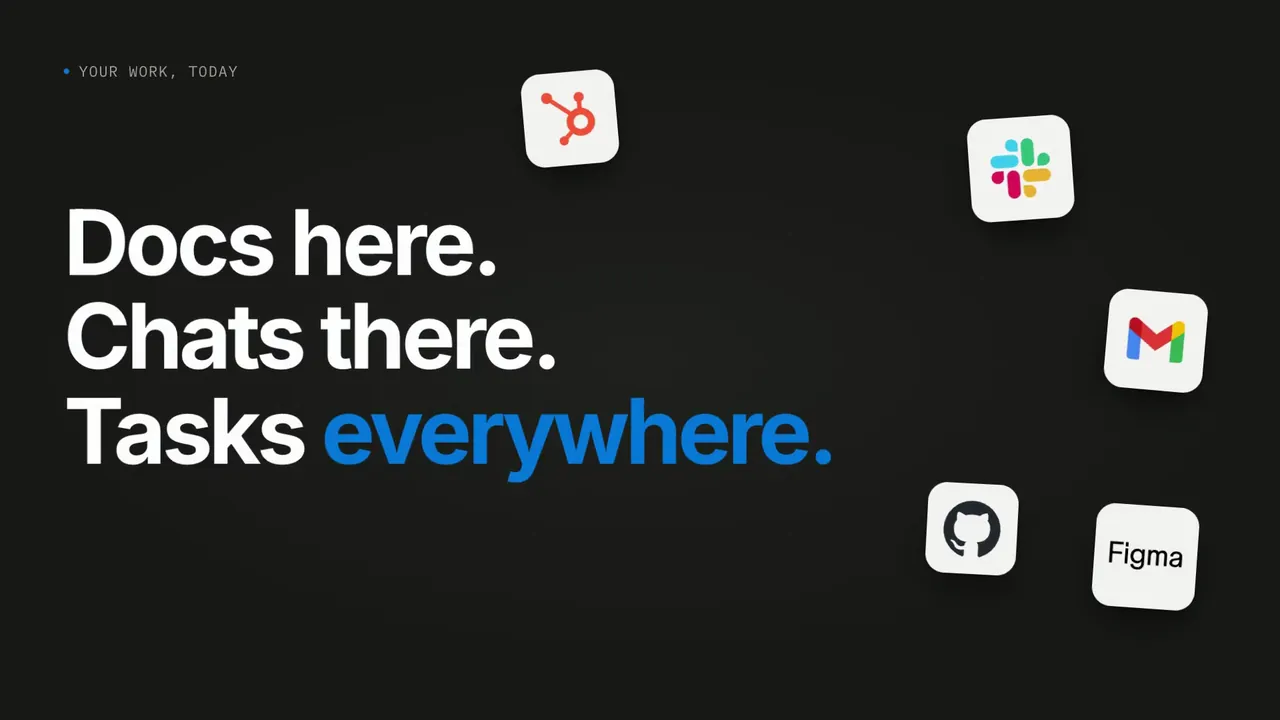
Establish the problem of scattered work; show a supported query across approved sample records; reveal a useful result in the workspace; close on the actual next step.
Explain setup steps, code verification, recovery codes and completion state.
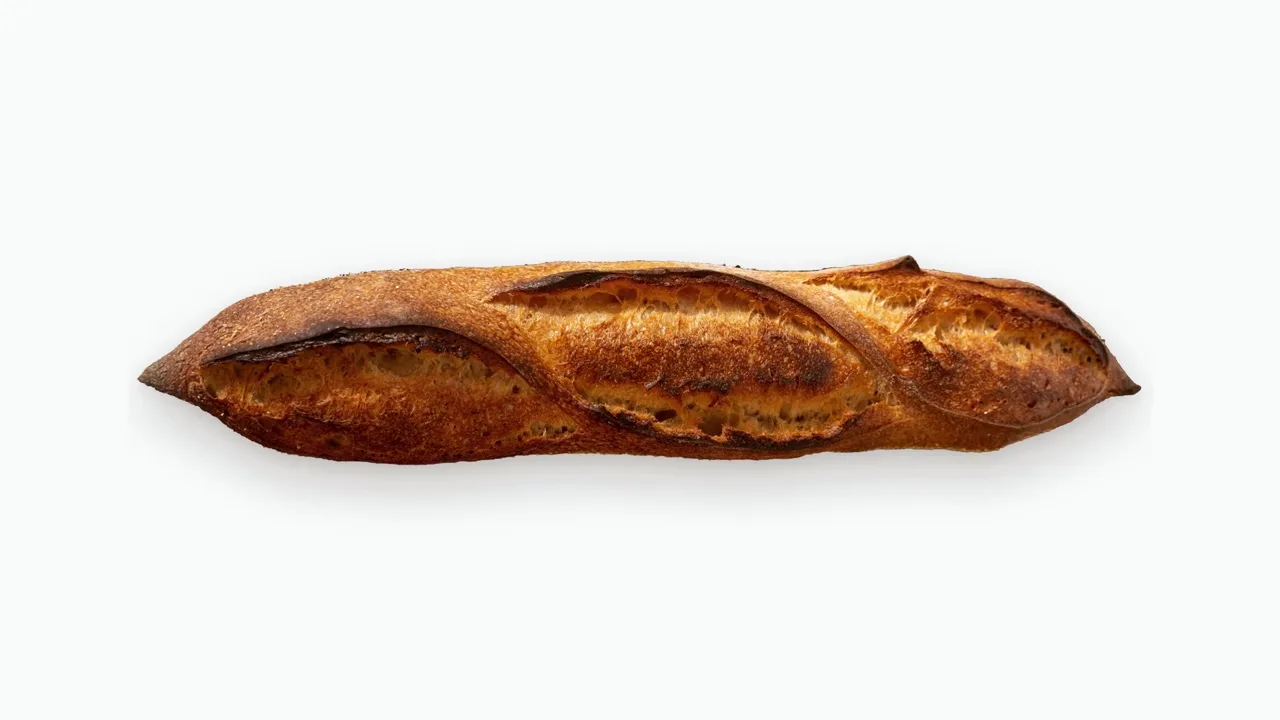
Present an authorized baked product on white; introduce a small number of approved qualities; inspect one tactile macro detail; settle the product with its identity.
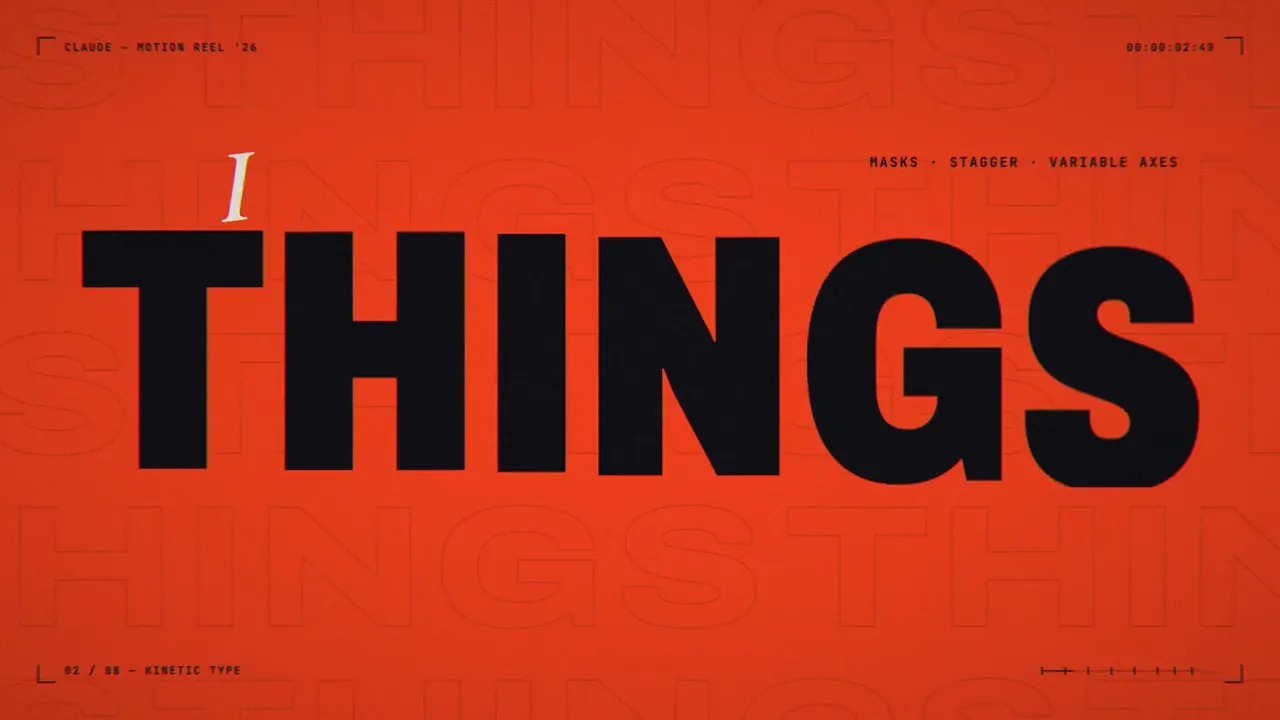
Introduce a short serif title on paper; turn an accent shape into a primary-color grid; connect letter masks and glass distortion; return to a quiet final identity.

Introduce a single point and a short approved phrase; let the point form a simple figure or path; vary scale and rhythm while keeping the same subject; end on a deliberate full stop.
Save a location with access notes and reference photos, assemble a shoot plan and record the date on which the information was checked.
Cover purpose, scope, roles, milestones, dependencies and immediate next steps.
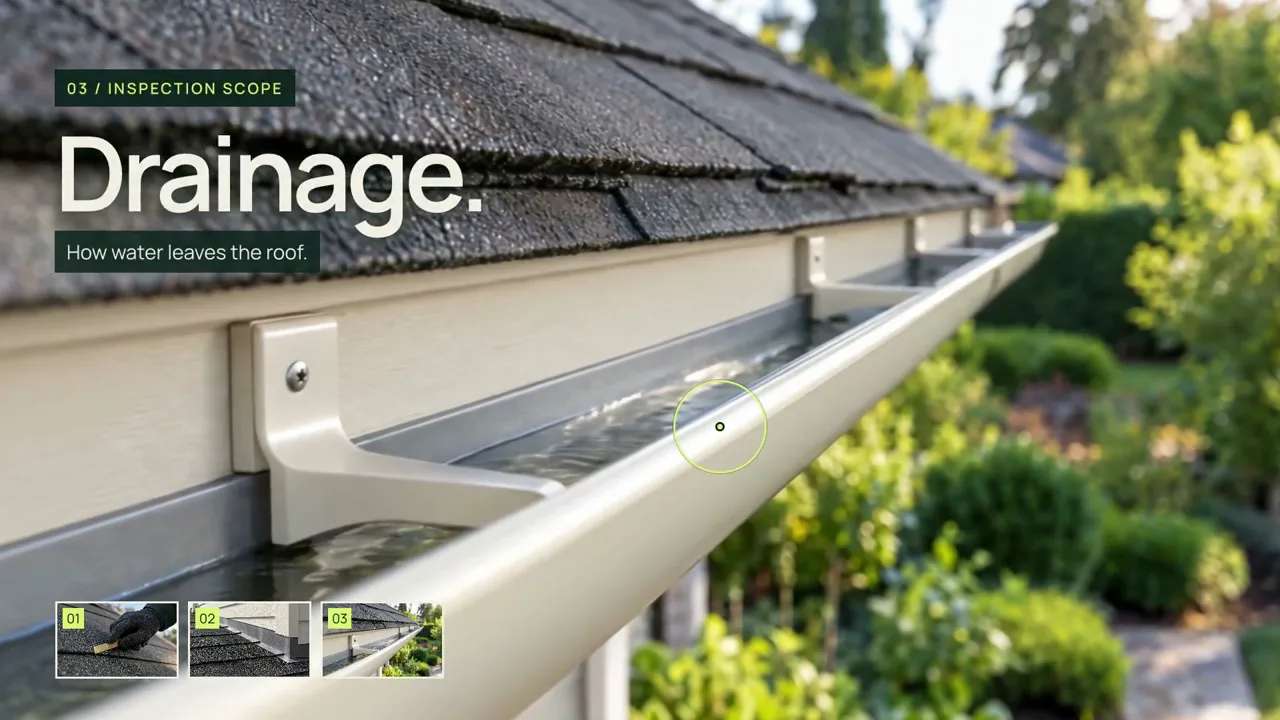
Introduce the specific roof component; separate its layers into an exploded view; connect labels to the correct physical parts; reassemble the model and show the inspection question.

Introduce the approved offer; reveal a small set of plan or service cards; compare the relevant included items; close with the complete billing condition and destination.
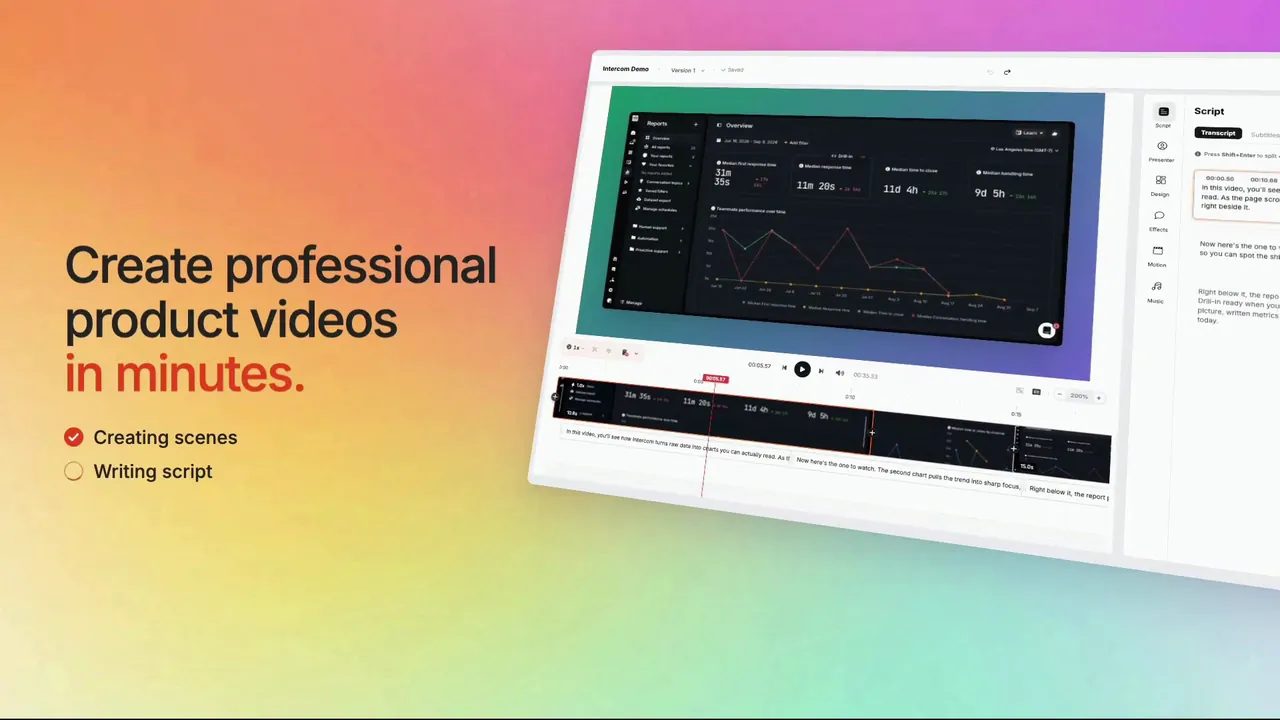
Introduce one input asset and editing goal; highlight a real editor control; show the resulting timeline or output; close on an authorized finished preview.
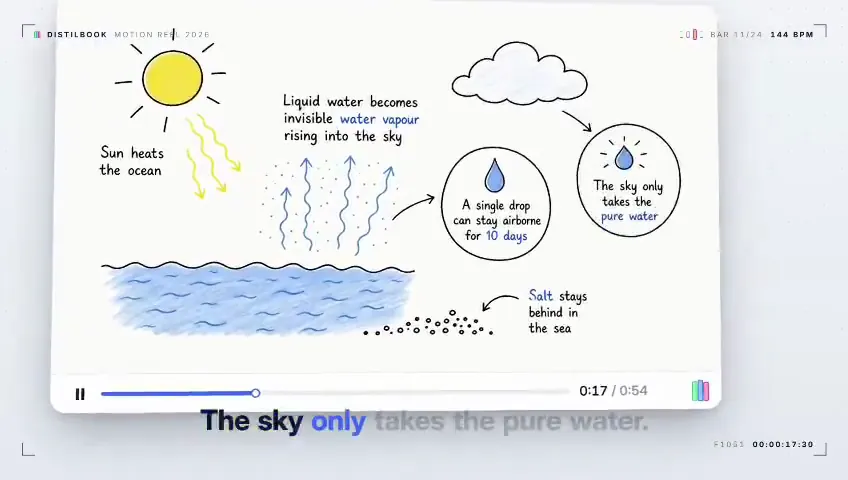
Establish the water cycle with a small landscape; show evaporation and cloud formation; animate precipitation and collection; return the water to the opening system.

Introduce an authorized device render; orbit to its main controls; show a clearly labeled demonstration waveform; settle on approved technical specifications.
Set an approved quotation with accurate attribution and a readable typographic hierarchy.

Introduce a real launch submission; show the supported listing and discovery flow; highlight an approved response metric; close on the actual launch destination.

Introduce an approved conversation context; run a labeled sample reply-generation step; compare a small set of candidate replies; show the human selecting and editing one.

Introduce a short typographic statement; convert its graphic anchor into a raised voxel field; reshape the field into a compact geometric composition; settle the final wordmark.
Catalog clothing with category and care notes, assemble an outfit from owned items and assign it to a day on a weekly plan.

Choose a small related set of techniques; introduce the common visual subject; transform it through geometry typography and depth; return to a coherent closing frame.
Show hover, focus, pressed, loading and completed states for a primary action.

Introduce an approved book or document; show the actual reading or summarization task; animate a supported result as editable text and cards; close on the app's real destination.

Introduce a real type-modeling problem; reveal a small approved schema; connect it to a supported interface or output; close on the actual developer-tool identity.

Choose one clearly stated mathematical relationship; introduce its symbols and variables; animate a parameter change with a matching diagram; hold the final interpretation.

Establish the lighthouse and surrounding weather; introduce the keeper through a small physical action; build a problem and response without dialogue; resolve the scene with light and a readable final gesture.
Explain the cause, proposed use of donations, verified evidence and ways to participate.

Introduce a reader's specific question; select an authorized book or document; show a supported summary or explanation; connect the result to a concrete reading action.

Establish a small working folder; show a change being saved as a commit; introduce branch and merge with a simple diagram; explain the next safe command.

Introduce the studio name on a controlled color field; assemble a small geometric motif; apply it to one authorized work example; resolve on a complete identity card.
Browse volunteer shifts with accessibility and preparation information, request a place and review confirmed commitments and cancellation steps.

Introduce the supplied mascot and invitation; explain the real referral action; show the qualifying condition and reward; close on the actual referral destination.
Group public profile, contact details, preferences and save-state feedback.

Introduce a source document and learning objective; select the relevant material in the interface; show a supported study output; finish with a useful next action.

Introduce a sample billing-review task; reveal a supported charge or invoice report; highlight one approved discrepancy; show the review result and next action.

Choose a dated set of verified game releases; introduce each game with authorized footage; explain one distinctive play mechanic; close with platform and release information.

Establish a supplied page and scroll range; introduce a small set of distinct section layouts; map each section's progress to its animation; settle the page at its final state.
Build an agenda with timed exercises, participant instructions and synthesis frames.

Choose a short approved phrase; reveal its letters through aligned masks; change scale while preserving the reading order; settle the complete message on a clean card.

Introduce a small luminous shape; build concentric bands of display type; vary orbit speed and depth; resolve the composition to a complete closing word.

Introduce a simple character facing a small challenge; show the character observing or trying a new action; turn the action into a modest visual win; end on an encouraging approved message.
Choose a fictional sports venue and court, select an available slot and review duration, participants and cancellation terms before a demo confirmation.

Introduce an approved file-sharing task; reveal the file or folder being shared; show access and delivery states; resolve the brand motif into the destination.
Show one supplied statistic with unit, denominator, period and source in a clear visual.

Establish the user's tracking task; identify the supported connection or record; show its status changing after an action; finish on a useful overview.

Introduce a real site-management problem; reveal the supported site list; apply one approved update action; show each site's resulting status.

Introduce a learner and a concrete reading goal; show a short authorized text; explain one supported vocabulary feature; close with an achievable practice action.

Introduce a child-like figure; evolve the same figure through selected life stages; connect repeated routines and relationships; close the cycle with a deliberate return.
Visualize queued, uploading, paused, failed and complete states with readable labels.

Introduce a real field task; capture a supported sketch or measurement record; organize the record into the relevant project view; show the approved report or next action.

Introduce an approved content draft and brand rules; type a specific image request; show a clearly labeled generated example; insert it into the relevant content location.
Browse editorial walking routes by length and accessibility notes, inspect landmarks and save an offline route overview.

Introduce a small outline document; identify its headings and content blocks; transform them into a corresponding HTML page; show the actual preview and identity.

Introduce an approved sample email list; run a labeled validation step; separate valid invalid and uncertain results; show the actionable report.
Build an image-led portfolio with ordered series, captions and a concise commission inquiry.

Introduce an original clay-like character; stage a small performance around the approved song; transform props with tactile stop-motion timing; finish on a coherent musical phrase.

Introduce an accent shape on a baseline; disperse it into a particle field; resolve the particles into an approved word; finish with a contrasting typographic card.

Define a specific historical period and question; introduce sourced places and dates; connect selected developments through a map or timeline; close with a qualified summary.
Organize notification topics by delivery channel with clear defaults and digest options.

Introduce the candidate's real name and role; show two verifiable skills through approved work; explain the candidate's specific contribution; close on a usable portfolio destination.

Establish a precise baseline grid; introduce one accent shape and a concise word; vary scale and movement within the grid; return to a balanced typographic close.

Introduce a verified editorial theme; build a rhythm of short typographic phrases; connect the phrases to authorized story cards; close on the actual publication identity.
Organize craft projects with materials and pattern references, mark the current step and record adjustments without editing the source pattern.

Introduce an approved analytical question; show the relevant dataset and dimensions; demonstrate a supported transformation or view; close on the interpretable result.

Establish a small set of moving objects and sound targets; trigger each note at a visible contact; build a repeating musical phrase; resolve the mechanism on a final synchronized impact.
Explain context, system boundaries, components, data flow and operational tradeoffs.

Introduce the person's actual role; show a small set of skills with authorized examples; connect the examples with a recurring graphic motif; close on the portfolio identity.

Define a short sequence of related graphic scenes; introduce one repeated shape or word; move it through controlled masks and camera changes; settle on an intentional final composition.

Introduce a real workspace arrangement; show a supported tiling action; demonstrate one verified classifier or organization result; close on the resulting usable layout.
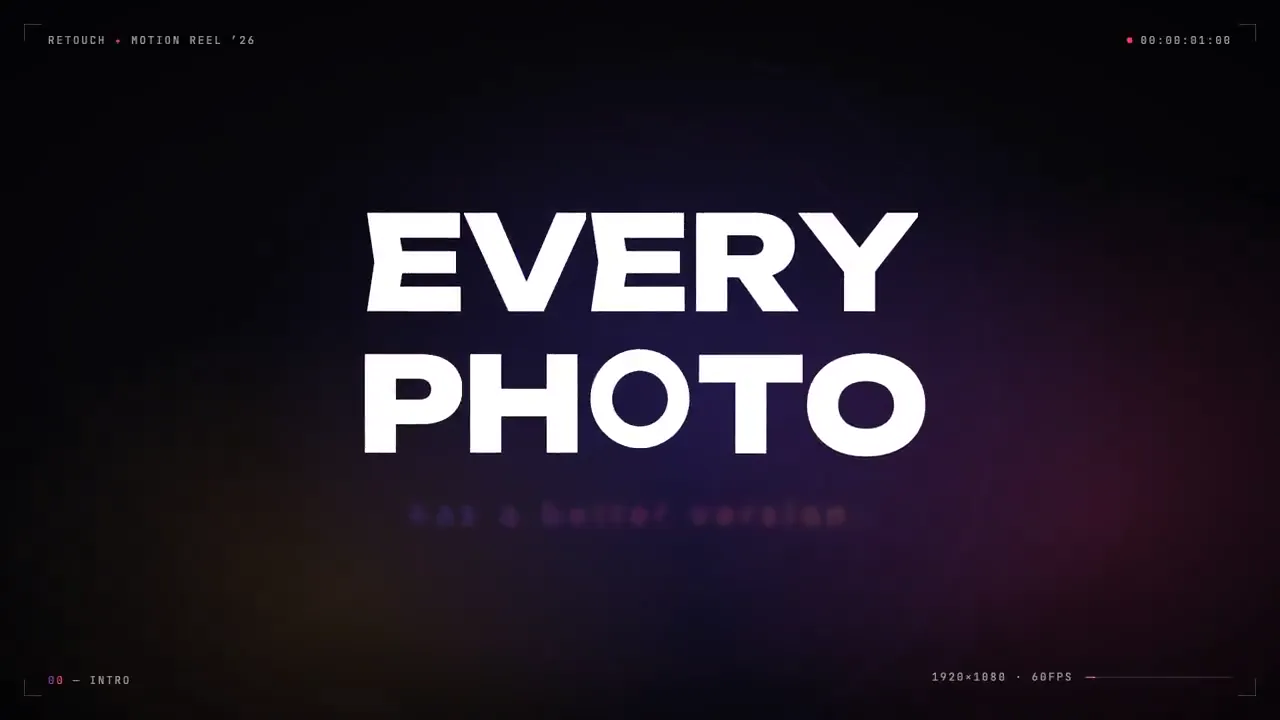
Introduce an authorized source photo; choose one supported retouch operation; compare matched before-and-after crops; close on the actual editing result and product identity.
Explain a real process as ordered steps with inputs, outputs and decision points.

Introduce an approved audit question; reveal a sample link report; distinguish the relevant link states; close with a practical audit action.

Introduce a real event-search question; enter a supported filter or keyword; reveal corresponding authorized listings; open one relevant event and finish on its destination.
Store fictional membership records, open a sample digital card and show expiry and manually supplied renewal information.

Establish a simplified football field and camera view; define the first-down target; show how the line is projected into the broadcast image; explain foreground occlusion with a controlled example.

Introduce an approved campaign setup; connect supported measurement records; explain a defined attribution view; show a human reviewing the next action.
Create a loading skeleton that matches the eventual content structure.

Introduce a small geometric vocabulary; combine shapes on a shared orbit; transform them through rhythmically timed masks; return to a concise closing arrangement.

Establish a shape and its transform channel; reveal a small set of keyframes; compare the interpolated path and easing curve; hold the final state with its parameters.

Choose authorized work from the supplied portfolio; introduce the creator's role; connect a small set of representative projects; close on a complete portfolio destination.
Present learning outcomes, syllabus, prerequisites, instructor background and enrollment details.

Introduce the supplied textile and maker context; show an authorized weaving or material detail; connect the fabric to an actual product use; close with verified brand and care information.
Log a vehicle's mileage and completed service, attach a receipt and maintain reminders based on owner-entered dates or mileage intervals.
Offer searchable actions with keyboard shortcuts, groups and a focused empty state.
Present priorities, dependencies, confidence levels and decisions required.
Browse places using specific access features, inspect dated source notes and submit a correction with optional supporting details.
Compare two approaches against consistent criteria using matched visual emphasis.
Animate stacked feedback messages with priorities, actions and dismissal.
Arrange podcast episodes, resume a partially played episode and manage offline downloads with per-episode progress and storage information.
Show the app's main task through a short screen sequence, platform requirements and install destinations.
Show result types, matching excerpts, filters and a useful no-results state.
Build a trip-specific checklist, assign shared items to travelers and record packed quantities with a separate carry-on list.
Show evidence-backed behaviors, goals, constraints and task scenarios for each persona.
Lay out dated milestones with accurate intervals or clearly labeled ordinal spacing.
Draft a public-space repair report with a location, category and photo, review privacy-sensitive details and show a clearly simulated submission timeline.
Design a calm overlay and dialog entrance that focuses attention on the task.
Explain the planned product, intended audience, expected next update and an email signup.
Organize work by status with owner, due date, labels and a task-detail panel.
Compare alternatives using declared criteria, dated sources and audience fit.
Arrange color roles, type references, materials and composition cues around a written brand direction.
Reveal secondary information from a card with an explicit control and reversible transition.
Group dated releases by feature, fix and improvement with product-area filters.
Let a team sort incoming issues by severity, owner and status with a reading pane.
Summarize progress, key metrics, cash context, risks and specific asks.
Create a concise visual sheet for logo spacing, color roles, typography and usage examples.
Show pickup, valid target, invalid target and completed placement states.
Structure the story as context, challenge, approach, evidence and remaining limitations.
Browse folders and assets with grid/list views, file metadata and a preview panel.
Introduce team purpose, working agreements, systems, first-week tasks and support contacts.
Compose an announcement with a live-text headline, image, supporting details and a clear CTA.
Animate a chart when the date range changes while keeping axes and comparisons understandable.
Offer task and platform filters, compatibility labels and installation links.
Show file selection, format guidance, upload progress, errors and retry controls.
Teach one workflow through prerequisites, sequential actions, examples and a practice task.
Arrange a lead story, secondary links, editorial note and subscription footer.
Open a high-resolution image view with zoom, pan, captions and a clear exit.
Explain the integration task, permissions, setup steps, supported data and troubleshooting.
Preview imported columns, map fields, validate rows and review errors before import.
Build a clear thesis, three supporting ideas, a concrete example and closing takeaway.
Prioritize event, date, seat or entry type and a clearly labeled validation area.
Connect multi-step form states with progress, validation and completion feedback.
Compare plan limits, included features, billing periods and upgrade paths.
Provide column priorities, sorting, compound filters, row selection and pagination.
Frame a question, show comparable values, explain uncertainty and recommend a decision.
Design directional signs with destinations, arrows, floor references and consistent hierarchy.
Plan a short HTML video as scenes for problem, action and outcome with timing and captions.
Present scope, deliverables, milestones, assumptions and a clear review action.
Show selected records, proposed changes, exceptions and a final change summary.
Present incident timeline, impact, contributing factors and owned follow-up actions.
Group dishes with descriptions, prices, dietary markers and section hierarchy.
Animate an event title, date and venue through a short legible typographic sequence.
Connect each service to a client problem, deliverables, process and relevant work.
Lay out timed events, all-day items, timezone and conflict indicators.
Map stages, user goals, touchpoints, friction and improvement opportunities.
Present product photography, dimensions, materials, variants and technical details on one sheet.
Create a slow abstract background using supplied brand shapes while leaving a quiet text zone.
Show cuisine, sample menu, service times, group policy and a booking path.
Choose a service, provider, date and time before reviewing details.
Frame a user task, demonstrate the workflow, explain boundaries and offer a next step.
Organize supplied product name, quantity, ingredients, usage and required copy within a label concept.
Organize room types, location, amenities, accessibility and booking information.
Present status, owner, due date, description, attachments and activity in a focused panel.
Show objectives, cost categories, alternatives, assumptions and approval decisions.
Design front and back layouts using the real name, role, contact details and brand tokens.
Present materials, origin, care, repair and purchase information in a considered layout.
Bring contact details, organization, relationship history and next action together.
Connect organizational needs to roles, timing, interview process and budget assumptions.
Explore a cover around the manuscript theme, title, author and a distinct visual metaphor.
Show a furniture family with dimensions, finishes, room context and product navigation.
Show opportunities by stage with amount, owner, next step and aging indicators.
Show the sprint goal, completed work, incomplete work, feedback and next priorities.
Create an original visual identity based on the artist's supplied mood, themes and album title.
Present dates, stages, lineup, daily schedule, access information and ticket tiers.
Combine conversation list, thread, customer context and assignment controls.
Map customer actions, visible service, backstage work and dependencies.
Build a cover with report title, period, organization and a reusable series identity.
Introduce the show, latest episode, episode archive, transcripts and listening destinations.
Place conversation, source references, attachments and editable output in a split workspace.
Present task-based findings with screenshots, severity rationale and recommended fixes.
Create a formal composition for recipient, achievement, issuing organization and date.
Create a lead story, topical sections, author bylines and a balanced article grid.
Let users choose a task, add context, attach references and inspect the final instruction.
Frame a target segment, customer need, alternatives, route to market and validation plan.
Show issuer, value or offer, recipient message and redemption instructions.
Explain the editorial promise, show an issue sample, frequency and subscribe form.
Compare supplied model options by supported tasks, constraints and available settings.
Organize reporting scope, measured impacts, methods, limitations and targets.
Prioritize the role, work mode, location and application destination in a brand-consistent visual.
Explain the problem, installation, usage example, repository and contribution paths.
Anchor comments to content, support replies, resolve state and a review summary.
State the decision, alternatives, evidence, risks and the requested resolution.
Communicate the approved offer, eligible products, dates and conditions with clear hierarchy.
Introduce the community purpose, upcoming activities, contribution paths and conduct resources.
List named versions, authors, timestamps and a comparison view with restore preview.
Present audience fit, sponsorship packages, deliverables and measurement plan.
Create a sequence of social cards that explains one workflow from problem to result.
Provide the session goal, host, date, timezone, format, agenda and participation requirements.
Group color, type, spacing and radius tokens with linked component previews.
Introduce the designer, select projects, explain roles and connect decisions to outcomes.
Turn a supplied workflow into a compact printable guide with steps, warnings and shortcuts.
Describe working principles, hiring steps and open roles with location and work-mode filters.
Let users inspect a component's variants, states, properties and code example.
Explain the change, affected workflows, rollout stages, support and feedback channels.
Introduce the community gathering, theme, time and participation mode in a flexible banner.
Separate responsibilities, requirements, compensation details, location and application process.
Compare mobile, tablet and desktop layouts with a synchronized page selection.
Compare intended outcomes with evidence, identify lessons and prioritize follow-up experiments.
Develop a repeating geometric motif derived from supplied brand shapes and color roles.
Explain the organization's purpose, people, disciplines and working approach.
Choose format, dimensions, selected pages and output destination with a review summary.
Arrange question, methods, results, limitations and references in a large-format research composition.
Set the talk title, presenter, event and date with a memorable but restrained composition.
Route visitors to sales, support, partnerships or press with only necessary fields.
Design first-use, no-results, permission-limited and deleted-content states.
Connect the objective, audience, choices, tradeoffs, measures and next actions on one canvas.
Create a coordinated welcome cover, checklist and quick-contact sheet for a new team member.
Offer a short factual company description, approved logos, screenshots and press contacts.
Explain what failed, what was preserved and the available retry or support actions.
Organize getting started, concepts, task guides, API reference and troubleshooting.
Show local changes, connection state, queued actions and conflict review.
Provide issue-oriented search, common tasks, topic groups and escalation paths.
Summarize items, quantities, delivery details, discounts and final cost before confirmation.
Filter guides, templates and reports by task, format and audience with useful summaries.
Present order status, item details, shipment steps and support paths.
Present preview-led templates with format, intended task and editable content requirements.
Show product variants, stock locations, availability and replenishment notes.
Compare two choices against declared criteria, sources and a clear intended audience.
Review amount, receipt, policy exceptions and approve/request-change actions.
Explain one capability through a task, required inputs, result and limitations.
Create line items, quantities, tax rules, payment details and a readable document preview.
Guide visitors through a short labeled product story with next and back controls.
Show logged time by project, person and task with editable date filters.
Show the learning agenda, presenters, timezone, format and registration requirements.
Present modules, completed lessons, upcoming tasks and resume points.
Create a readable narrative around approved highlights, methods, financial tables and source documents.
Review reported content, context, policy references and decision options.
Organize selected places by district, discipline and visit information with an editorial map key.
Group suggestions by topic, status and feedback with duplicate handling.
Show a single listing with photographs, floor plan, dimensions, amenities and inquiry route.
Connect a trigger, conditions and actions with configuration and test results.
Present day-by-day stops, travel time assumptions, booking references and optional detours.
List named keys, permissions, creation dates and revoke actions.
Explain the workshop artifact, prerequisites, timed agenda and materials checklist.
Let users review export scope, request a file and see pending/ready/expired states.
Explain the demo scope, intended audience, required company details and expected follow-up.
List available workspaces with role, recent activity and creation/join paths.
Demonstrate tokens, type scale, components and layout examples from an existing design system.
Show role, constraints, process, alternatives, outcome and lessons with annotated visuals.
Separate shipped, in-progress and exploratory items with status explanations.
Organize documented controls, data handling, compliance evidence and contact paths.
Present known access features, limitations, feedback contact and review date.
Offer platform-specific installers, versions, system requirements and release notes.
Show service components, incident summaries, timestamps and resolution history.
Present the research question, authors, abstract, methods summary and linked artifacts.
Organize a creator's current work, contact and selected destinations into a concise mobile-first page.
Let visitors choose a location and compare hours, access information and local services.
Try a broader task or remove a style filter.
PROMPT COLLECTION
Connect a few prompts around the thing you actually need to make.
Create the portfolio homepage, develop a case study, present the work and add an optional motion treatment.
Connect account setup, sign-in recovery, team invitations and useful first-use states.
A connected set of briefs for the page, presentation and announcement around your next release.
OpenDesign
Bring the prompt and reference image into OpenDesign. Add your content, build the first version and refine the details.